

7 Signs Your Gutters Need a Professional Cleaning Before the Next Connecticut Storm Season

Every gutter system, regardless of construction method, has to manage the expansion and contraction that comes from temperature change. Metal expands when heated and contracts when cooled, and Connecticut's climate produces significant temperature swings across every season: hot, humid summer days followed by cool nights, and winter conditions that cycle through freezing and thawing repeatedly.
The worst time to discover your gutters are not working is during a nor'easter. Water pouring over the fascia, pooling at the foundation, and backing up under the roof edge is what happens when a clogged gutter system meets 47 inches of annual Connecticut rainfall with no warning. Every one of those consequences was preventable, and every one of them announced itself beforehand if the homeowner knew what to look for.
The signs are there right now, in late summer, while the weather is still calm and the fall storm season has not started. A gutter system that is headed for failure in October or November is already showing evidence in August. The homeowner who catches it now gets a scheduled cleaning. The one who does not gets a problem during the worst possible weather.
CT GutterPro has protected homes across the Connecticut Shoreline since 1986. These are the seven signs the team looks for that tell a homeowner the gutters need professional attention before the next storm season, not after.

1. Water Spills Over the Edge During Rain
The most obvious sign is also the one that confirms the problem has already reached a critical point. If water is sheeting over the front edge of the gutter during a rainstorm rather than flowing to the downspout, the system is blocked.
A functioning gutter catches roof runoff and channels it through the trough to the downspout, which carries it away from the foundation. When debris, leaves, or sediment fill the trough or block the downspout opening, the water has nowhere to go and spills over the fascia. On a Connecticut Shoreline property receiving the 47.3 inches of annual precipitation NOAA documents, that overflow hits the foundation, saturates the soil, and starts the damage sequence every storm.
What overflow means for the house:
- Water is bypassing the entire drainage system
- The foundation is taking concentrated roof runoff
- The fascia behind the overflow point is getting saturated
- Every rain event is compounding the problem
If you see water going over the edge, the gutter needs cleaning now, not at the next convenient time. It has already stopped doing its job.
2. Plants Are Growing in the Gutter
When seedlings, weeds, or grass are growing out of the gutter trough, the system has been clogged long enough for soil to form from decomposed organic debris and for seeds to germinate in it.
This is not just a cosmetic issue. The root systems growing in the debris hold moisture against the gutter floor and accelerate corrosion on metal gutters. The accumulated soil and organic material adds weight the gutter hangers were not designed to carry. And the debris mass is dense enough that a standard homeowner cleaning may not clear it, because what started as loose leaves has composted into a compacted layer.
What gutter plants indicate:
- Debris has been accumulating for multiple seasons
- Decomposition has created soil inside the trough
- The gutter floor is holding sustained moisture
- The blockage is likely too compacted for a garden hose
This sign means the cleaning has gone well past routine and into the territory where professional equipment and hands-on removal are needed.
3. Staining or Streaks on the Siding Below the Gutter Line
Dark streaks, discoloration, or staining running down the siding beneath the gutter are evidence that water has been escaping the system and running down the exterior wall, sometimes for a while.
The stains are mineral and dirt residue carried by the overflowing water as it runs down the siding. They mark exactly where the gutter is failing, and on homes in Branford, Madison, and Guilford with painted clapboard or vinyl siding, these streaks are often the first visible sign a homeowner notices because they are visible from the ground without climbing a ladder.
What the streaking reveals:
- Overflow has been occurring at that point during rain
- The siding is absorbing repeated water exposure
- The fascia behind the overflow is likely saturated
- Paint or siding material may be deteriorating at that spot
Staining is the gutter problem announcing itself on the exterior of the house. By the time the streaks are visible, the overflow has been happening for multiple rain events.
4. The Gutter Is Sagging or Pulling Away From the Fascia
A gutter trough that is visibly sagging, pulling away from the fascia board, or showing gaps where it meets the roofline is carrying more weight than its hangers can support, and that weight is almost always wet debris.
A standard residential gutter system is designed to carry water, which weighs about 8 pounds per gallon. A trough full of wet leaves, composted organic material, and standing water weighs far more than flowing water alone, and the hangers and fasteners holding the gutter to the fascia were not sized for that sustained load. Over time, the hardware loosens, the gutter separates from the fascia, and the system loses the pitch that directs water toward the downspout. Once the pitch is lost, water stands in the trough rather than draining, which adds still more weight.
What sagging indicates:
- Debris weight is exceeding the system's design capacity
- Hanger fasteners are pulling from the fascia
- Pitch has been lost, so water is standing rather than flowing
- The fascia behind the separation point may be softening
A sagging gutter left through storm season is a gutter that comes down during a nor'easter, potentially pulling fascia and soffit with it. Addressing the debris load before the storms arrive prevents the mechanical failure.
5. Birds, Squirrels, or Insects Are Nesting in the Gutter
When wildlife makes a home in the gutter, the debris inside has been there long enough and deep enough to create shelter, and the blockage is significant.
Birds, squirrels, and wasps seek out gutter troughs because the accumulated debris provides insulation and protection from wind and rain. The nesting material they add compounds the blockage, and the presence of nests often means the downspout openings are already sealed by debris. On properties in Clinton, Westbrook, and Old Saybrook near wooded areas, this is a consistent late-summer finding.
What nesting activity signals:
- Debris accumulation is deep and established
- Downspout openings are likely sealed
- Additional nesting material is compounding the blockage
- Removal needs to happen before breeding season adds more
Professional cleaning at this stage includes nest removal and a full system flush to clear the compacted debris that attracted the nesting in the first place.
6. Shingle Granule Buildup in the Gutter
Dark, gritty sediment in the gutter trough that looks like coarse sand is shingle granule material, and it signals two things: an aging roof above and a gutter system accumulating material that rain alone does not flush.
Asphalt shingles shed granules as they age, and that material washes into the gutter with every rain event. A modest amount is normal. A heavy accumulation, thick enough to feel gritty underfoot when running a finger through the trough, indicates both significant roof aging and a gutter that has not been cleaned in long enough for the granules to build up.
What granule buildup means:
- The roof above is aging and shedding protective material
- The gutter is accumulating sediment rain cannot clear
- Granules add weight and reduce flow capacity
- Heavy buildup can clog downspouts at the opening
This is one of the less obvious signs because it requires looking inside the gutter, which most homeowners cannot do without a ladder. A professional cleaning identifies and removes granule buildup as part of the service.
7. You Cannot Remember the Last Time the Gutters Were Cleaned
This is not a structural sign. It is the most reliable predictor of all the others.
If the answer to "when were the gutters last cleaned" is "I'm not sure" or "it's been a while," the system is almost certainly carrying debris from at least one full leaf season, and likely more. On a Connecticut Shoreline property under oak, maple, or pine canopy, one missed season is enough to produce blockage. Two missed seasons produces the compacted, composted buildup that causes the visible signs listed above.
The honest baseline for most CT Shoreline properties:
- Under heavy canopy: two to three cleanings per year
- Under moderate canopy: two cleanings per year
- Under light canopy: one to two cleanings per year
If the schedule has lapsed, the most valuable thing a homeowner can do before fall is get the system cleaned, inspected, and restored to function before the storms that test it most arrive.
How Fast Clogged Gutters Create Damage in Connecticut
The damage from clogged gutters does not wait for storm season. It progresses with every rain event, and Connecticut delivers rain year-round.
| Time clogged | What is typically happening |
|---|---|
| One season | Debris accumulating, flow reduced |
| Two seasons | Overflow starting, fascia saturation |
| Three seasons | Compacted debris, standing water, sagging |
| One year plus | Fascia rot, foundation moisture, pest activity |
| Through a winter | Ice dams from blocked drainage at the roof edge |
The EPA advises homeowners to clean and repair gutters regularly as a foundation moisture prevention measure. Every season a clogged gutter stays clogged advances the damage another step, and once the damage reaches the fascia or foundation, the cost to address it dwarfs what the cleaning would have cost.
What a Professional Cleaning Covers That a DIY Pass Does Not
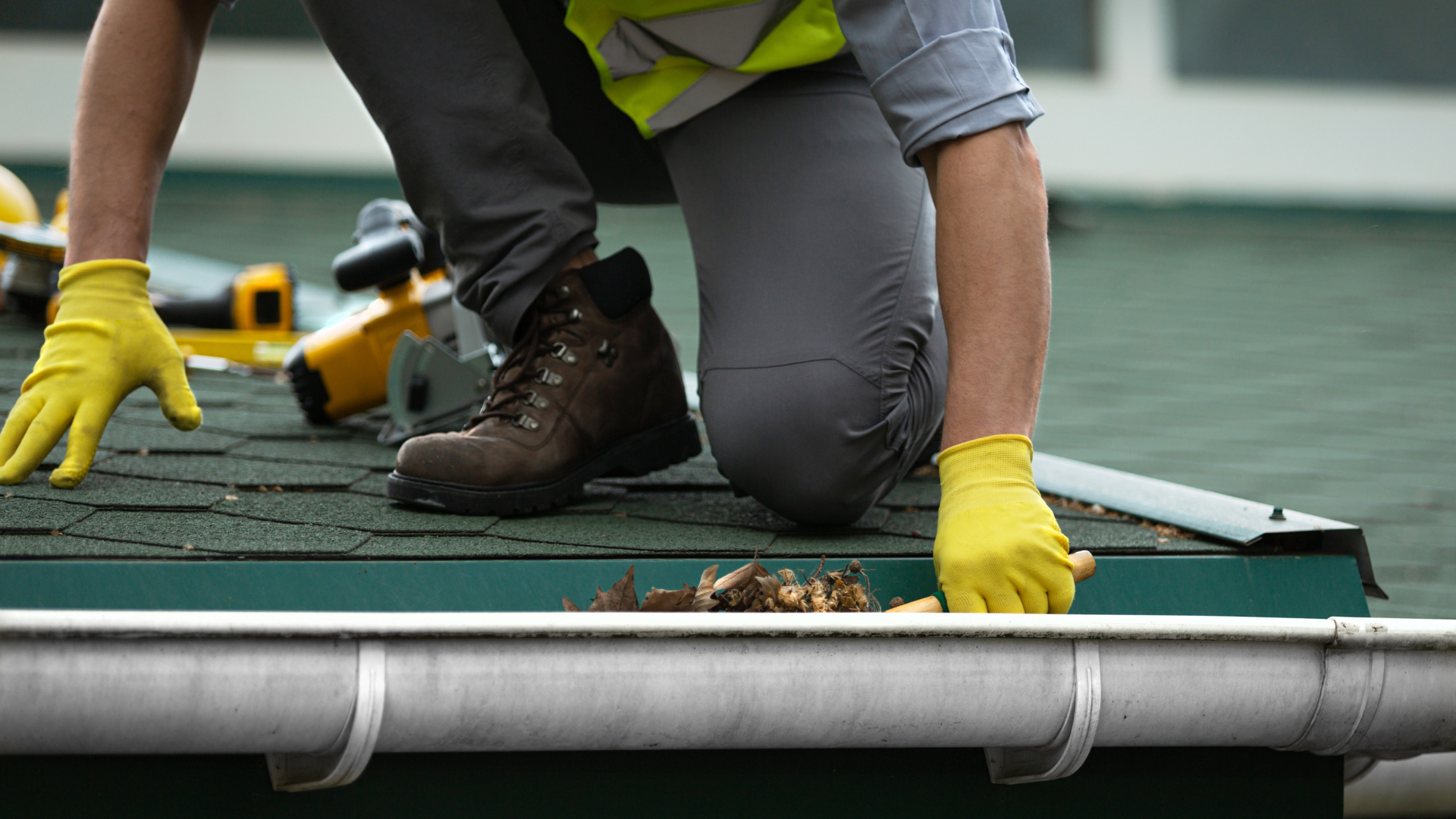
A homeowner with a ladder can scoop leaves from the trough. A professional cleaning addresses the full system.
| What gets checked | Why it matters |
|---|---|
| Trough cleared of all debris | Restores flow capacity |
| Downspouts flushed from top | Confirms no blockage below |
| Hangers and fasteners inspected | Catches sag before failure |
| Pitch checked along each run | Confirms water flows to downspout |
| Fascia condition assessed | Catches rot early |
| Seams and end caps checked | Identifies leak points |
CT GutterPro's gutter cleaning service covers all of the above across Branford, Madison, Guilford, Old Saybrook, and Milford. The gutter tune-up service adds a full system assessment alongside the cleaning, including pitch correction and hanger resecuring where needed. For the deeper question of how gutter overflow connects to foundation damage, the article on what happens when storm-damaged gutters go unrepaired covers the full consequence chain.
For homeowners whose canopy drives a more aggressive cleaning schedule, the article on how oak and maple canopy determines your gutter cleaning schedule maps specific tree species to their debris patterns and the cleaning cadence each requires.
If your gutters are showing any of these signs on your Branford, Madison, Guilford, Old Saybrook, or Milford property, CT GutterPro can clean, inspect, and restore the system before the fall storm season puts it to the test.
Gutter Cleaning | Gutter Tune-Up | Gutter Repair | Gutter Guards | Drainage Solutions | Contact CT GutterPro