

How Connecticut's Oak and Maple Canopy Determines Your Gutter Cleaning Schedule

Every gutter system, regardless of construction method, has to manage the expansion and contraction that comes from temperature change. Metal expands when heated and contracts when cooled, and Connecticut's climate produces significant temperature swings across every season: hot, humid summer days followed by cool nights, and winter conditions that cycle through freezing and thawing repeatedly.
Most homeowners on the Connecticut Shoreline clean their gutters when they remember to, or when they notice a problem. Once in the fall, maybe once in the spring, and the rest of the year the gutters take care of themselves. On some properties, that schedule works fine. On others, it is not even close to enough, and the difference is almost entirely about what trees are on the lot.
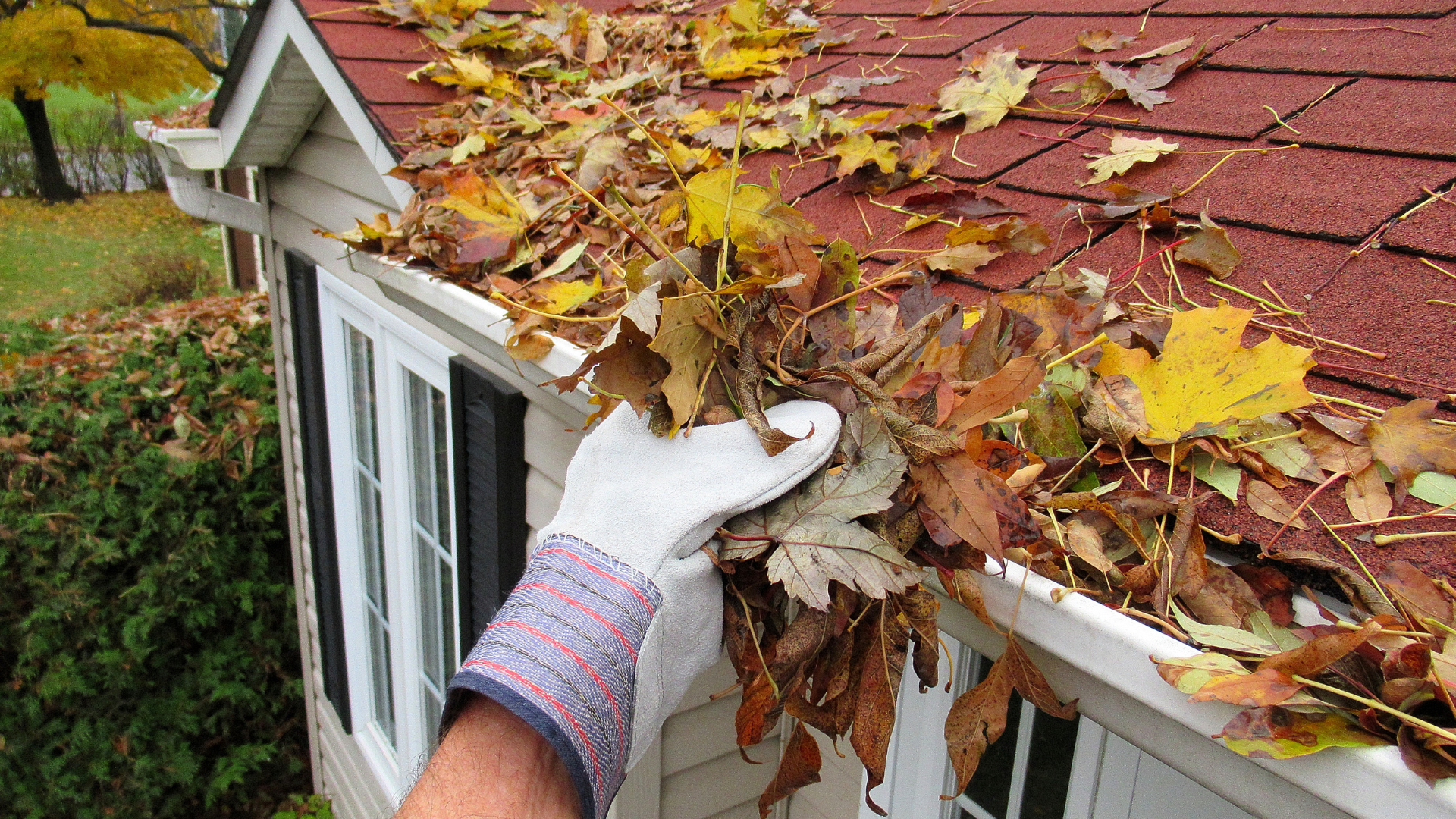
A home in Branford under a canopy of white oaks is dealing with a different debris load, on a different timeline, than a home in Old Saybrook with a few ornamental trees and open sky. The oak drops catkins in spring, sheds leaves through late fall into December, and produces acorns that clog downspouts. A sugar maple dumps its entire canopy in a concentrated three-week window that can fill a gutter system in a single storm. Knowing what your trees do and when they do it is what turns gutter cleaning from a guess into a schedule that actually protects the house.
CT GutterPro has cleaned gutters on Connecticut Shoreline properties since 1986. This guide maps the debris patterns of the most common Shoreline canopy trees to an actual cleaning calendar, so your schedule matches your trees rather than a generic recommendation..
Why the Generic "Twice a Year" Advice Falls Short
The standard recommendation for gutter cleaning is twice a year, spring and fall. That advice is not wrong. It is just incomplete, because it treats every property the same regardless of what is overhead.
A home with minimal tree canopy near the gutter line may genuinely need only one or two cleanings a year. A home under mature oaks, maples, and pines may need three or four, because those trees produce debris across multiple seasons and in volumes that overwhelm a gutter system long before the next scheduled visit.
The NOAA Connecticut State Climate Summary documents 47.3 inches of annual precipitation with no dry season and increasing extreme rainfall events. Every one of those rain events puts the full load on gutters that may already be partially clogged with seasonal debris. A cleaning schedule built around the actual canopy rather than a calendar default is what keeps the system functioning through Connecticut's year-round rainfall.
The Tree-by-Tree Debris Calendar
| Tree species | Spring debris | Summer debris | Fall debris | Winter notes |
|---|---|---|---|---|
| White oak | Catkins (April to May) | Minimal | Leaves (October to December, holds late) | Some leaves persist into January |
| Red oak | Catkins (April to May) | Minimal | Leaves (October to November) | Drops cleaner than white oak |
| Sugar maple | Seed helicopters (May to June) | Minimal | Heavy leaf dump (3-week window, October) | Clean once leaves are down |
| Red maple | Seed helicopters (April to May) | Minimal | Leaves (September to October, earlier than sugar) | Earlier fall drop |
| White pine | Needles year-round | Needles and cones | Needles and heavy cone drop | Needles continue |
| Eastern hemlock | Fine needles year-round | Fine needles | Fine needles | Does not stop |
| Hickory | Catkins (April to May) | Minimal | Leaves and husks (October to November) | Husks can jam downspouts |
| Black cherry | Flower debris (May) | Fruit drop (July to August) | Leaves (October) | Fruit stains and attracts insects |
The trees that drive the most aggressive cleaning schedules are the ones that produce debris across multiple seasons, particularly white oaks, pines, and hemlocks, because the gutters never fully clear on their own.

What Each Canopy Type Actually Needs
Heavy oak canopy (most common on inland Branford, Madison, and Guilford lots).
Oaks are the dominant canopy on most established CT Shoreline residential properties, and they are the most demanding gutter trees in the region. White oaks hold their leaves well past other hardwoods, often into December or January, which means the fall cleaning most homeowners schedule for November is too early. A property under heavy white oak needs:
- A spring cleaning after catkin and pollen season (May)
- A mid-fall cleaning during peak leaf drop (late October to early November)
- A late cleaning after the oaks finish dropping (December to early January)
Heavy maple canopy.
Maples dump fast. A sugar maple can drop its entire canopy in a concentrated window, and a single heavy rain during that window fills gutters completely. The schedule is simpler but the timing is critical:
- A spring cleaning after seed helicopter drop (May to June)
- A fall cleaning timed to right after the maple finishes (late October)
Pine or hemlock present.
Properties with white pine or Eastern hemlock near the gutter line have a year-round debris problem. Needles are fine enough to pass through most gutter guard perforations and accumulate inside the gutter continuously. These properties need:
- At minimum three cleanings spread across the year
- An honest conversation about whether micro-mesh gutter guards are the better long-term answer
For the guard conversation, the CT GutterPro article on micro-mesh versus perforated gutter guards explains how each guard type handles needle debris specifically.
Light or minimal canopy (shoreline and beach properties in Old Saybrook, Milford).
Properties with limited overhead canopy near the gutter line often need only one or two cleanings a year, timed to spring pollen and fall leaf season. These are the properties where the generic twice-a-year advice actually fits.
What Happens When the Schedule Does Not Match the Canopy
A cleaning schedule that underserves the canopy does not just leave debris in the gutter. It starts a damage sequence that the EPA specifically identifies as a moisture and foundation risk: water that cannot reach the downspout overflows at the fascia, pools at the foundation, and creates the conditions for both structural damage and mold.
The consequences compound by season:
| Season missed | What accumulates | What it causes |
|---|---|---|
| Spring catkins and pollen | Fine organic paste, clogs downspouts | Reduced flow before summer storms |
| Mid-fall leaf drop | Matted leaves blocking flow | Overflow and fascia saturation |
| Late fall (oaks finish) | Dense wet leaf pack | Ice dams in winter, overflow through spring |
| Year-round (pine needles) | Continuous fine buildup | Persistent reduced capacity |
Each missed cleaning makes the next rain event more damaging, because the gutter system is operating at progressively less capacity. The damage is not dramatic at first, but by the time fascia rot, foundation moisture, or ice dam damage appears, it has been building through multiple missed cycles.
Why August Is the Right Time to Set the Schedule
Late August is the moment on the CT Shoreline calendar when the cleaning schedule for the rest of the year should be in place, because everything that follows is heavy and fast.
- September and October bring the heaviest leaf drop from maples and early oaks
- November and December bring the late oak drop and the nor'easter season
- January through March bring freeze-thaw cycling that turns any remaining debris into ice dams
A homeowner who schedules their fall cleanings now, before the leaves start falling, gets the appointments locked in before every other property owner calls at the same time. Demand for gutter cleaning on the CT Shoreline spikes sharply in October and November, and scheduling in August is what keeps the timing aligned with the canopy rather than the waitlist.
CT GutterPro's gutter cleaning service covers all canopy types across Branford, Madison, Guilford, Old Saybrook, and Milford. The gutter tune-up service adds a full system inspection alongside the cleaning, catching pitch, hanger, and fascia issues that a cleaning-only visit does not assess. For the deeper question of how gutter overflow connects to foundation problems, the article on what happens when storm-damaged gutters go unrepaired covers the downstream consequences.
If your gutters overflow between cleanings, or you have never matched your cleaning schedule to the trees actually on your property, CT GutterPro can assess the canopy and set a cleaning cadence that keeps the system clear through every season on your Branford, Madison, Guilford, Old Saybrook, or Milford property.
Gutter Cleaning | Gutter Tune-Up | Gutter Guards | Drainage Solutions | Contact CT GutterPro