

7 Things That Happen to a Connecticut Home When Storm-Damaged Gutters Go Unrepaired

Every gutter system, regardless of construction method, has to manage the expansion and contraction that comes from temperature change. Metal expands when heated and contracts when cooled, and Connecticut's climate produces significant temperature swings across every season: hot, humid summer days followed by cool nights, and winter conditions that cycle through freezing and thawing repeatedly.
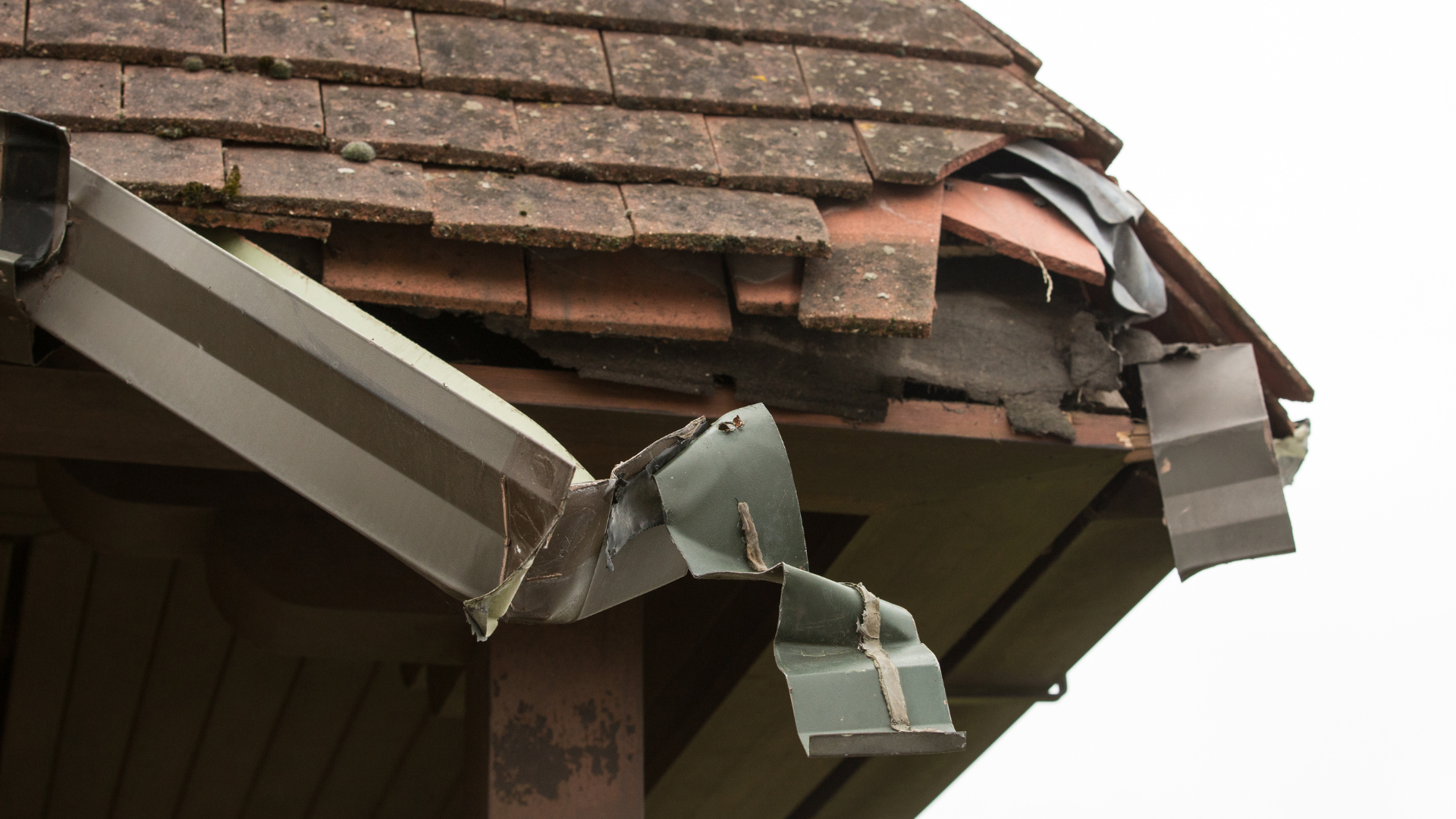
A nor'easter or a summer line storm rolls through Branford, Madison, Guilford, or Old Saybrook, and afterward a section of gutter is sagging, a downspout is disconnected, or a seam has pulled loose. It still mostly works. The water still mostly goes where it should. So it goes on the list of things to deal with eventually, and eventually keeps getting pushed back.
The problem is that a gutter system does not fail politely. Once storm damage compromises how it moves water off the roof and away from the house, the damage that follows does not stay at the gutter. It travels, into the fascia, down the walls, into the foundation, and in a Connecticut climate with 47 inches of annual rain and a hard freeze-thaw winter, it travels faster than most homeowners expect.
CT GutterPro has protected homes across the Connecticut Shoreline since 1986. These are the seven things the team sees happen, in order, when storm-damaged gutters are left unrepaired through a Connecticut season.

1. The Fascia and Soffit Begin to Rot
The fascia board is the wood the gutter is mounted to. It is also the first casualty when a gutter fails.
When storm damage causes water to overflow behind the gutter or spill along its back edge, that water runs directly down the fascia and into the soffit beneath the roof edge. Wood that stays wet stays wet longer in Connecticut's humid Shoreline climate, and repeated saturation breaks down the wood fiber, delaminates paint, and invites the fungal decay that turns a solid board soft.
What makes this the first domino:
- The fascia holds the entire gutter system to the house
- As it rots, it loses its grip on the hangers
- A gutter pulling away from rotting fascia dumps even more water on the same spot
- Left long enough, the rot spreads into the roof rafters and the roof edge itself
A storm-damaged gutter that is still hanging is quietly destroying the wood that holds it up.
2. Water Reaches the Foundation
A gutter system exists for one primary job: move roof water away from the foundation. When storm damage breaks that job, the water goes straight down at the base of the house instead.
A Connecticut roof sheds an enormous volume during a rain event. When a compromised gutter concentrates that water at the foundation instead of carrying it to a downspout and away, the soil at the base of the house saturates. Saturated soil against a foundation wall creates hydrostatic pressure, the force that drives water through concrete and into basements.
The U.S. Environmental Protection Agency names this directly in its home moisture guidance, advising homeowners to clean and repair roof gutters regularly and to make sure the ground slopes away from the foundation so water does not collect there. A broken gutter defeats both of those protections at once.
3. Water Gets Into the Basement
Once water is pressurizing the foundation, the basement is next.
Foundation walls are not fully waterproof. They resist water under normal conditions, but sustained hydrostatic pressure from saturated soil finds the paths of least resistance: hairline cracks, the cove joint where the wall meets the floor, and any existing penetration. On older homes throughout Branford, Madison, and Guilford, many of which have foundations that predate modern waterproofing, this is a common and expensive result of a gutter that stopped doing its job.
The costs escalate fast once water is inside:
- Finished basement materials, flooring, drywall, and belongings, are damaged
- The moisture creates the conditions for mold, covered next
- FEMA documents that just one inch of water in a home can cause up to $25,000 in damage
- The source, a storm-damaged gutter, often costs a fraction of that to repair
4. Mold Takes Hold
Wherever gutter failure puts water into the structure, whether the fascia, the wall cavity, or the basement, mold follows on a predictable timeline.
The EPA is specific that when materials stay wet, mold will grow, and that materials dried within 24 to 48 hours of a water event usually will not develop mold. A storm-damaged gutter does not offer a 24 to 48 hour window. It reintroduces water with every rain, keeping the affected materials continuously damp and well past the point where mold prevention is possible.
The EPA's guidance is blunt on the root cause: the key to mold control is moisture control. A gutter that has stopped controlling where roof water goes has become a moisture source, and in the wall cavities and basements it feeds, mold is the consequence rather than the risk.
5. The Siding Stains and Deteriorates
Not all gutter overflow goes down. Some goes out, and that water hits the siding.
When a storm-damaged gutter overflows or sprays from a failed seam, water runs down the exterior walls it was designed to keep dry. On Connecticut Shoreline homes, this produces a familiar set of problems:
- Streaking and discoloration down the siding below the failure point
- Paint blistering and peeling where water runs repeatedly
- Behind the siding, moisture intrusion into the wall sheathing
- On homes with wood siding, the same rot process that attacks the fascia
Siding stains are usually the most visible early sign of a gutter problem, and the one homeowners notice first from the curb. By the time the staining is obvious, the water has usually been finding its way behind the siding for a while.
6. The Landscape and Soil Wash Away
A gutter that dumps concentrated water at one point does not just threaten the house. It reshapes the ground around it.
Roof water released at a single point during a Connecticut rain event hits the soil with enough volume to erode it. Over a season of storms, that creates channels, washes out mulch and plantings, and displaces the soil that was grading water away from the house. The erosion often makes the foundation problem worse by carving new low points that direct even more water back toward the structure.
What gets damaged on a Shoreline property:
- Landscaping, garden beds, and plantings near the discharge point
- Mulch and topsoil, washed away and needing replacement
- The grade itself, reversed so water now flows toward the house
Hardscape like walkways and patios, undermined by soil loss beneath them
7. Winter Ice Dams Get Worse
In Connecticut, a broken gutter is a year-round problem that gets more dangerous in winter.
When a storm-damaged gutter holds debris, sags, or fails to drain properly, standing water in the gutter freezes as temperatures drop. That ice blocks the gutter completely, and meltwater running off the roof has nowhere to go. It backs up under the shingles at the roof edge, then refreezes, building the ice dam that drives water into the roof assembly and down into the walls.
The freeze-thaw cycle common across the Connecticut Shoreline, where temperatures cross above and below freezing repeatedly through a single week, is the exact condition that builds ice dams. A gutter already compromised by storm damage cannot shed the meltwater that a functioning system would carry away, which turns a manageable winter into a season of ice dam damage.
How Fast This Happens on a Connecticut Home
The sequence above is not a multi-year timeline. On a Connecticut Shoreline property with 47 inches of annual rainfall and no meaningful dry season, storm-damaged gutters move through these stages in months, not years.
| Timeframe after storm damage | What is typically happening |
|---|---|
| First heavy rain | Overflow begins at the damage point |
| 1 to 3 months | Fascia saturation, siding staining, soil erosion |
| 3 to 6 months | Foundation saturation, early basement moisture |
| 6 to 12 months | Fascia rot, mold onset, basement water intrusion |
| First winter | Ice dams form at the compromised sections |
The rainfall volume is not hypothetical. NOAA's Connecticut State Climate Summary documents the state averaging 47.3 inches of precipitation annually with no dry season, and extreme precipitation events, days with two or more inches of rain, occurring multiple times per year. Each of those events puts the full load on the gutter system again.
What Repair Actually Involves and Why It Beats Waiting
The reason storm gutter damage is worth addressing quickly is the gap between the repair cost and the damage cost. A gutter repair is a modest, contained job. The fascia, foundation, basement, and mold problems it prevents are not.
| Issue | Relative cost to address |
|---|---|
| Storm gutter repair | Lowest, contained to the gutter system |
| Fascia and soffit replacement | Moderate, carpentry and repainting |
| Foundation and basement water | High, waterproofing and restoration |
| Mold remediation | High, plus health considerations |
| Full-season compounded damage | Highest, multiple systems at once |
CT GutterPro's storm damage and gutter repair service addresses the full range of storm gutter failures across Branford, Madison, Guilford, Old Saybrook, and Milford, from resecuring and realigning sagging sections to replacing damaged runs, reconnecting downspouts, and resealing failed seams. For gutters that are also clogged or holding debris from the storm, the gutter cleaning service clears the system so it can drain, and the gutter tune-up service inspects pitch, hangers, seams, and fascia condition in a single visit.
For the deeper picture of how gutter failure connects to foundation problems specifically, the CT GutterPro article on how Connecticut's heavy rainfall and freeze-thaw cycles make foundation drainage a year-round priority covers the downstream drainage consequences in detail.
If a recent storm left your gutters sagging, leaking, disconnected, or overflowing on your Branford, Madison, Guilford, Old Saybrook, or Milford property, CT GutterPro can assess the damage and repair the system before the next Connecticut rain turns a gutter problem into a foundation problem.
Gutter Repair | Gutter Cleaning | Gutter Tune-Up | Gutter Installation | Drainage Solutions | Contact CT GutterPro