

Do Gutter Guards Need Maintenance Before Connecticut’s Fall Leaf Drop?

Every gutter system, regardless of construction method, has to manage the expansion and contraction that comes from temperature change. Metal expands when heated and contracts when cooled, and Connecticut's climate produces significant temperature swings across every season: hot, humid summer days followed by cool nights, and winter conditions that cycle through freezing and thawing repeatedly.
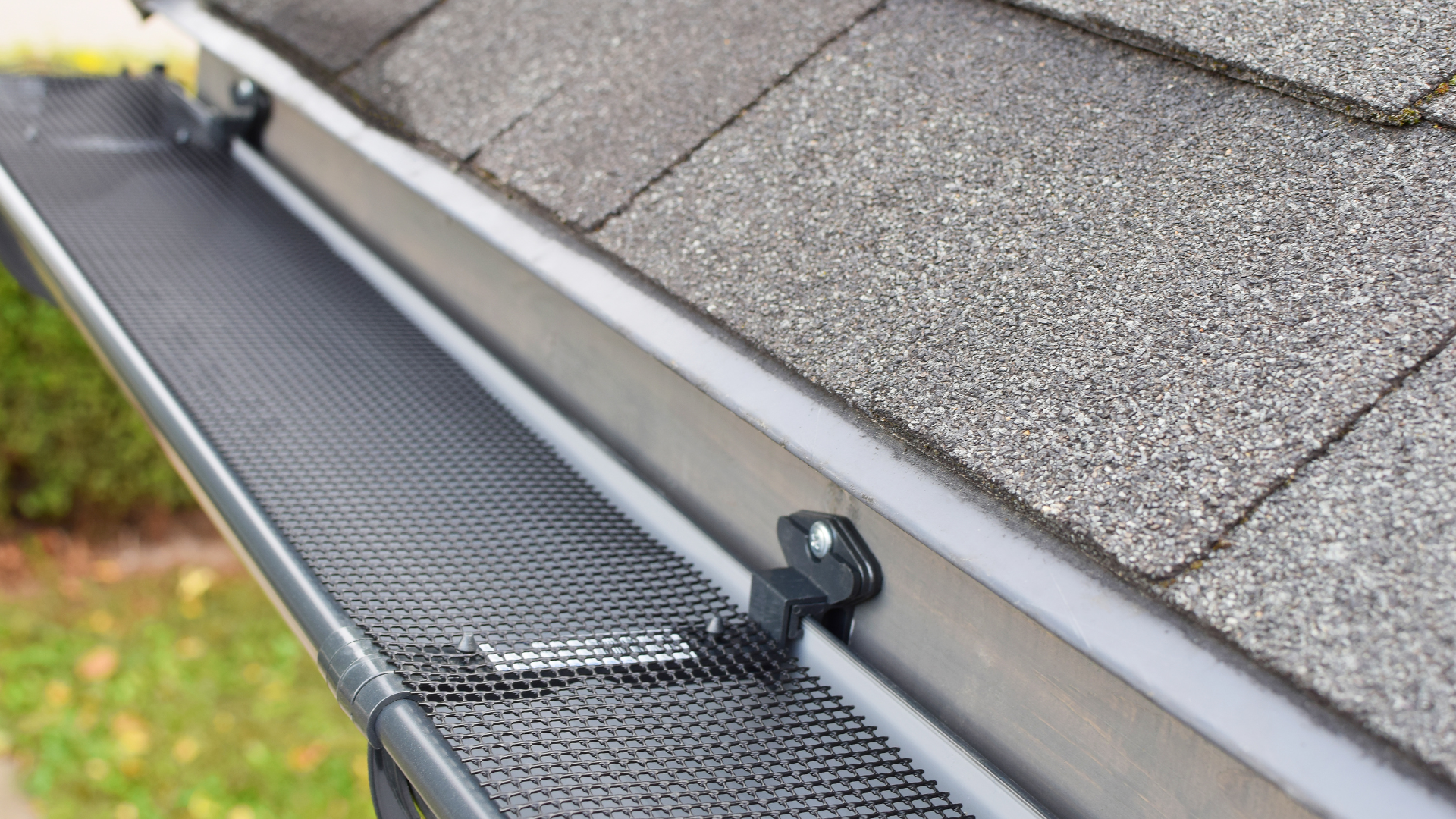
Gutter guards reduce the amount of leaves and debris that enter your gutters, but they do not make the system maintenance-free. Fine debris can still collect on top of the guard, small particles can work through openings, and the gutter system underneath still depends on clear downspouts, proper pitch, secure hangers, and solid fascia.
At CT GutterPro, we have installed more than 700,000 feet of gutter guards across Connecticut, and the pattern is consistent: the best-performing systems are the ones that are maintained before small restrictions become fall overflow problems.
For homeowners in Branford, gutter guard maintenance before peak leaf drop is less about removing piles of leaves and more about making sure the system is ready for the heaviest debris period of the year.
Why September 2026 Is the Right Time to Check Gutter Guards
Connecticut DEEP currently says the state's foliage season begins in late September and extends into early November, with peak color estimated between October 3 and November 8. DEEP also notes that weather in the coming weeks can move those dates earlier or later. Connecticut DEEP fall foliage guidance
That makes early September a useful inspection window in Branford. The goal is not necessarily to perform the final fall cleaning now. It is to identify problems before oak and maple leaves begin loading the roofline heavily.
Check the system now if:
- Water has been spilling over during summer storms
- Pine needles or seed debris are sitting on top of the guards
- One section drains slower than the rest
- The guards have not been serviced in more than a year
- You see moss, roof grit, or organic buildup on the surface
- A storm has lifted or shifted part of the guard
- The gutters have not had a full inspection in several years
In Branford, New Haven, Guilford, and North Branford, the exact maintenance schedule depends heavily on the trees around the property. A home under open sky behaves very differently from one surrounded by mature oak, maple, or pine canopy.
Yes, Gutter Guards Still Need Maintenance
A gutter guard is a maintenance-reduction system, not a maintenance-elimination system.
Large leaves may stay out of the gutter channel, but fine debris can accumulate on the guard surface. Pine pollen, seed pods, small needles, roof moss, and shingle granules can partially restrict micro-mesh over time. On perforated or surface-style guards, debris can collect at openings or along the front edge and change how water enters the gutter.
CT GutterPro generally recommends one annual cleaning for homes with gutter guards and a full system inspection every two to three years to check more than the guard itself.
Our gutter guard service is built around that full-system view. A clean guard sitting on a sagging or poorly pitched gutter will not solve a drainage problem.
What Actually Builds Up on Gutter Guards Before Fall
Different gutter guards fail in different ways, which is why gutter guard cleaning should match the product instead of using the same method on every roof.
Common Debris by Guard Type
| Guard Type | What Commonly Builds Up | What to Watch For |
|---|---|---|
| Micro-mesh | Fine pollen, roof grit, moss, small organic debris | Water skating over clogged mesh |
| Perforated aluminum | Leaves, small twigs, seeds | Openings partially blocked |
| Surface-tension guards | Debris along the front edge | Water overshooting the gutter |
| Screens | Pine needles and small leaves | Debris wedged into openings |
| Brush or foam inserts | Organic debris within the product | Debris trapped instead of shed |
For most Connecticut Shoreline homes, we favor professional-grade micro-mesh because it handles the region's mix of leaves, pine needles, seeds, and shingle granules better than many other options. Our 2026 Connecticut gutter guard guide explains the strengths and limitations of the main systems.
Even good micro-mesh still benefits from an annual rinse and inspection. The product may be doing its job perfectly while fine material slowly reduces the open surface area available for water.
A 10-Minute Ground Check Before You Schedule Cleaning
You do not need to climb onto the roof to learn whether the system deserves attention.
Start by walking around the home from the ground. If possible, do this during or immediately after a normal rain so you can see how water is moving.
Look for these signs:
- Water flowing over the front edge of the gutter
- One section dripping while the rest drains normally
- Water exiting behind the gutter near the fascia
- A downspout with little or no visible discharge
- Debris visibly sitting in roof valleys above the guard
- A guard panel that appears lifted, bent, or disconnected
- Water marks on siding beneath a gutter run
Use those ground-level symptoms to decide whether the next step is simple surface maintenance or a broader inspection. Repeated overflow after cleaning usually means the problem is no longer just debris.
Should You Clean Gutter Guards Before Leaf Drop or After?
The answer depends on what condition the system is in right now.
If the guards are already restricted in September, waiting until every leaf is down can mean sending the heaviest fall debris onto a system that is starting the season at reduced capacity. If the guards are clean and flowing well, cleaning too early can mean paying for service before most of the seasonal debris has arrived.
Use This Fall Timing Decision
| Current Condition | Best Timing |
|---|---|
| Guards clean, water flowing well | Wait until most leaves have dropped |
| Fine debris already restricting mesh | Clean before heavy leaf drop |
| Heavy oak/maple canopy | Consider mid-fall check plus late-fall service |
| Pine-heavy property | Inspect earlier because needles fall beyond one short window |
| Recent storm damage | Inspect now rather than waiting |
| One annual service only | Schedule after the largest leaf drop but before persistent freezing |
Connecticut's oak and maple canopy does not drop all at once. Maples can move earlier, while oak leaves often hold later. Pine needles can continue creating debris even after deciduous trees are bare.
That is why we do not recommend one universal calendar date for fall gutter maintenance. The right schedule follows the trees on the property and the current condition of the system.
DIY Gutter Guard Cleaning vs Professional Maintenance
Some homeowners can safely remove light surface debris from low, accessible gutter runs without damaging the guards. The risk rises quickly on two-story homes, steep roofs, uneven ground, or systems where the guard has to be lifted to reach the gutter channel.
A simple DIY surface clean may be reasonable when:
- The gutter is safely accessible
- Only loose debris is sitting on top
- Water is already flowing correctly
- The guard does not need to be removed
- No structural problem is visible
Call for professional service when:
- The roof is steep or the gutter is high
- You need to remove guard sections
- Downspouts are partially blocked
- Overflow continues after surface debris is removed
- Guard panels are damaged or loose
- The gutter is sagging or pulling from the fascia
- You suspect hidden debris underneath the guard
Our gutter cleaning service includes cleaning guard surfaces and the gutter underneath when necessary, along with downspout flushing and system inspection.
What Professional Gutter Guard Maintenance Should Include
A proper maintenance visit should do more than blow dry leaves off the top.
At CT GutterPro, the useful part of the service is confirming that water can move through the entire system from roof edge to ground discharge.
A complete visit can include:
- Clearing debris from the guard surface
- Cleaning material that has worked underneath
- Flushing downspouts from top to discharge
- Checking guard attachment
- Inspecting seams and end caps
- Verifying pitch where water has been pooling
- Checking hangers for looseness
- Inspecting fascia behind the gutter
- Identifying sections damaged by branches or storms
For Branford homes that have not had a full inspection recently, a gutter tune-up can make more sense than cleaning alone because it combines cleaning with inspection and minor correction work.
This is especially useful before fall because a small pitch issue or partial downspout restriction may not show itself during light rain but can become obvious once wet leaves and heavier seasonal storms arrive.
What Does Gutter Guard Maintenance Cost in Connecticut?
For estimated planning context, gutter cleaning on the Connecticut Shoreline commonly falls around $150 to $350, depending on home size, gutter length, roof height, access, and debris load.
Gutter guard maintenance can vary because some systems only need the surface cleared, while others require sections to be opened, the channel cleaned underneath, downspouts flushed, or damaged guard panels corrected.
What Changes the Cost?
| Cost Factor | Why It Matters |
|---|---|
| Home height | Higher gutters require more setup and safety equipment |
| Gutter length | Longer systems take more time to inspect and clean |
| Guard type | Some products are easier to access than others |
| Debris level | Heavy organic buildup takes longer to remove |
| Under-guard cleaning | Adds labor if debris has entered the channel |
| Downspout blockages | May require additional flushing or disassembly |
| Roof access | Steep roofs and difficult terrain increase complexity |
| Guard damage | Loose or bent sections may need repair |
| System condition | Pitch, hanger, seam, or fascia problems can expand the scope |
The better comparison is not simply the cheapest cleaning visit. Ask whether the service checks water flow, downspouts, guard condition, and the gutter structure underneath.
At CT GutterPro, we use gutter guard maintenance to protect the entire water-management system, not just the guard surface. We check what is sitting on top, what may have collected underneath, how the downspouts are flowing, and whether the gutter itself is still pitched and secured correctly.
If everything is clean and working, we may recommend waiting until the main leaf drop is over. If the system is already showing signs of restriction, cleaning now can give it the capacity it needs for the busiest debris season of the year.
Related Services & Pages
Gutter Guards
Gutter Cleaning
Gutter Tune-Up
Gutter Services in Branford
Best Gutter Guards for Connecticut Weather
Spring vs Fall Gutter Cleaning in Connecticut