
Roof & Gutter Heat Cable Installation Across the Connecticut Shoreline
CT GutterPro provides professional roof heat cable installation for homeowners across Connecticut and throughout the CT Shoreline who deal with recurring winter ice buildup along roof edges, gutters, and downspouts. Every roof and gutter heat cable system is planned around the specific roofline, gutter layout, downspout locations, and recurring freeze points on the property so meltwater has a better path to keep moving during Connecticut freeze and thaw cycles. The goal is not to cover the roof in unnecessary cable, but to place roof heat cable where it can support the gutter system and help reduce repeated winter ice buildup.
We will get back to you as soon as possible.
Please try again later.

Why Roof Heat Cable Installation Makes Sense for Connecticut Homes
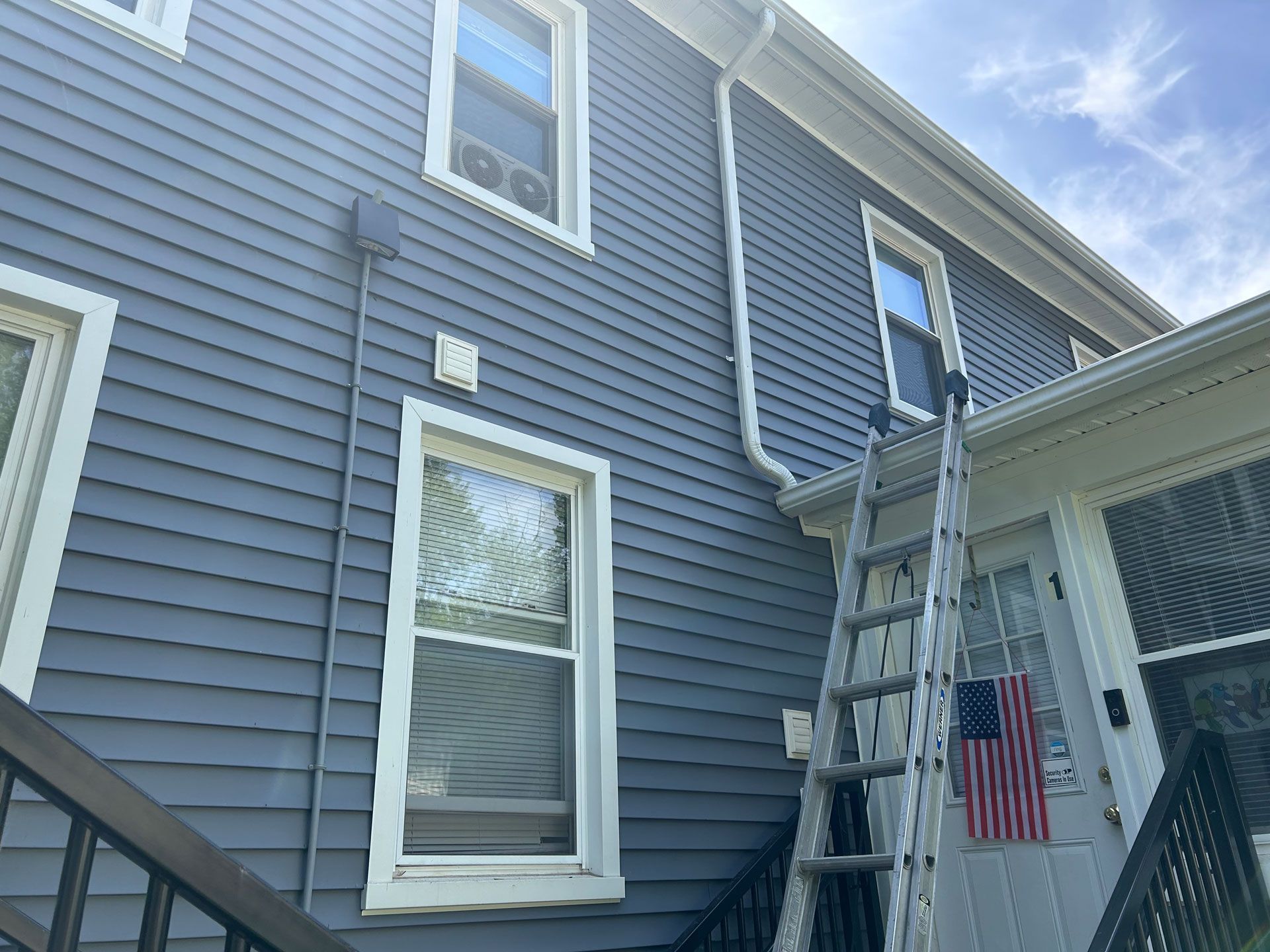
Connecticut winters create exactly the conditions that cause repeated roof-edge freezing. Snow accumulates on the roof, warmer sections begin to melt it, and that water reaches colder areas near the eaves, gutters, and downspouts where it can freeze again. Once those drainage paths begin closing up, each additional freeze and thaw cycle can add more ice.
A professional roof heat cable installation is designed to help maintain a path for meltwater through those vulnerable areas. Depending on the home, that may include sections of the lower roof edge, valleys, gutter runs, and downspouts where ice regularly forms. For homeowners researching ice dam prevention, targeted heat cable can be one part of a larger winter water-management approach.
Heat cable is not a substitute for correcting major insulation, air sealing, ventilation, roofing, or drainage problems. If we see a roofline or gutter condition that should be addressed first, we tell you. That is the same approach CT GutterPro has taken with Connecticut homeowners since 1986: assess the full system, explain what is actually happening, and recommend the work that makes sense for the property.
Why CT GutterPro Looks at the Gutter System Before Installing Heat Cable
A roof heat cable can only do so much if the gutter system underneath it is already failing. Gutters that are packed with debris, holding standing water, pulling away from the fascia, or draining into blocked downspouts create their own winter problems before the temperature even drops.
Before recommending a gutter heat cable, gutter heat tape, or roof deicing cable layout, we look at the condition and pitch of the gutters, downspout flow, roof edge, fascia, and the locations where water is actually collecting. If the system needs cleaning, repair, adjustment, or another correction first, we explain that before installation begins.
This matters because the objective is not simply to install heat wire for roof areas. It is to create a winter water-management system that works together from the roof edge through the gutter and downspout.
What Is Included in Roof & Gutter Heat Cable Installation
Every home is different, so the layout is based on the roofline and the specific areas where winter ice repeatedly develops.
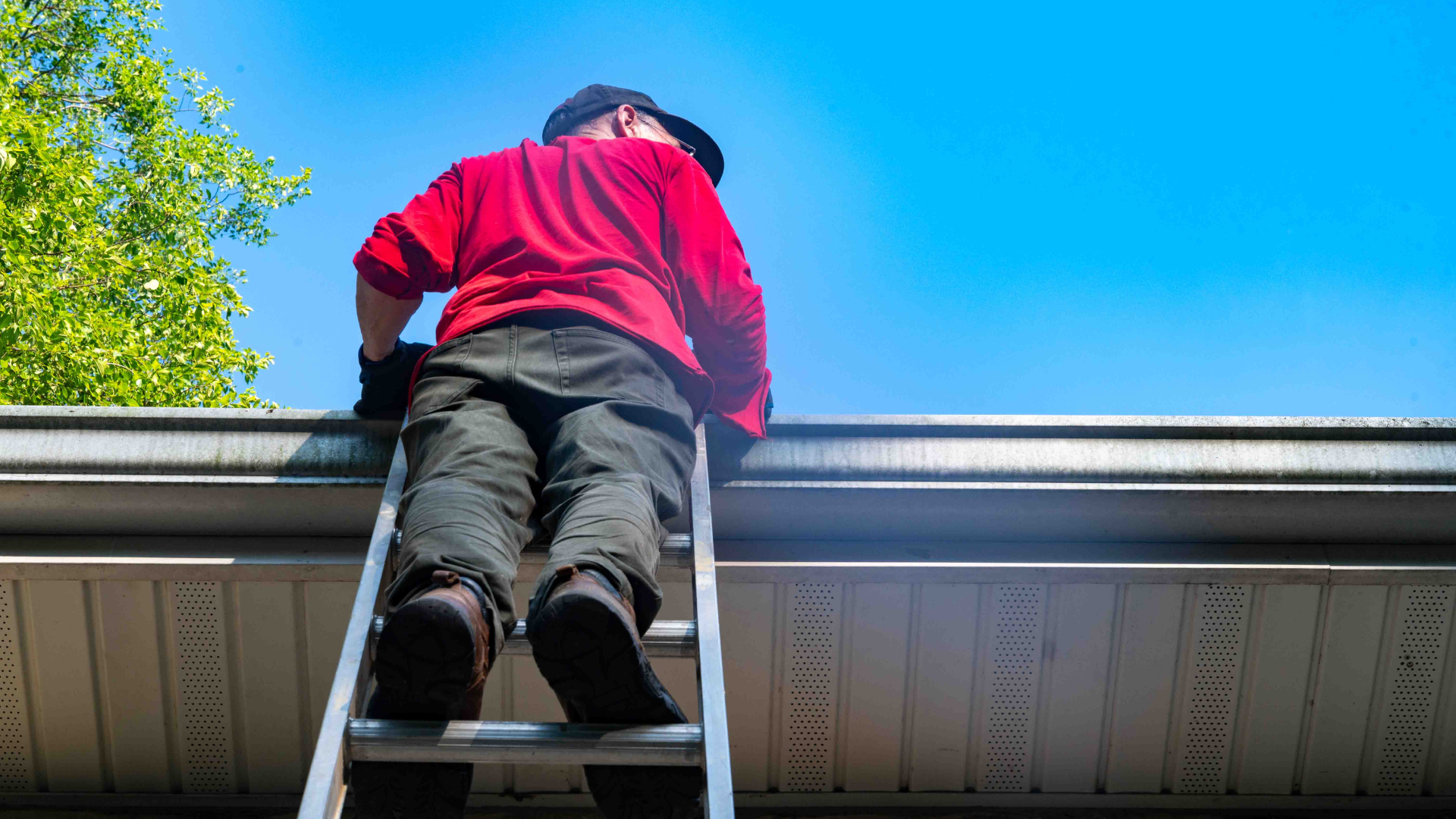
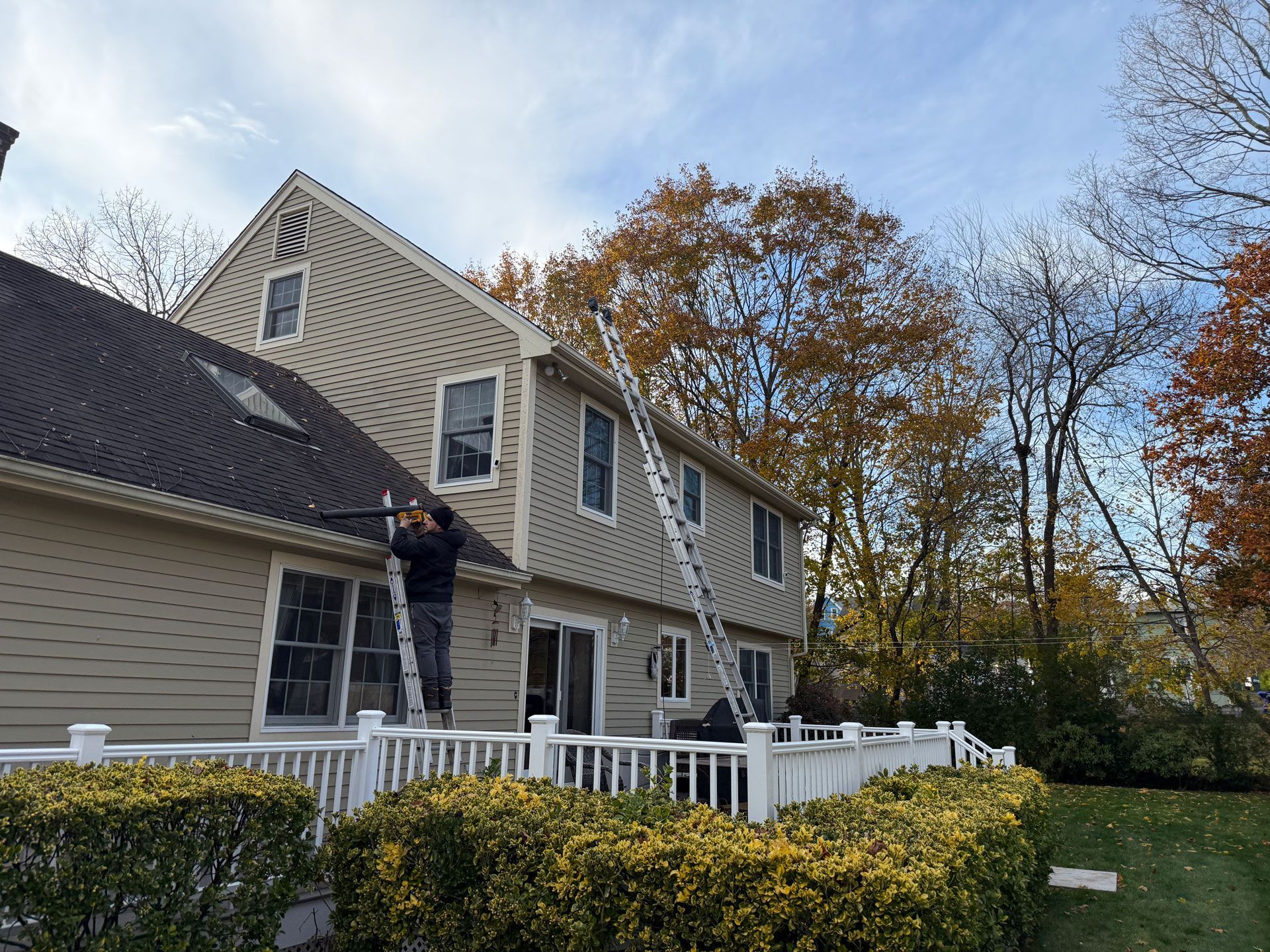
A typical assessment includes the roof edge and eave conditions, gutter runs, downspout locations, roof valleys where applicable, fascia condition, recurring freeze points, access conditions, and the path meltwater needs to follow once it reaches the gutter system.
From there, we plan the roof and gutter heat cable installation around the areas that actually need protection. Depending on the conditions, the system may include roof heating cables, roof heat tape, heat tape for gutters, or cable routed through problem gutter and downspout sections. The layout is kept focused instead of adding unnecessary coverage across parts of the roof that are not contributing to the problem.
If the gutters need cleaning or repair before the system is installed, CT GutterPro can address those conditions as part of preparing the roofline for winter service.
Where Heat Cable May Be Installed
Roof Edges and Eaves
The lower edge of the roof is one of the most common places for refreezing because it is typically colder than the roof area directly over the heated portion of the home. Roof heating cables can be laid out in targeted sections to help create drainage paths through areas where ice repeatedly develops.
Gutters
A gutter heat cable can help keep a path open inside gutter runs that regularly freeze during winter weather. Homeowners may also search for this type of system as gutter heat tape or heat tape for gutters. The purpose is the same: help meltwater continue moving instead of freezing inside the gutter channel.
Downspouts
A roof and gutter heat cable system may also need to account for downspouts. Keeping the gutter open does not solve the full problem if meltwater reaches a downspout that is frozen solid. We look at the complete drainage path instead of treating each component separately.
Roof Valleys and Recurring Ice Areas
Some homes develop concentrated winter buildup in roof valleys, transitions, or isolated sections where snowmelt repeatedly travels toward a colder roof edge. These areas require a property-specific layout rather than a one-size-fits-all roof heat tape pattern.
What Roof Heat Cable Is Designed to Do
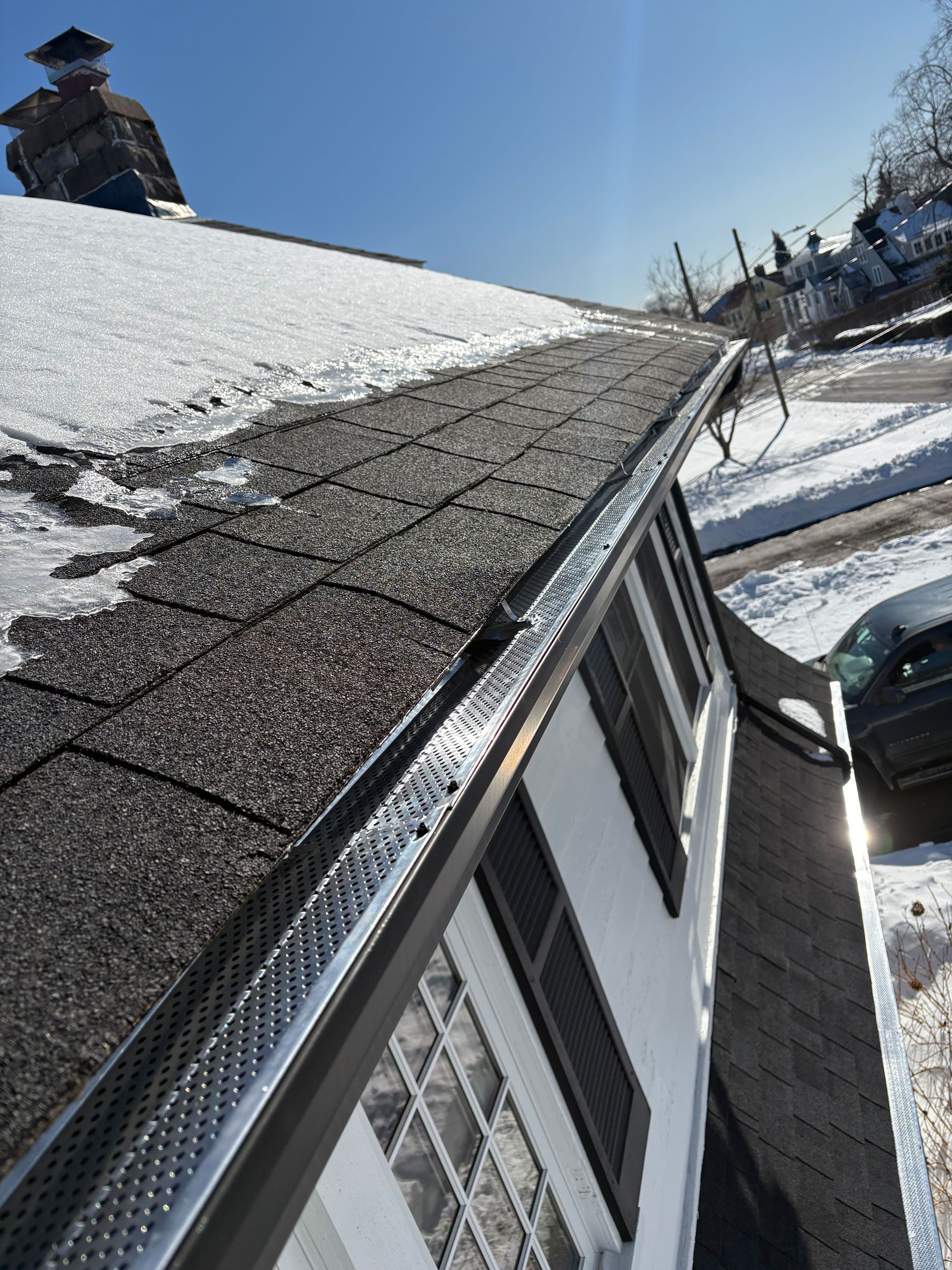
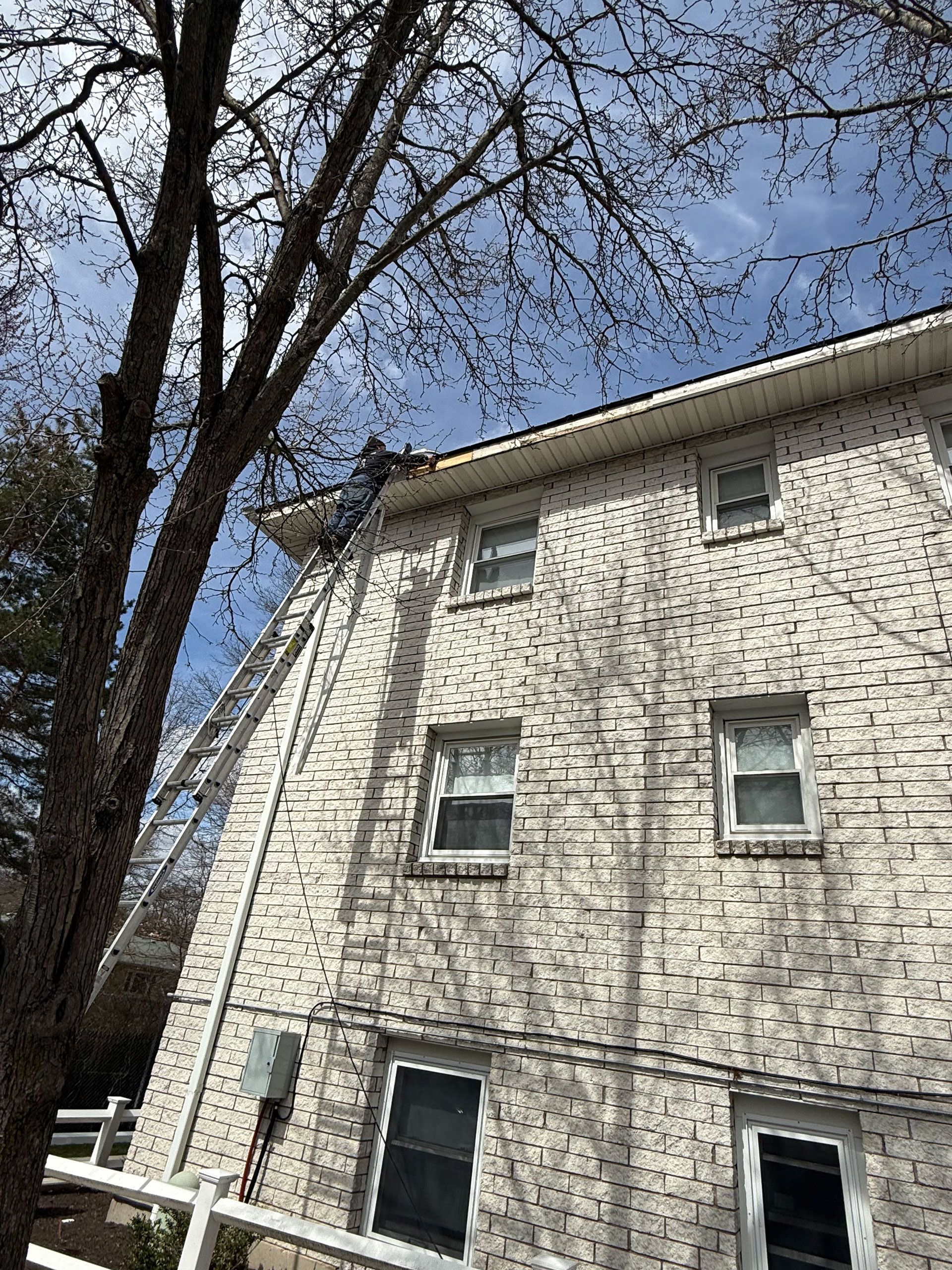
Roof heat cable is a preventative winter ice-management service. Its job is to help maintain drainage paths through roof-edge, gutter, and downspout areas that repeatedly freeze during Connecticut winters. An ice dam heat cable system is intended to help create a path for meltwater through problem areas, not to make the entire roof snow-free.
That distinction matters. The best installation is one that addresses the specific freeze points on your home without adding unnecessary cable to areas that are already draining correctly. Heat cable also does not replace corrections to larger insulation, ventilation, roofing, or drainage problems when those conditions are contributing to the issue.
If you are unsure whether the problem you are seeing calls for heat cable, gutter service, roofline repair, or another correction, we can inspect the conditions and give you a straight answer before any work is scheduled.
Before the Installation Starts: What We Check
A proper roof heat cable installation starts with the roofline, not with the cable.
We look for clogged or slow-draining gutters, improper pitch, loose sections, damaged fascia, blocked downspouts, areas where snowmelt repeatedly collects, and roofline conditions that may affect how water reaches the gutter. We also look at whether the proposed cable path can be installed cleanly and safely without creating an unnecessary amount of material on the roof.
If a gutter tune-up, cleaning, or repair would improve the system first, we explain that. If the roofline condition suggests a different contractor should address an underlying roofing, insulation, ventilation, or electrical issue before heat cable is added, we tell you that too.
You will get an honest recommendation based on what your home actually needs, not a larger installation than the property requires.

Roof Heat Cable Installers Serving the Connecticut Shoreline
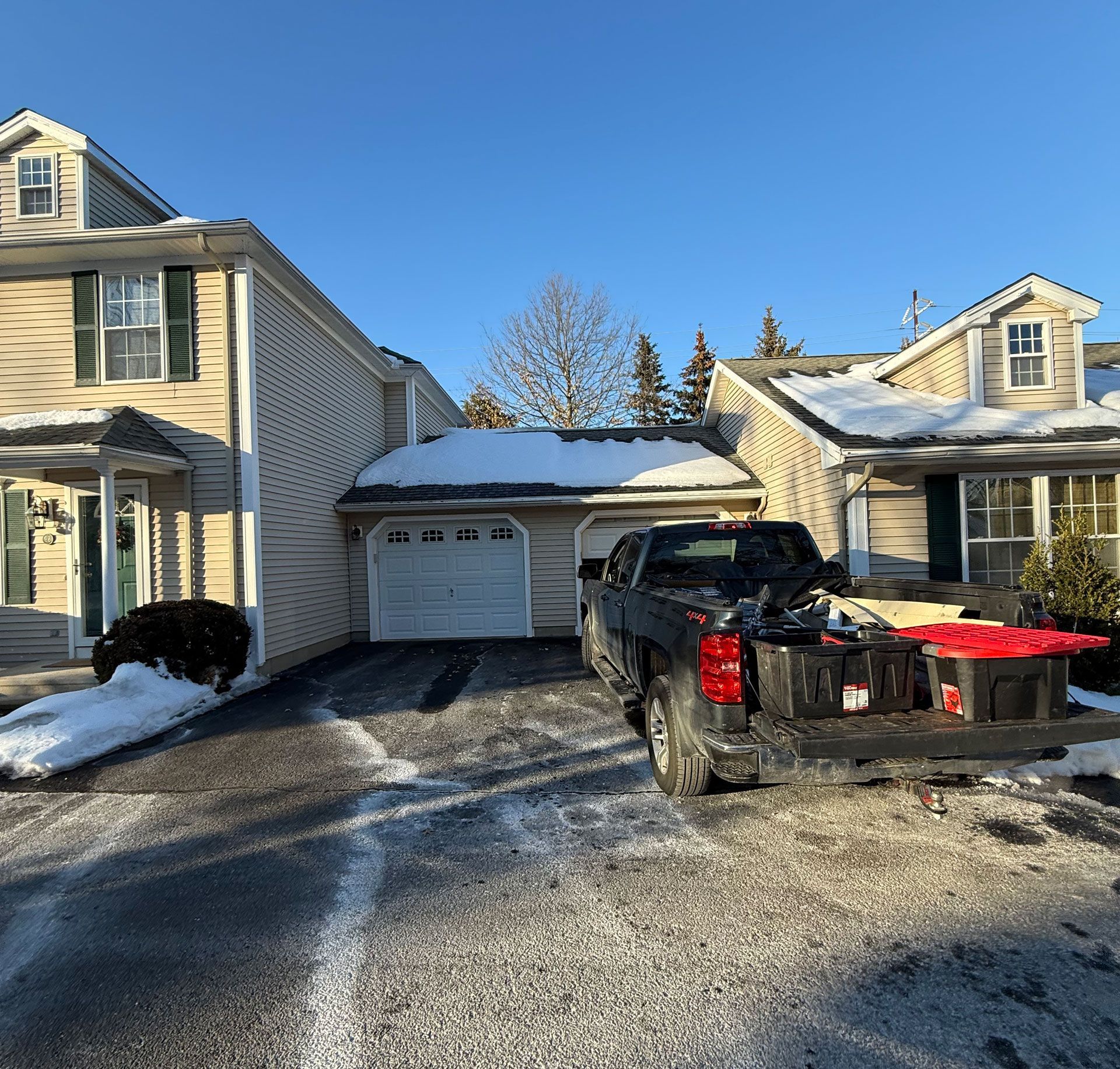
CT GutterPro is based in Branford, CT, and our roof heat cable installers serve homes across the Connecticut Shoreline. We have worked on Connecticut rooflines and gutter systems since 1986, through heavy leaf seasons, coastal storms, freeze and thaw cycles, and the winter drainage problems that come with them.
We also provide roof heat cable installation across Connecticut. Our service corridor runs from the coastline towns of Milford, New Haven, Guilford, Madison, Clinton, and Old Saybrook through the inland communities of Wallingford, North Haven, Hamden, and Middletown, with Branford at the center of our Shoreline service area.
If you have been searching for roof heat cable installers near me, gutter heat tape installation, or roof and gutter heat cable service anywhere across the CT Shoreline or our Connecticut service area, our crew can assess the full roofline and recommend a system based on the conditions at your home.
Why Connecticut Homeowners Choose CT GutterPro
Nearly Four Decades of Connecticut Roofline Experience
CT GutterPro has been serving Connecticut homeowners since 1986. We have installed more than two million feet of gutter and served more than 8,500 customers across the state.
We Look at the Whole System
A winter ice problem is not always just a cable problem. We inspect the gutter, downspout, fascia, roof edge, and drainage path so the recommendation is based on the full system instead of one visible symptom.
Honest Assessments, No Pressure
If heat cable makes sense, we explain where and why. If cleaning, repair, drainage work, or another correction should happen first, we tell you. CT GutterPro has built its reputation by giving homeowners a straight answer before any work begins.
Licensed and Insured
CT GutterPro is licensed and insured for work across Connecticut. HIC #0706616.
Frequently Asked Questions About Roof Heat Cable Installation
What does a roof heat cable do?
A roof heat cable is designed to warm targeted areas along the roof edge and drainage path enough to help meltwater keep moving during freezing conditions. It is commonly used around eaves, gutters, downspouts, valleys, and other areas where water repeatedly refreezes.
Is roof heat cable the same as gutter heat tape?
Homeowners often use the terms roof heat cable, gutter heat cable, roof heat tape, and gutter heat tape interchangeably. The exact product and layout can vary, but all of these terms generally describe an electrically heated cable system used to manage snowmelt and winter ice around the roofline and gutter system.
Is heat cable installation the same as ice dam removal?
No. Ice dam removal refers to removing an ice dam that has already formed. Roof heat cable installation is a preventative service designed to help maintain drainage paths through areas that repeatedly freeze. The two terms may appear together during winter-related searches, but they describe different services.
Will heat cable completely prevent ice dams?
No system should be presented as a guarantee that ice will never form. Heat cable is used to help maintain drainage channels through areas that are prone to freezing. If the home has major heat-loss, insulation, ventilation, roofing, or drainage problems, those conditions may also need to be addressed.
Where should roof heating cables be installed?
The correct layout depends on where the home repeatedly develops ice. Common locations include lower roof edges, eaves, gutter runs, downspouts, and roof valleys. CT GutterPro evaluates the roofline and drainage path before recommending placement.
Can heat cable be installed in existing gutters?
In many cases, yes, but the gutter system should be inspected first. Gutters that are clogged, sagging, improperly pitched, loose, or attached to damaged fascia may need cleaning or repair before a gutter heat cable system is installed.
Do my gutters need to be cleaned before heat cable installation?
If debris is present, the gutters should be cleaned before installation. Leaves, pine needles, shingle granules, and other buildup can restrict drainage and create additional freeze points. CT GutterPro can inspect the system and let you know whether cleaning is needed first.
How do I know if my home is a good candidate for roof heat cable installation?
Homes with recurring ice buildup in the same roof-edge, gutter, downspout, or valley locations may benefit from heat cable. The best way to determine whether it makes sense is to inspect where the freezing occurs and whether the underlying gutter and drainage system is functioning correctly.
Do you provide free estimates for heat cable installation?
Yes. CT GutterPro provides free on-site estimates across our Connecticut service area. We inspect the roofline, gutter system, and recurring winter problem areas, then give you a clear recommendation and pricing before any work begins.
When should roof and gutter heat cables be turned on before winter weather arrives?
Roof and gutter heat cables should generally be ready to operate before snow begins accumulating or meltwater starts refreezing at the roof edge.
For a manually controlled system, waiting until a thick ice dam has already formed makes the cable’s job much harder. Automatic systems with temperature and moisture controls can activate when conditions are right for snow and ice.
For Branford homes, CT GutterPro recommends checking the system before the first winter storm instead of discovering a problem during one. The goal is to maintain a drainage path at the eaves, gutters, and downspouts while snow is melting, not to melt all the snow off the roof.
Do roof heat cables need to run all winter, or only during certain weather conditions?
No. Roof heat cables generally do not need to run continuously all winter. They are most useful when snow, ice, and near-freezing temperatures create conditions for ice dams.
Running a manual system during dry, mild weather wastes electricity without providing much benefit. Systems with automatic temperature and moisture controls can operate only when conditions call for de-icing.
At CT GutterPro, we look at where ice actually forms on a Branford roof and how the meltwater needs to travel. A properly planned system is intended to create reliable drainage during problem weather rather than heat the entire roof throughout the season.
Can heat cable be installed through gutters and downspouts to keep melting snow draining properly?
Yes. Roof de-icing cable can be routed through gutters and downspouts when the cable is specifically rated for roof and gutter applications.
Heating only the roof edge can leave meltwater with nowhere to go if the gutter or downspout remains frozen. Extending the system through the drainage path helps keep a channel open so melted snow can move away instead of refreezing at the roofline.
On Branford homes with recurring ice buildup, CT GutterPro looks at the roof edge, gutter runs, valleys, outlets, and downspouts together. The cable layout should follow the actual meltwater path rather than treating the roof and gutter as separate problems.
Should gutters and downspouts be cleaned before a roof heat cable system is used for the winter?
Yes. Gutters and downspouts should be clear before a roof and gutter heat cable system is relied on for winter drainage.
Leaves, pine needles, roof grit, and other debris can restrict the same drainage path the cable is trying to keep open. A warm gutter that is still packed with debris can continue to overflow or hold water that later refreezes.
CT GutterPro recommends preparing Branford gutter systems before winter by clearing the gutters, checking downspout flow, and inspecting the roof edge. Heat cable works best as part of a functioning drainage system, not as a substitute for fall gutter maintenance.
Why do ice dams keep forming on shaded or north-facing sections of a roof?
Ice dams often form more repeatedly on shaded or north-facing roof sections because those areas stay colder and receive less direct sunlight during winter.
Heat escaping from the home can melt snow higher on the roof. When that meltwater reaches a colder shaded eave, it can refreeze. As the cycle repeats, ice builds at the roof edge and can prevent additional meltwater from draining.
On Madison homes, CT GutterPro looks at where the ice forms rather than assuming the entire roof behaves the same way. Tree shade, roof orientation, valleys, insulation conditions, and gutter drainage can all create colder sections that need more targeted ice-dam protection.
Can roof heat cable help prevent meltwater from refreezing around roof valleys and eaves?
Yes. Properly installed roof heat cable can help maintain drainage channels through areas where meltwater commonly refreezes, including roof valleys and eaves.
Valleys concentrate water from multiple roof surfaces into a smaller area. If that water reaches a cold eave and freezes, ice can build quickly and begin backing water toward the shingles.
For Madison homes with recurring ice in the same valleys or roof edges, CT GutterPro can plan heat cable around the actual problem areas. The goal is not to create a bare roof. It is to give meltwater a continuous route from the warmer roof surface into the gutter and downspout.
Do roof heating cables use a lot of electricity during the winter?
Electricity use depends on how much cable is installed, its wattage per foot, how long it operates, and whether the system uses automatic controls.
As an example, a 100-foot cable rated at 5 watts per foot would draw about 500 watts while operating. A longer system or higher-output cable would use more power, while automatic or self-regulating systems can reduce unnecessary operation when full heat output is not needed.
CT GutterPro considers the amount of roof edge, gutter, valley, and downspout that actually needs protection on a Madison home. Designing the system around known ice-dam areas can be more practical than heating sections of the roof that do not have a winter drainage problem.
How can I tell if an older roof heat cable system is still working before the first snow?
An older heat cable system should be checked before winter for visible damage, loose connections, failed controls, and whether the cable actually energizes as designed.
Warning signs include cracked or brittle cable jackets, sections pulling away from the roof, damaged clips, exposed wiring, a tripped protective circuit, or an automatic controller that no longer activates. A cable can look intact from the ground and still have an electrical failure somewhere along the run.
Before the first Madison snowfall, CT GutterPro recommends having an older system inspected if its condition or performance is uncertain. Do not energize visibly damaged heating cable. A working system should be confirmed before snow and ice make the roof difficult or unsafe to access.
Get a Free Roof & Gutter Heat Cable Installation Estimate Across the Connecticut Shoreline
Get a Free Roof & Gutter Heat Cable Installation Estimate Across the Connecticut Shoreline
If your home develops recurring winter ice along the roof edge, gutters, or downspouts anywhere across Connecticut or the CT Shoreline, CT GutterPro can assess the full system and determine whether roof heat cable installation is the right solution. We will inspect the problem areas, check the condition of the gutter and drainage system, and give you a clear recommendation with no pressure and no hidden fees.
Call
(475) 286-8063 or request your free on-site estimate today.