

Micro-Mesh Gutter Guards vs Perforated Gutter Guards: What CT GutterPro Installs and Why

Every gutter system, regardless of construction method, has to manage the expansion and contraction that comes from temperature change. Metal expands when heated and contracts when cooled, and Connecticut's climate produces significant temperature swings across every season: hot, humid summer days followed by cool nights, and winter conditions that cycle through freezing and thawing repeatedly.
There is no shortage of gutter guard products on the market, and most of them come with claims that suggest they will eliminate gutter maintenance entirely and last a lifetime. After nearly four decades of gutter guard installation across the Connecticut Shoreline, CT GutterPro has a more specific and more honest answer to the question of which gutter guard works best: it depends on the trees on your property.
That is not a hedge. It is the most accurate thing anyone with real installation experience can tell a Connecticut homeowner. A gutter guard that performs well on a home surrounded by large maple and oak trees will underperform on a property with white pine or Eastern hemlock on the lot line. The debris type, not the brand name or the price point, is what determines which guard system belongs on a given home.
CT GutterPro has installed over 700,000 feet of gutter guards across Branford, Madison, Guilford, Old Saybrook, Milford, and the surrounding communities since 1986. This is the comparison the team gives homeowners before any installation decision is made.
Why the Tree Canopy Determines Everything
A gutter guard is not a universal product. It is a filtration system, and filtration systems are only as effective as their opening size relative to what they are filtering.
The Connecticut Shoreline has one of the most varied residential canopy profiles in the state. Properties in Branford and Madison inland neighborhoods sit under dense oak, maple, hickory, and occasionally pine. Shoreline and beach properties have lighter canopy because wind exposure limits growth. Properties in Guilford and Old Saybrook near the Connecticut River and its tributaries often have a mix of deciduous hardwood and Eastern red cedar. And properties throughout the Shoreline corridor that were developed in the 1960s and 1970s frequently have mature white pines planted as windbreaks along property lines, trees that have grown to 60 or 80 feet and produce continuous needle fall across an extended season.
Each tree type produces a different debris profile, and each debris profile has a different relationship to gutter guard opening size.
| Tree type | Debris produced | Problem for perforated guards | Problem for micro-mesh |
|---|---|---|---|
| Oak | Large flat leaves, catkins (tassels), small acorns | Leaves mat over openings during heavy fall; catkins pass through standard perforations | Catkins and pollen can temporarily reduce flow if not rinsed after spring drop |
| Maple | Large flat leaves, helicopter seeds | Seeds can bridge perforations and accumulate; leaves mat in heavy fall | Seeds sit on mesh surface and blow or wash off; minimal penetration concern |
| White pine, Eastern hemlock | Continuous fine needle drop from late spring through winter | Needles pass directly through standard perforations and accumulate inside gutter | Mesh openings at 50 to 275 microns are too small for pine needles to penetrate |
| Eastern red cedar | Small berry-like cones, fine foliage | Fine material passes through most perforations | Blocked effectively by micro-mesh |
| Hickory | Large leaves, husks | Leaves mat over openings; husks can bridge perforations | Cleared effectively; mesh handles mixed debris well |
The NOAA Connecticut State Climate Summary documents Connecticut's annual precipitation at 47.3 inches distributed across all twelve months. That continuous rainfall is what determines how well any gutter guard system actually performs. A guard that handles debris correctly under normal conditions but allows fine material to accumulate during the state's two-plus annual extreme precipitation events, where two or more inches fall in a single day, creates exactly the blockage and overflow conditions it was supposed to prevent.
What Micro-Mesh Gutter Guards Actually Are
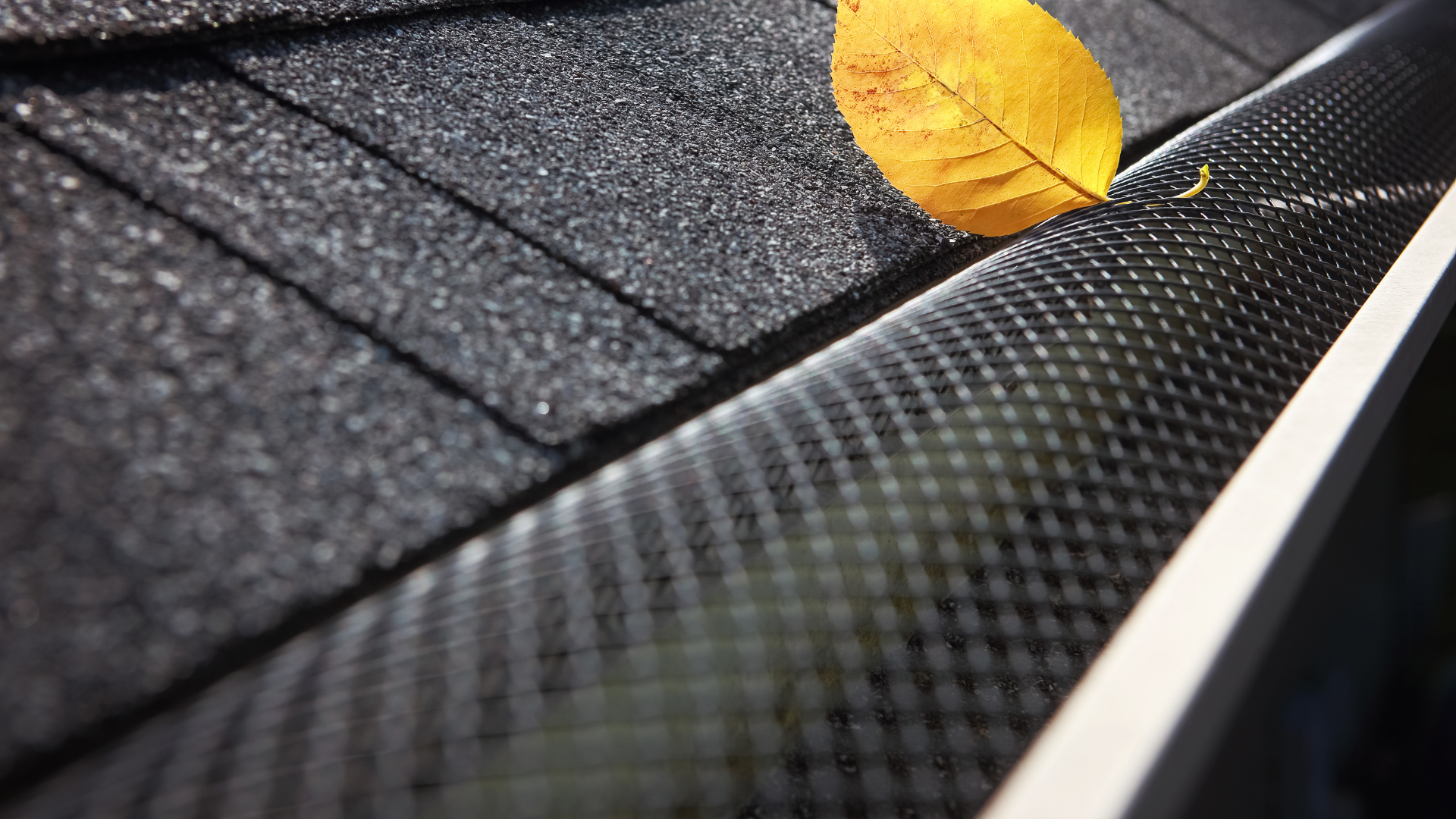
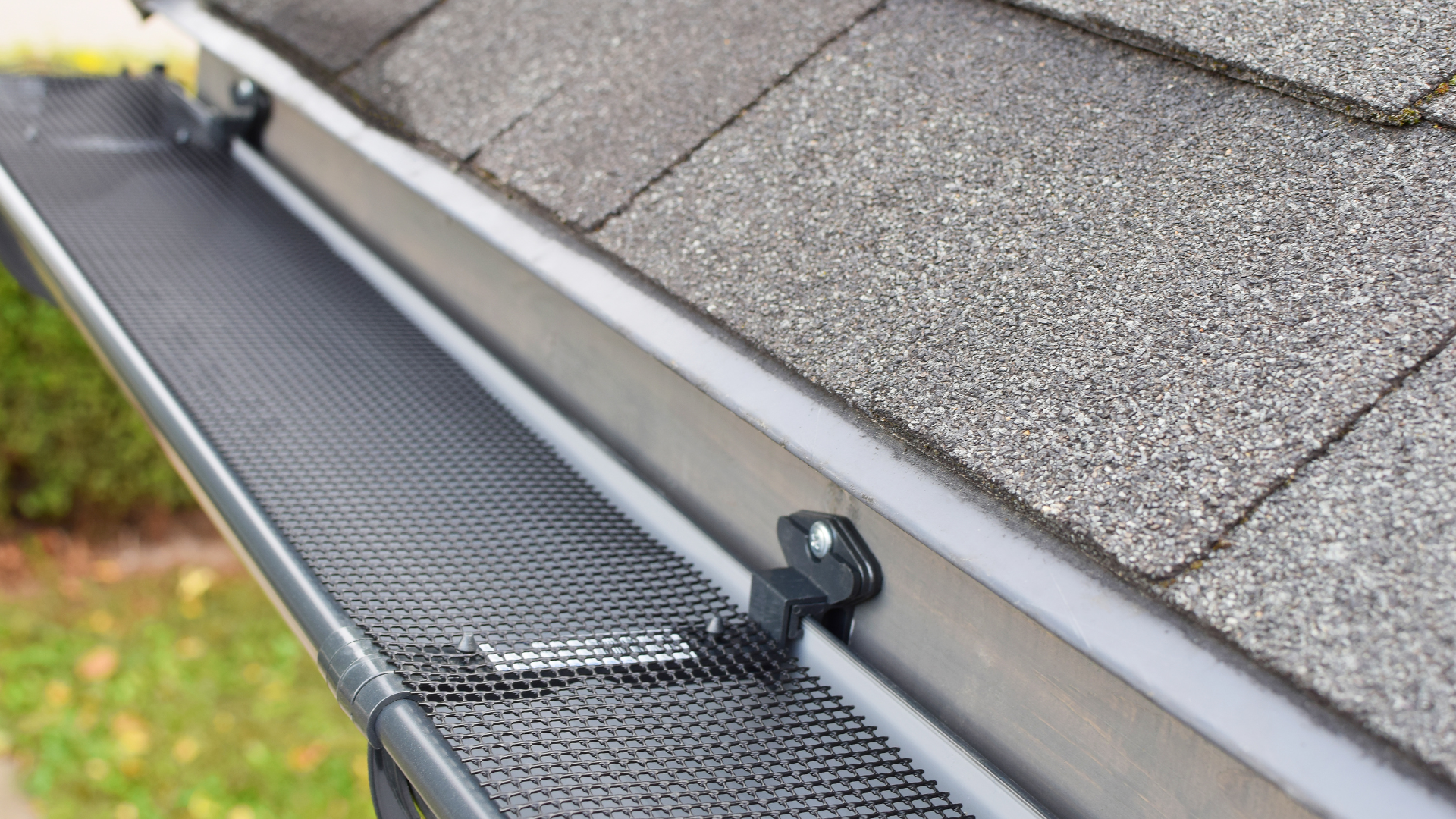
Micro-mesh is the most specific and most consistently accurate term for the category of gutter guard that uses a fine stainless steel or aluminum mesh with openings measured in microns rather than fractions of an inch.
Standard perforated guards have openings typically ranging from one-eighth to one-half inch. That is 3 to 12 millimeters, or 3,000 to 12,000 microns. Micro-mesh guards have openings in the range of 50 to 275 microns, which is less than a single human hair in width at the finer end of the range. The practical difference is that micro-mesh blocks material that perforated guards cannot.
CT GutterPro installs micro-mesh systems with stainless steel mesh panels set in an aluminum frame that attaches to the gutter and roof edge. The mesh sits at a slight pitch that allows water to adhere to the surface through capillary action and flow into the gutter while debris sits on top and either blows off or dries and is rinsed clear in subsequent rain events.
The performance difference between micro-mesh and perforated guards is most pronounced in two specific debris categories. Pine needles, which are the narrowest common tree debris in Connecticut and typically measure 50 to 150 microns in width at the point where they would enter a gutter guard opening, pass through standard perforations but cannot penetrate micro-mesh openings. Shingle grit, the granule material that washes off asphalt shingles during rain events, similarly passes through perforations but is blocked by micro-mesh. On an aging roof, shingle grit accumulation inside the gutter is a meaningful accelerant of gutter corrosion and downspout blockage.
The tradeoff is upfront cost and the potential for a condition called sheeting during extreme rainfall events. On a properly installed micro-mesh system set at the correct pitch relative to the roof angle and gutter profile, rainfall adheres to the mesh surface and flows into the gutter at a rate sufficient for the volumes Connecticut produces. On a system installed at an incorrect pitch or on a gutter profile that creates a flat or concave guard surface, heavy rainfall can sheet over the front edge of the guard rather than flowing through the mesh. This is an installation problem, not a product problem, but it is the most common performance complaint associated with micro-mesh systems and it is entirely preventable with proper specification and installation.
CT GutterPro's gutter guard installation service evaluates roof pitch, gutter profile, and guard angle as part of the pre-installation assessment on every project across the Shoreline.
What Perforated Aluminum Gutter Guards Actually Are
Perforated aluminum guards are solid aluminum panels with punched or drilled openings distributed across the surface. They sit over the gutter opening and are secured to the gutter or roof edge depending on the specific product. Water flows through the perforations while debris is intended to sit on the surface and blow or slide off.
For properties dominated by large-leaf hardwood trees, specifically oaks and maples, perforated aluminum guards deliver meaningful performance at a significantly lower price point than micro-mesh. Large flat leaves do not pass through perforations. They rest on the guard surface, dry between rain events, and are moved by wind or washed clear. During Connecticut's leaf fall season, a perforated guard on an oak-heavy property will reduce gutter cleaning frequency substantially compared to an unguarded gutter.
The limitation is debris size. Anything narrower than the perforation opening passes through. On Connecticut Shoreline properties where even one significant pine or hemlock is within debris range of the gutter system, perforated guards do not prevent the accumulation of needle material inside the gutter. They reduce it compared to an unguarded system but they do not eliminate it. Annual cleaning remains necessary to clear accumulated fine material, which means the cost savings on cleaning frequency are partial rather than complete.
Perforated aluminum guards also require an honest conversation about the term maintenance-free. No gutter guard type eliminates the need for periodic inspection entirely. Perforated guards in particular benefit from occasional surface inspection after heavy debris events to confirm that material is clearing from the surface rather than matting over the openings under wet conditions. CT GutterPro's gutter tune-up service covers guard surface inspection alongside the full system assessment on properties where guards are installed.
The CT GutterPro Decision Framework: Which Guard Belongs on Your Home
After 700,000 feet of guard installations across the Connecticut Shoreline, CT GutterPro uses a straightforward property assessment to match the right guard type to each home.
The assessment starts with the debris question, not the budget question. Budget matters and it is part of the conversation, but installing the less expensive option on a property where it will underperform produces the worst outcome: a guard investment that does not reduce cleaning frequency as expected, followed by either ongoing cleaning costs or early replacement with the correct product.
| Property condition | CT GutterPro recommendation |
|---|---|
| Oak and maple dominant canopy, no conifers within debris range | Perforated aluminum guards are a practical and cost-effective choice. Annual cleaning may still be advisable but frequency is reduced significantly. |
| White pine, Eastern hemlock, or red cedar present on the property | Micro-mesh is the appropriate specification. Pine needles will pass through perforated guards and accumulate inside the gutter. |
| Mixed canopy with hardwood dominant and occasional conifer debris | Micro-mesh is the recommended specification. The investment in micro-mesh on a mixed debris property outperforms perforated guards over a three to five year period when cleaning frequency is factored in. |
| Shoreline or beach property with limited canopy | Either product performs well in reduced debris environments. Perforated aluminum is a practical choice. Micro-mesh is appropriate if budget allows and the homeowner wants the longest-interval cleaning schedule. |
| Complex multi-plane roofline with dormers or additions | Micro-mesh is recommended regardless of tree type because complex rooflines create debris concentration points at valleys and transitions that benefit from finer filtration. |
| Aging asphalt roof producing shingle grit | Micro-mesh is recommended because perforated guards do not block shingle grit, which accumulates inside the gutter and accelerates corrosion of the gutter floor. |
What Neither Guard Type Will Do
The most consistent source of gutter guard disappointment on Connecticut Shoreline properties is the expectation that any guard product will eliminate gutter maintenance entirely. CT GutterPro gives every customer the same honest answer before any installation: no guard type eliminates the need for periodic inspection, and the claims of any product that says otherwise should be evaluated carefully.
Micro-mesh significantly reduces cleaning frequency on the right property. On a Branford or Madison home with heavy oak and maple canopy and no conifers, a properly installed micro-mesh system may allow a homeowner to move from twice-annual cleaning to every two or three years with periodic surface inspection in between. On a property with significant pine debris, micro-mesh eliminates needle infiltration but surface accumulation on the mesh still benefits from an annual rinse or inspection.
Perforated aluminum guards on the right property, large-leaf hardwood dominant with no conifers, reduce cleaning frequency meaningfully and are a practical long-term investment for the homeowner who plans to have CT GutterPro out annually anyway and wants to reduce the volume of debris inside the gutter between visits.
What both systems do reliably when properly installed and matched to the property is protect the downspouts from the sudden, complete blockage that unguarded gutters experience during heavy leaf fall events. That protection alone prevents the overflow and foundation saturation events that are the most consequential consequence of gutter failure on Connecticut Shoreline properties.
For the related piece on how gutter overflow connects to foundation drainage problems, the CT GutterPro article on how Connecticut's heavy rainfall and freeze-thaw cycles make foundation drainage a year-round priority covers the downstream consequences of clogged gutters in detail.
If you want an honest assessment of which gutter guard belongs on your Branford, Madison, Guilford, Old Saybrook, or Milford property based on your specific tree canopy, roof profile, and maintenance goals, CT GutterPro provides free on-site estimates with written pricing and no sales pressure.
Gutter Guard Installation | Gutter Cleaning | Gutter Tune-Up | Gutter Installation | Drainage Solutions | Contact CT GutterPro