
Downspout Extension vs French Drain: Which Drainage Solution Does Your Connecticut Home Need

Every gutter system, regardless of construction method, has to manage the expansion and contraction that comes from temperature change. Metal expands when heated and contracts when cooled, and Connecticut's climate produces significant temperature swings across every season: hot, humid summer days followed by cool nights, and winter conditions that cycle through freezing and thawing repeatedly.
When water pools near the foundation after a rainstorm in Branford, Madison, Guilford, or Old Saybrook, the homeowner wants to know one thing: how do I move it away from the house? The two most common answers are a downspout extension and a French drain, and both redirect water from the foundation. But they solve different problems, they work on different water sources, and installing the wrong one for the situation either undersolves the problem or overspends the budget.
Getting this right matters especially now. Late summer on the Connecticut Shoreline is the calm before the fall storm season, when nor'easters and hurricane remnants drive the heavy, sustained rainfall that exposes every drainage weakness a property has. A foundation drainage problem identified in August is far easier and less costly to address than one discovered in November with water already in the basement.
CT GutterPro has served the Connecticut Shoreline since 1986 and has installed drainage solutions alongside gutter systems across Branford, Madison, Guilford, Old Saybrook, and Milford for nearly four decades. This is the comparison the team walks homeowners through before any drainage recommendation is made.
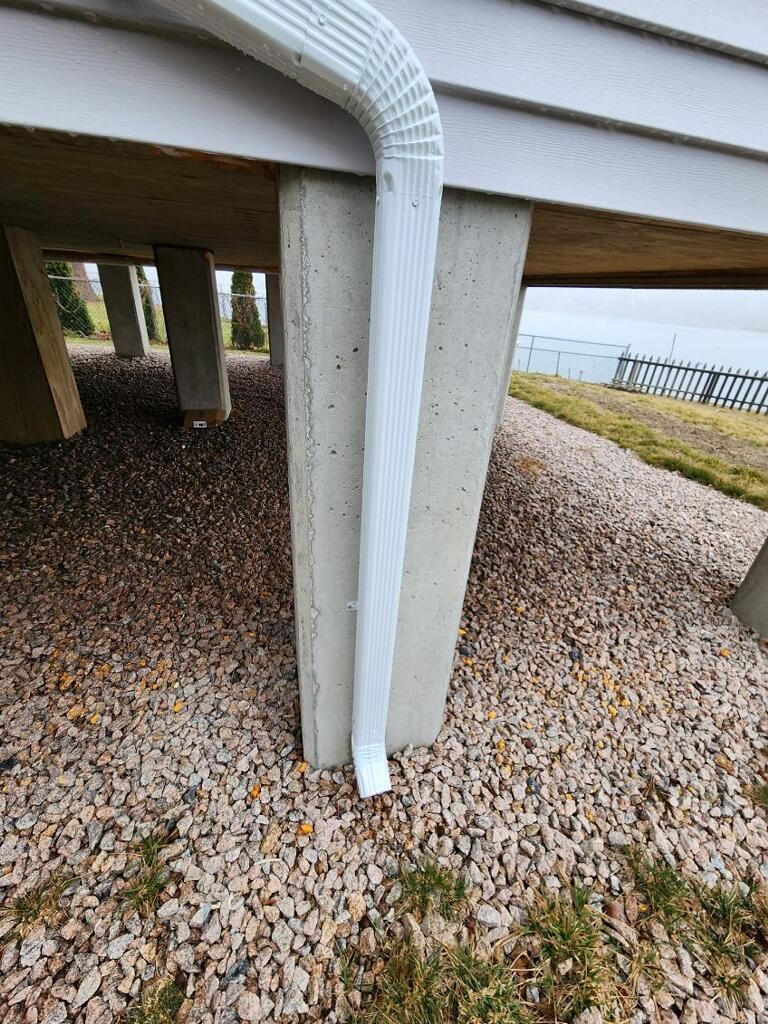
The Distinction That Determines Everything
The most important thing to understand about this comparison is that downspout extensions and French drains address different water sources. Confusing the two is how homeowners end up with the right product installed for the wrong problem.
A downspout extension handles roof water.
It connects to the bottom of the downspout and carries the concentrated flow of roof runoff further from the foundation before releasing it. The water it manages originates on the roof, is collected by the gutter, travels down the downspout, and needs to be discharged far enough from the house that it does not saturate the soil against the foundation wall.
A French drain handles ground water.
It is a perforated pipe set in a gravel-filled trench that intercepts water already in the soil and redirects it to a discharge point. The water it manages is not coming from the roof. It is coming through the ground, either from a high water table, lateral flow from uphill terrain, or soil that has become saturated from any source.
When a homeowner sees water near the foundation and assumes one solution will fix it, the question that determines whether the fix works is: where is this water actually coming from?
- If it is concentrated at the downspout discharge points, the gutter system is delivering roof water right to the foundation, and extensions solve it
- If water appears along the foundation between downspouts or in areas with no roof drainage above, it is ground water, and a French drain is the answer
- If both conditions are present, both solutions may be needed
What a Downspout Extension Does and When It Is the Right Answer
A downspout extension is the simplest, most cost-effective drainage fix available, and when roof water is the problem, it is often all a CT Shoreline home needs.
Standard downspouts on most Connecticut homes discharge right at the foundation line. On a property receiving 47 inches of rain a year with no dry season, that concentrated discharge point saturates the soil next to the foundation with every rain event. An extension carries that water 4 to 10 feet away from the house, or further through a buried pipe, before releasing it where it can absorb without pressurizing the foundation.
When extensions are the right fix:
- Water pools specifically at downspout discharge points
- The foundation stays dry between discharge locations
- Soil erosion and splash damage appear at the downspout base
- No water appears along foundation walls away from downspouts
Extensions come in several forms, each suited to a different property layout:
- Above-ground splash blocks or flexible extensions route water across the surface away from the house. Simple, inexpensive, and effective where grade allows.
- Buried rigid pipe carries water underground to a discharge point away from the foundation. Cleaner appearance, no tripping hazard, and the water exits well away from the structure.
- Pop-up emitters discharge buried pipe at a low point in the yard, releasing water only when it flows and staying flush with the lawn otherwise.
CT GutterPro's drainage solutions service includes downspout extension and buried discharge systems across the Shoreline, and the recommendation on which type fits starts with the property's grade, the soil conditions, and where the water needs to go.
What a French Drain Does and When It Is the Right Answer
A French drain addresses a fundamentally different problem, and understanding when it is necessary prevents both underspending on a problem that needs it and overspending on one that does not.
A French drain is a perforated pipe set in a trench filled with drainage stone and wrapped in filter fabric. It intercepts water moving through the soil, either laterally from uphill terrain or upward from a rising water table, and redirects it to a discharge point before it reaches the foundation. The U.S. Environmental Protection Agency advises homeowners to ensure that ground slopes away from the foundation so water does not collect there, and a French drain is the professional-grade solution for properties where grading alone cannot control the subsurface water reaching the foundation wall.
When a French drain is the right fix:
- Water appears along the foundation between downspouts
- Basement moisture persists even after downspout drainage is corrected
- The lot slopes toward the house from neighboring terrain
- The soil near the foundation stays saturated for days after rain
French drains on Connecticut Shoreline properties need to account for frost depth, which in the Branford and Madison area runs 36 to 42 inches. A French drain installed too shallow is vulnerable to frost heave that shifts the pipe and reduces its effectiveness, which is why professional installation matters on Shoreline properties specifically.
The Head-to-Head Comparison
| Factor | Downspout extension | French drain |
|---|---|---|
| Water source addressed | Roof runoff via the gutter system | Groundwater in the soil |
| Typical cost | Lower, simpler installation | Higher, excavation and materials |
| Installation time | Hours | One to two days |
| Best for | Concentrated water at downspout discharge | Broad foundation saturation or subsurface flow |
| Frost-depth consideration | Minimal | Must be installed below 36 to 42 inches on the CT Shoreline |
| When it is overkill | When the problem is groundwater, not roof water | When the problem is simply a downspout dumping at the foundation |
The practical takeaway: start by determining whether the water is coming from the roof drainage or from the ground. That single question usually points to the right solution before anything else is discussed.
When a CT Shoreline Home Needs Both
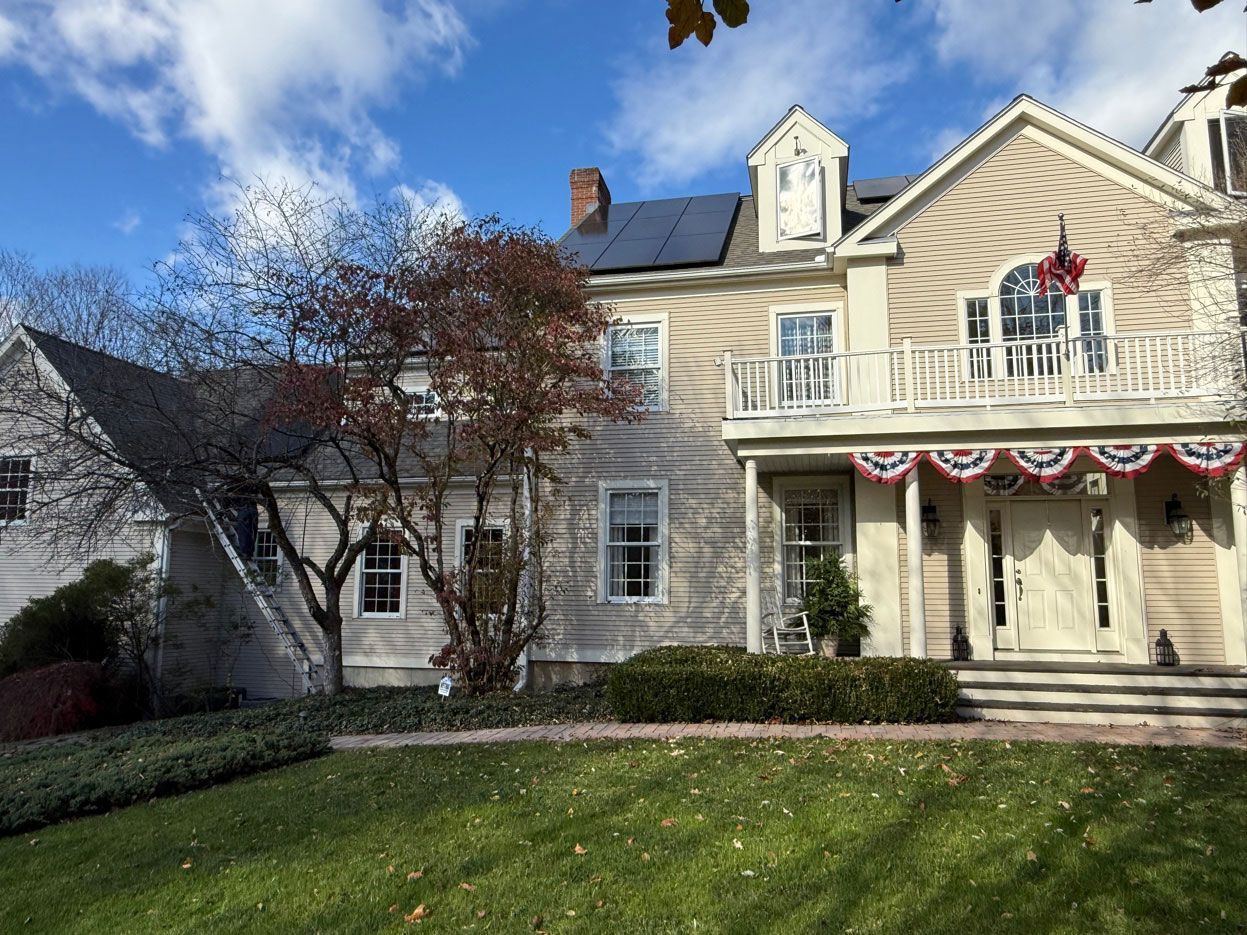
Some Connecticut Shoreline properties have both problems simultaneously, and addressing only one leaves the other still working against the foundation.
This is common on properties with two characteristics: an active gutter system that is dumping concentrated roof water right at the foundation, combined with a lot that receives subsurface water from uphill or sits in a high water table zone. A home on a sloped lot in Guilford or Madison that also has four downspouts discharging at the foundation may need extensions to redirect the roof water and a French drain to intercept the ground water, because each is arriving from a different source and each needs its own solution.
The pattern CT GutterPro sees most often:
- A homeowner installs extensions and the pooling at the downspouts stops
- But basement moisture persists between the downspout locations
- That remaining moisture is ground water the extensions were never designed to handle
- A French drain along the affected foundation wall addresses the remaining source
Starting with extensions is often the right first step because they are far less expensive, and on many properties they solve the entire problem. If moisture persists after the roof water is redirected, the remaining issue is ground water, and the French drain conversation begins from a clearer diagnostic position.
Why Timing This Before Fall Matters on the CT Shoreline
Connecticut's fall storm season, from roughly October through the winter nor'easters, is when foundation drainage is tested hardest. Every weakness the system has is exposed by sustained, heavy rainfall that can deliver two or more inches in a single event.
The
NOAA Connecticut State Climate Summary documents the state averaging 47.3 inches of precipitation annually with no dry season, and extreme rainfall events becoming more frequent in recent decades. Addressing a drainage problem in the August calm, before the fall storms arrive, is the practical window that lets the work happen on a planned schedule rather than an emergency one.
| When you address it | What that looks like |
|---|---|
| Late summer, before fall storms | Planned installation, dry conditions, best results |
| During fall storm season | Reactive, wet conditions, potentially emergency |
| After the damage is done | Foundation repair, mold remediation, far higher cost |
A drainage solution installed in August protects the foundation through the entire fall and winter. One deferred to spring means the foundation absorbs another full season of the conditions that created the problem.
How CT GutterPro Approaches a Drainage Assessment
Because the right solution depends entirely on where the water is coming from, every CT GutterPro drainage project starts with an on-site assessment before any recommendation.
The assessment identifies which water source, roof or ground or both, is reaching the foundation, where the discharge points are, what the grade and soil conditions look like, and what solution matches the actual problem. The team does not default to the more expensive option. If extensions solve it, extensions are what gets recommended. If a French drain is warranted, the scope and pricing reflect the actual conditions rather than a generic estimate.
For the broader picture of how gutter performance connects to foundation drainage, the CT GutterPro article on what happens when storm-damaged gutters go unrepaired covers the consequences of a gutter system that is not managing roof water correctly. For properties where the French drain question involves intercepting lateral groundwater from uphill, the related Drainage Pro of CT article on curtain drain versus French drain goes deeper on that distinction.
CT GutterPro's drainage solutions service covers downspout extensions, buried discharge systems, and French drain installation across Branford, Madison, Guilford, Old Saybrook, and Milford. Free on-site assessments are available with written pricing before any work begins.
If water is pooling near your foundation after rain in Branford, Madison, Guilford, Old Saybrook, or Milford, CT GutterPro can determine whether the source is your roof drainage, the ground, or both, and recommend the right solution before the fall storm season puts your foundation to the test.
Drainage Solutions | Gutter Repair | Gutter Installation | Gutter Tune-Up | Gutter Guards | Contact CT GutterPro