

Spring Gutter Cleaning vs Fall Gutter Cleaning: When Is the Best Time to Schedule Service in Connecticut?

Every gutter system, regardless of construction method, has to manage the expansion and contraction that comes from temperature change. Metal expands when heated and contracts when cooled, and Connecticut's climate produces significant temperature swings across every season: hot, humid summer days followed by cool nights, and winter conditions that cycle through freezing and thawing repeatedly.
Walk through almost any established neighborhood in Branford, Guilford, Madison, Clinton, or Old Saybrook after a long Connecticut winter, and the gutters tell you what the house has been through. Small branches collect at roof valleys. Shingle grit settles into the trough. Downspouts that looked fine in December begin draining slowly once snowmelt and early spring rain arrive.
Walk those same streets in late October and the problem looks different. Maple leaves blanket the roofline. Oak leaves wedge into inside corners. Pine needles settle across gutter guards and exposed troughs. The system may be clean in the morning and restricted again by the next windy afternoon.
That is why Connecticut homeowners often ask a practical question: should gutter cleaning be scheduled in the spring or in the fall?
The honest answer is that each season solves a different problem. Spring gutter cleaning removes winter damage and prepares the system for heavier spring rain. Fall gutter cleaning removes the largest debris load of the year before freezing temperatures turn wet leaves into ice-bound clogs.
For most homes on the Connecticut shoreline, fall is the more important single cleaning. For homes under mature trees, homes with older gutters, and properties that have experienced winter storm damage, the better answer is both. A spring visit and a fall visit protect different parts of the year, and together they keep water moving away from the roof, siding, fascia, foundation, and basement.
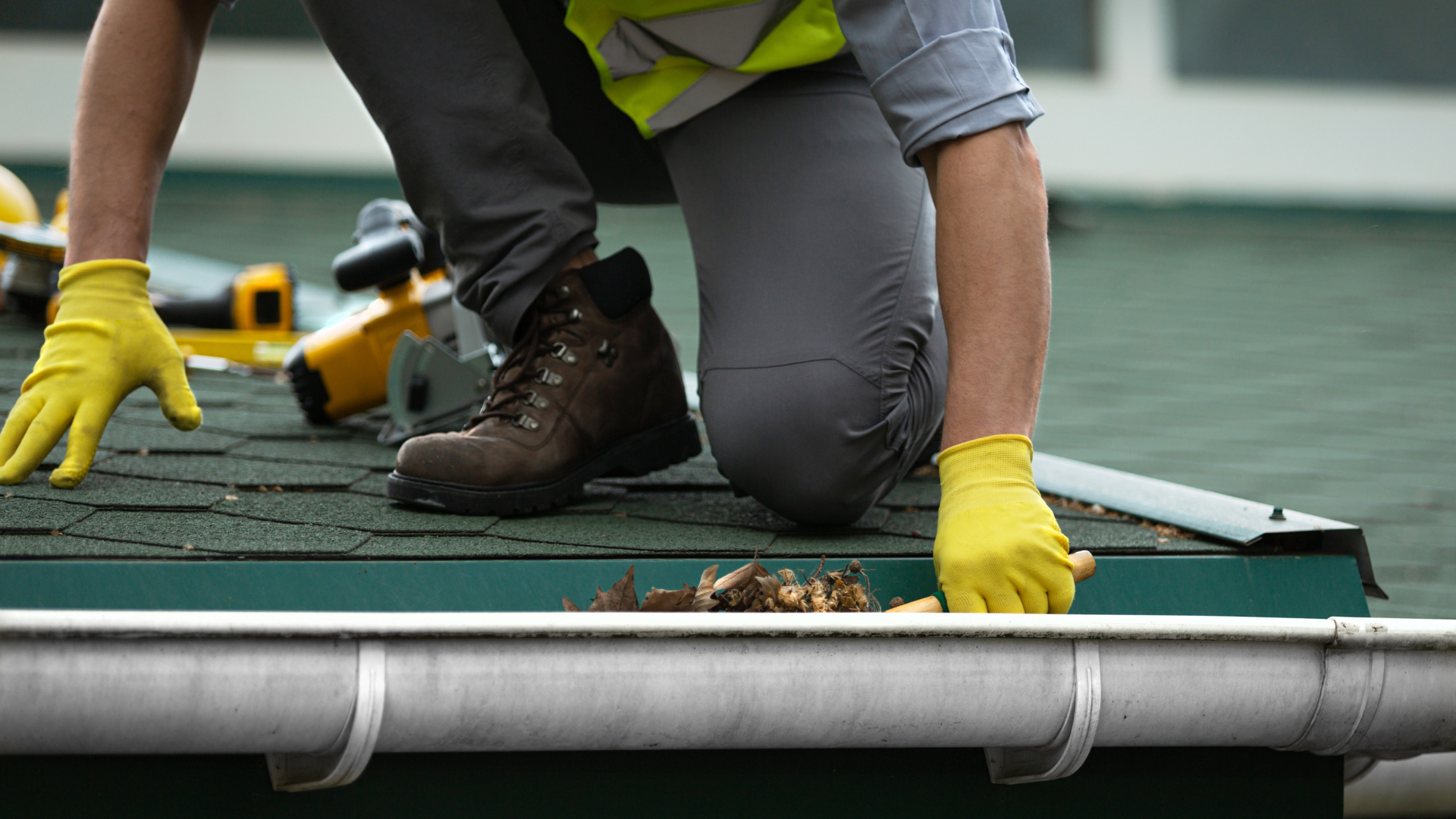
Why Gutter Cleaning Timing Matters More in Connecticut
Gutter cleaning is not just leaf removal. It is seasonal water management. A gutter system exists to collect roof runoff, carry it to downspouts, and discharge it away from vulnerable parts of the home. When that chain breaks at any point, water goes where it should not go.
Connecticut makes that chain work harder than many homeowners realize. The NOAA Connecticut State Climate Summary describes the state's precipitation as abundant but highly variable, with annual precipitation generally above average since the 1970s and the highest number of 2-inch extreme precipitation events recorded during 2005 to 2014. The same summary projects increases in the frequency and intensity of extreme precipitation events, along with increases in winter and spring precipitation.
That matters because gutters fail under volume, weight, and restriction. A partially clogged gutter can seem acceptable during a light drizzle, then overflow during a fast-moving thunderstorm or nor'easter. A downspout that drains slowly may appear functional until a one-inch rainfall event sends hundreds of gallons of water off a typical residential roof.
The Connecticut Stormwater Quality Manual defines a one-inch, 24-hour rainfall as the water quality design storm used in Connecticut stormwater planning because it represents a common runoff-producing event across the region. A roof does not need a historic flood to create a drainage problem. It only needs a normal Connecticut rainstorm meeting a clogged gutter.
That is the practical reason seasonal timing matters. Cleaning before the wrong season arrives is prevention. Cleaning after overflow begins is response.
What Spring Gutter Cleaning Actually Solves
Spring gutter cleaning is about recovery and preparation. It removes what winter left behind, then gives the system a chance to handle spring rain without carrying months of hidden debris.
Connecticut winters do not load gutters with leaves the way October does, but they create a different kind of buildup. Wind snaps small branches. Snow and ice move roof grit downward. Freeze and thaw cycles loosen debris trapped behind shingles, flashing, and roof valleys. Animals may also use quiet gutter sections as nesting areas before the house is active again in warmer weather.
By March or April, the material inside a gutter is often heavier and more compacted than it looks from the ground. It may include shingle granules, mud, seed pods, needles, twigs, and damp organic matter that settled beneath winter snow cover. That mixture restricts water movement differently than dry leaves. It creates sludge.
Reason 1: Spring Cleaning Clears Winter Storm Debris
A Connecticut winter does not have to be severe to affect the roofline. One coastal storm can push branches, needles, and grit into gutter channels. Several small winter events can do the same thing gradually, especially on homes with overhanging trees or roof valleys that funnel debris into one section of gutter.
This is common in wooded areas of North Branford, Guilford, Madison, and the inland sections of shoreline towns where tall trees sit close to the home. Even if most leaves were removed in November, winter winds can still reload the system before spring.
A spring cleaning removes that accumulation before April and May rain expose the restriction. It also gives a technician a clear view of the gutter bed, outlet openings, seams, hangers, and downspout inlets.
Reason 2: Spring Cleaning Prepares the System for Heavier Rain
Spring rainfall is one of the main reasons a spring cleaning can be valuable. Connecticut's climate pattern is not limited to gentle seasonal showers. The UConn CIRCA Connecticut Physical Climate Science Assessment projects an increase in annual precipitation, with the largest increase expected in winter and spring, and projects an increase in heavy rain days that can raise flood risk.
The practical effect at the home level is simple. Spring storms test gutter capacity. If outlets are blocked or downspouts are half full of sediment, water backs up in the trough, spills over the front edge, or runs behind the gutter.
Water running behind a gutter is especially damaging. It wets the fascia board, feeds rot at the roofline, and can spread into the soffit and structural framing. Once that process starts, gutter cleaning alone is no longer the full repair. The home may need Fascia & Soffit work before the gutter can be secured properly again.
Reason 3: Spring Cleaning Reveals Damage Before Summer Storms
A clean gutter is easier to inspect. Once winter debris is removed, small problems become visible. Loose spikes, failing hangers, separated joints, pitch issues, cracked sealant, bent outlets, and early fascia rot are all easier to identify when the trough is not packed with debris.
That matters because summer thunderstorms can expose weak points quickly. A gutter section that is already loose in April may pull farther from the fascia after a few heavy rains in June. A downspout elbow that is partially blocked in spring may overflow near the foundation during a fast summer downpour.
This is where a spring Gutter Tune-Up can make more sense than cleaning alone. Cleaning removes the debris. A tune-up adds the inspection and minor correction work that helps the system perform before storm season.
The Limit of Spring Cleaning
Spring cleaning is valuable, but it does not solve the largest debris event of the year. Connecticut's biggest gutter load still arrives in fall.
A gutter cleaned in April may work perfectly all summer, then fill quickly once leaves begin dropping in October. Homes surrounded by oak, maple, beech, birch, or hickory trees can go from clear to restricted within a few windy days. Pine needles add another challenge because they slide into small openings and compact tightly around outlet holes.
For homes under heavy canopy, spring service is not a replacement for fall service. It is the first half of the annual maintenance cycle.
What Fall Gutter Cleaning Actually Solves
Fall gutter cleaning is about winter preparation. It removes the debris most likely to cause clogs during freezing weather, when access is harder and damage can develop quietly.
Leaves are not the only problem. Fall gutters collect wet leaf mats, pine needles, acorns, seed pods, small sticks, moss, and roof grit. Once that material absorbs water, it becomes heavy. Once temperatures drop, that wet material can freeze into a dense mass that blocks flow and adds weight to the gutter run.
That combination is why fall cleaning is usually the more important single cleaning for Connecticut homeowners. It happens after the largest debris drop and before the season when water can freeze in place.
Reason 1: Fall Cleaning Removes the Largest Debris Load of the Year
Most Connecticut homes receive their heaviest gutter debris in October and November. In shoreline communities such as Branford, Guilford, Madison, Clinton, Westbrook, Old Saybrook, Old Lyme, and East Haven, the timing can vary by tree coverage and exposure to coastal wind.
Oak leaves often hold late. Maples can drop earlier. Pine needles and small evergreen debris may continue falling even after deciduous trees are bare. That is why the best fall cleaning window is usually after most leaves have dropped, but before consistent freezing conditions arrive.
Clean too early and the system may refill. Wait too long and wet debris can freeze in place, making the work more difficult and increasing the risk of winter overflow.
Reason 2: Fall Cleaning Helps Reduce Ice-Related Gutter Problems
Clean gutters do not prevent every winter roof problem. Ice dams, for example, are driven primarily by heat loss, attic insulation, ventilation, snow cover, and roof temperature differences. But clogged gutters can make winter drainage problems worse because they trap water at the roof edge.
The National Weather Service ice dam guidance explains that ice dams form when snow melts during the day and refreezes as temperatures drop overnight. After several melting and freezing cycles, water and ice can work back under shingles and cause damage inside the building.
A gutter packed with wet leaves does not cause all of that by itself, but it does create a place where meltwater can sit instead of draining. In freezing weather, standing water becomes ice. Ice adds weight. Weight pulls on hangers, stresses seams, and can worsen sagging sections that were already weak before winter.
That is why fall cleaning is not just cosmetic maintenance. It reduces the amount of trapped organic material and standing water present at the roofline before freeze and thaw conditions begin.
Reason 3: Fall Cleaning Protects Fascia, Soffits, and Foundations Before Winter
When gutters overflow in summer, the damage is visible quickly. You see water spilling over the edge. You see mulch wash out. You may notice damp siding or soil erosion. Winter overflow can be harder to see because snow and ice hide the problem.
If water cannot drain through the gutter and downspout, it may back up behind the system, soak the fascia, freeze at the edge, or spill directly against the foundation once thawing begins. Older homes in East Haven, New Haven, Branford, and Guilford often have aging roofline wood that does not tolerate repeated wetting well.
The Building America Solution Center foundation drainage guide notes that good water management practices, including gutters and grading that slopes away from the house, help protect foundations from water saturation. Gutters are only one part of that system, but they are the first part. If they fail, everything below them works harder.
The Limit of Fall Cleaning
Fall cleaning is the most important single service for many Connecticut homes, but it does not erase what winter does afterward. A clean November gutter can still collect branches in January, grit in February, and early spring seed pods in April.
This is especially true on homes exposed to Long Island Sound winds. Coastal and near coastal properties may not have the same heavy leaf canopy as inland homes, but they often deal with wind-driven roof grit, salt exposure, and storm debris. A fall cleaning gets the system ready for winter. A spring inspection tells you how the system actually survived winter.
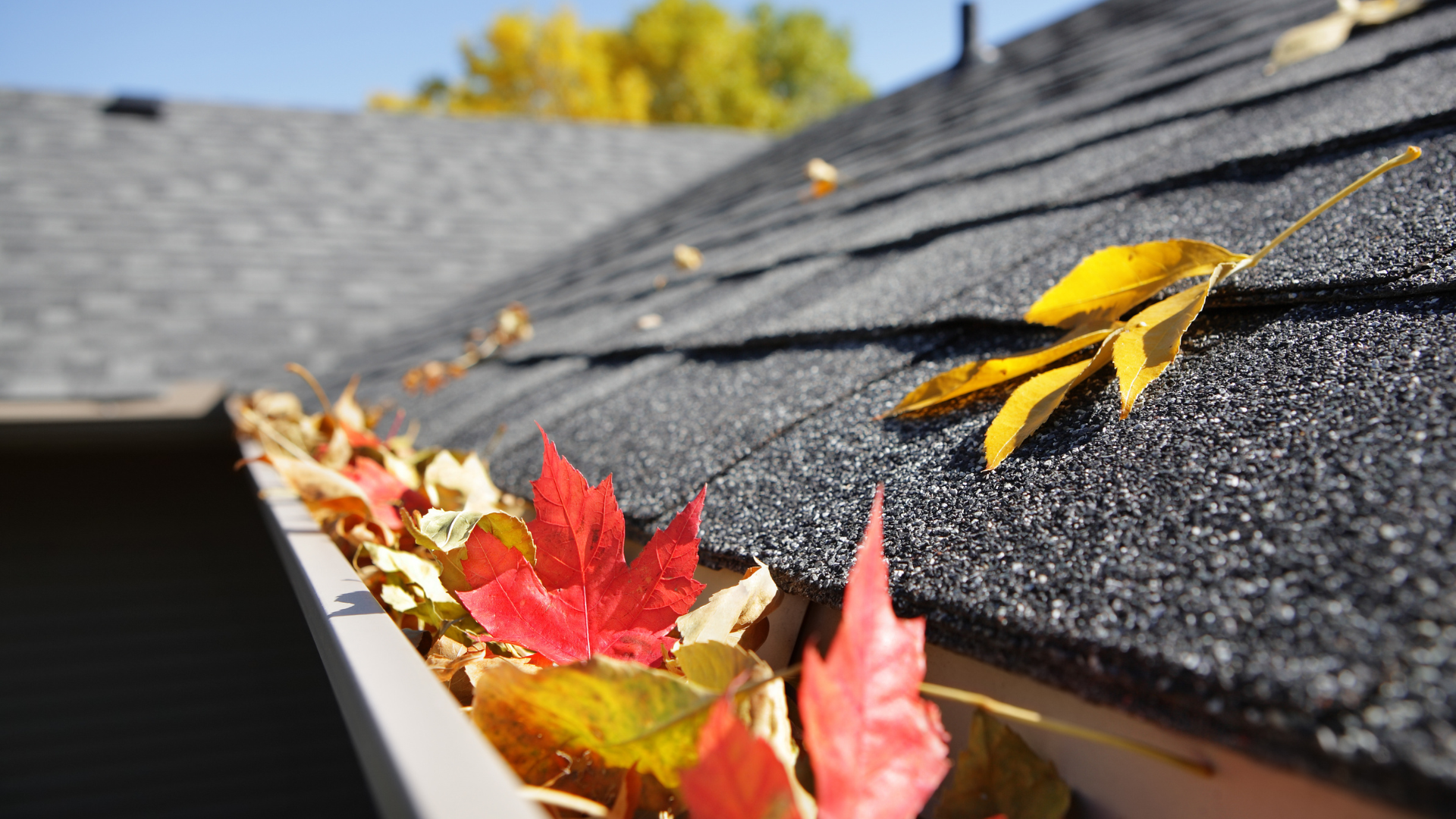
Spring vs Fall Gutter Cleaning: Which One Is Better?
If a Connecticut homeowner can only schedule one gutter cleaning per year, fall is usually the better choice.
The reason is simple. Fall cleaning happens after the heaviest debris drop and before the highest-risk freeze period. It removes the material most likely to clog outlets, trap moisture, add weight, and contribute to winter overflow.
Spring cleaning is still valuable, but it is more situational. It becomes especially important after a windy winter, after roof work, after visible overflow, after ice buildup, or when the home sits under trees that drop seed pods and debris in spring.
Quick Scheduling Guide
- Spring: Best for clearing winter debris, checking storm damage, removing seed pods, and opening downspouts before spring rain. In Connecticut, this usually means late March through May, depending on snowmelt and the spring debris cycle.
- Fall: Best for removing leaves, pine needles, acorns, wet organic buildup, and debris that can freeze in place. In Connecticut, this usually means late October through late November, after most leaves drop and before steady freezing.
- Both: Best for homes with heavy tree canopy, older gutters, recurring overflow, coastal storm exposure, basement moisture concerns, or roof valleys that concentrate debris. Spring inspection and cleaning plus fall winter preparation gives the system the most complete protection.
Homes That Should Schedule Both Spring and Fall Cleaning
Many Connecticut homes do not fit neatly into a once-per-year schedule. A property with light tree cover and newer seamless gutters may do well with an annual fall cleaning. A property with mature trees, older sectional gutters, and a low-slope roof may need spring and fall service every year.
Twice-yearly cleaning is worth considering if any of the following apply:
- Large oak, maple, pine, or beech trees overhang the roof.
- Water spills over the gutter during normal rainfall.
- Downspouts clog more than once a year.
- The home has older gutters, visible seams, or sagging sections.
- The property has basement moisture, soil erosion, or poor grading near the foundation.
- Roof valleys concentrate debris in a few gutter sections.
- The home is near the coast and exposed to wind-driven storm debris.
- The roof sheds shingle granules into the gutter system.
In these cases, cleaning twice per year is not excessive. It is aligned with how the property actually loads debris. The goal is not to clean on a calendar for the sake of it. The goal is to prevent restriction before the next high-risk weather period.
Local Conditions That Change the Best Schedule
The best gutter cleaning schedule depends heavily on where the home sits in Connecticut. Shoreline homes and inland homes experience different debris patterns, even when they are only a few miles apart.
Branford, Guilford, Madison, and Clinton
These towns often combine mature tree cover with shoreline weather exposure. Inland neighborhoods may collect heavy leaves and pine needles, while coastal properties may collect more roof grit and wind-driven debris. Many homes in these communities benefit from fall cleaning as the baseline, with spring service added when winter storms have been active.
Old Saybrook, Old Lyme, and Westbrook
Waterfront and near waterfront homes in these towns face salt air, wind exposure, and storms moving off Long Island Sound. Some properties have less overhead tree cover, but that does not mean the gutter system stays clean. Wind can carry debris across open areas, and shingle granules can accumulate quickly on older roofs.
East Haven and New Haven
East Haven and New Haven properties often include older housing stock, tighter lots, and established street trees. Older gutters may already have weak hangers, undersized downspouts, or fascia deterioration. For these homes, cleaning should be paired with inspection because water management problems are often structural, not just debris-related.
North Branford, North Haven, Hamden, and Wallingford
Inland communities often carry heavier tree canopy. That means fall leaf volume can be the dominant issue. Homes with wooded backyards, steep roof pitches, and multiple valleys often need a late fall cleaning after most leaves have dropped, then a spring visit to remove winter branches and seed debris.
Where Gutter Guards Fit Into the Schedule
Gutter guards change the maintenance pattern, but they do not eliminate maintenance. This is one of the most important points for Connecticut homeowners to understand.
A good guard system reduces how much debris enters the trough. It can also reduce how often the gutters need to be opened and cleaned by hand. But debris still lands on the guard surface, roof valleys still collect material, and downspout outlets still need to be monitored. Pine needles, seed pods, oak tassels, and shingle grit can all affect performance depending on the guard type and roof conditions.
That is why Gutter Guards work best as part of a complete system. The gutter should be clean, pitched correctly, securely fastened, and properly connected to downspouts before guards are installed. If the fascia is soft or the gutter already sags, guards will not solve the underlying problem.
For many Connecticut homes, guards reduce the need for full cleanings but do not remove the value of seasonal inspection. A guarded system on a heavily wooded Madison or Guilford property should still be checked after fall and after winter because the local debris load is too high to ignore.
Why Professional Cleaning Is Different From a Quick DIY Cleanout
A homeowner can remove leaves from an easy first-story gutter. That does not mean the entire water management system has been serviced.
Professional gutter cleaning should include the troughs, downspout openings, downspout flow, roofline conditions, visible fasteners, slope, seams, outlets, and discharge points. The difference is inspection. A professional is not just asking whether the gutter is empty. The better question is whether the system will move water correctly during the next storm.
This matters because some of the most expensive gutter problems begin as small observations. A loose hanger becomes a sagging gutter. A small seam leak becomes fascia rot. A short downspout discharge becomes foundation saturation. A clogged underground drain backs up and makes the homeowner think the gutter is failing when the outlet is actually the problem.
When cleaning reveals active problems, Gutter Repair may be the next step. If the system is undersized, repeatedly leaking, or failing at multiple points, Gutter Installation may be the better long-term answer. If water leaves the downspout correctly but still pools near the home, Drainage Solutions should be considered.
Best Time to Schedule Spring Gutter Cleaning in Connecticut
The best spring gutter cleaning window in Connecticut is usually late March through May. The exact timing depends on snowmelt, tree conditions, and recent storms.
Early spring works well when the goal is to clear winter debris before heavier spring rain. Mid to late spring may be better for properties with trees that drop seed pods, catkins, blossoms, and small spring debris. Homes under heavy maple, oak, or pine cover sometimes need to wait until that spring drop has passed.
If the home showed winter overflow, icicles along the gutter edge, water stains near the soffit, or soil washout below downspouts, do not wait until summer. Those are signs that the system should be cleaned and inspected before the next round of storms.
Best Time to Schedule Fall Gutter Cleaning in Connecticut
The best fall gutter cleaning window is usually late October through late November. The goal is to wait until most leaves have dropped, but not so long that wet debris freezes in the trough.
This timing can vary. A heavily wooded North Branford property may need a later fall cleaning because oaks hold leaves longer. A coastal Branford or Old Saybrook home with less canopy may be ready earlier. A Madison property under mixed pine and hardwood cover may need a targeted late fall cleaning even if it had a light mid-season cleanout.
The key is not the date on the calendar. The key is the debris pattern. Schedule after the roof has received the bulk of the fall drop and before freezing weather makes wet organic material harder to remove.
Common Mistakes Connecticut Homeowners Make
Cleaning Too Early in the Fall
Cleaning in early October can feel proactive, but many Connecticut trees have not finished dropping. If the home is surrounded by oaks or maples, the gutters may refill before Thanksgiving. For heavy canopy properties, a late fall cleaning is usually more protective than an early fall cleaning.
Assuming Spring Cleaning Covers the Whole Year
A spring cleaning removes winter debris, but it does not prepare the home for autumn leaf load. If fall leaves are the primary clogging source, skipping fall service leaves the system vulnerable during the freeze period.
Ignoring Downspouts
A gutter can look clean from above while the downspout remains restricted. Downspouts are where many drainage failures begin because all the roof water from a gutter run must pass through a small outlet. Professional cleaning should include flushing or verifying downspout flow, not just scooping the trough.
Treating Overflow as Normal
Overflow is not normal. During an unusually intense storm, any system can be overwhelmed temporarily. But repeated overflow during normal rain usually means there is a clog, pitch problem, undersized system, insufficient downspout capacity, or poor discharge condition.
So, When Is the Best Time to Schedule Gutter Cleaning in Connecticut?
If you choose one season, choose fall. Fall gutter cleaning removes the largest debris load of the year and prepares the system for winter freeze and thaw conditions. For many Connecticut homes, especially those under mature trees, it is the most important cleaning of the year.
If your home has heavy tree cover, visible overflow, older gutters, coastal exposure, or a history of basement moisture, schedule both spring and fall. Spring service clears winter debris and reveals damage. Fall service removes leaves and prepares the roofline for winter. Together, they protect the home through both high-risk seasons.
Connecticut's weather does not leave much margin for a restricted gutter system. The Connecticut DEEP climate booklet notes that precipitation is increasing mostly in winter and early spring, while warmer air can hold more moisture and fuel storms. At the same time, the shoreline continues to deal with coastal wind, salt exposure, mature tree canopy, and aging housing stock.
The best gutter cleaning schedule is the one that matches those conditions before water damage begins.
Get the Right Gutter Cleaning Schedule for Your Connecticut Home
CT GutterPro provides professional Gutter Cleaning for homes across the Connecticut shoreline, including Branford, Guilford, Madison, Clinton, Old Saybrook, Old Lyme, East Haven, New Haven, North Branford, Westbrook, and surrounding communities. Every home is different, so the right schedule depends on tree coverage, roof design, gutter age, drainage conditions, and how the system performed during the last storm season.
If your gutters overflow, drain slowly, pull from the fascia, or clog more than once a year, a professional inspection can show whether the issue is simple debris buildup or a larger system problem. Cleaning is often the first step. Repair, guards, drainage upgrades, or replacement may be the right next step when the gutter system itself is no longer performing.
Schedule service before the next storm exposes the weak point. The best time to clean gutters is before water has a chance to find the problem for you.
Related CT GutterPro Resources
- Professional Gutter Cleaning: Schedule seasonal gutter cleaning and downspout clearing for Connecticut homes.
- Gutter Tune-Up: Combine cleaning with inspection and minor corrections before problems grow.
- Gutter Repair: Fix sagging gutters, leaking seams, loose hangers, and outlet problems.
- Gutter Guards: Reduce debris entry with guard options suited to Connecticut weather and tree conditions.
- Drainage Solutions: Move roof water away from foundations, basements, and low areas around the home.
- What Causes Sagging Gutters: Learn why sagging gutters need fast attention before fascia and drainage damage spread.
- The True Cost of Neglecting Your Gutters: Understand how clogged gutters lead to foundation, fascia, basement, and ice-related damage.
- Best Gutter Guards for Connecticut Weather: Compare guard types for Connecticut leaf load, pine needles, shingle grit, and winter conditions.