

Why Gutters Pull Away From Older New Haven Homes After Heavy Fall Rain

Every gutter system, regardless of construction method, has to manage the expansion and contraction that comes from temperature change. Metal expands when heated and contracts when cooled, and Connecticut's climate produces significant temperature swings across every season: hot, humid summer days followed by cool nights, and winter conditions that cycle through freezing and thawing repeatedly.
Most residential gutters are supported by hangers or older spike-and-ferrule fasteners anchored through the gutter into the fascia or framing behind it. A secure installation spreads the load across enough attachment points and holds the back of the gutter firmly against sound material. When fasteners loosen, spacing is too wide, or the substrate weakens, the gutter can rotate forward and sag between supports. The low section then holds more water, which adds weight and accelerates the movement.
Debris creates a similar cycle. UConn Extension recommends clearing gutters before heavy rain because leaves and roof grit restrict flow while pooled water pulls harder on stressed attachment points. Overflow can then run behind the gutter, keeping the fascia wet and reducing its ability to hold a fastener. This explains why simply driving an old spike back into the same hole may produce only a temporary gutter reattachment.
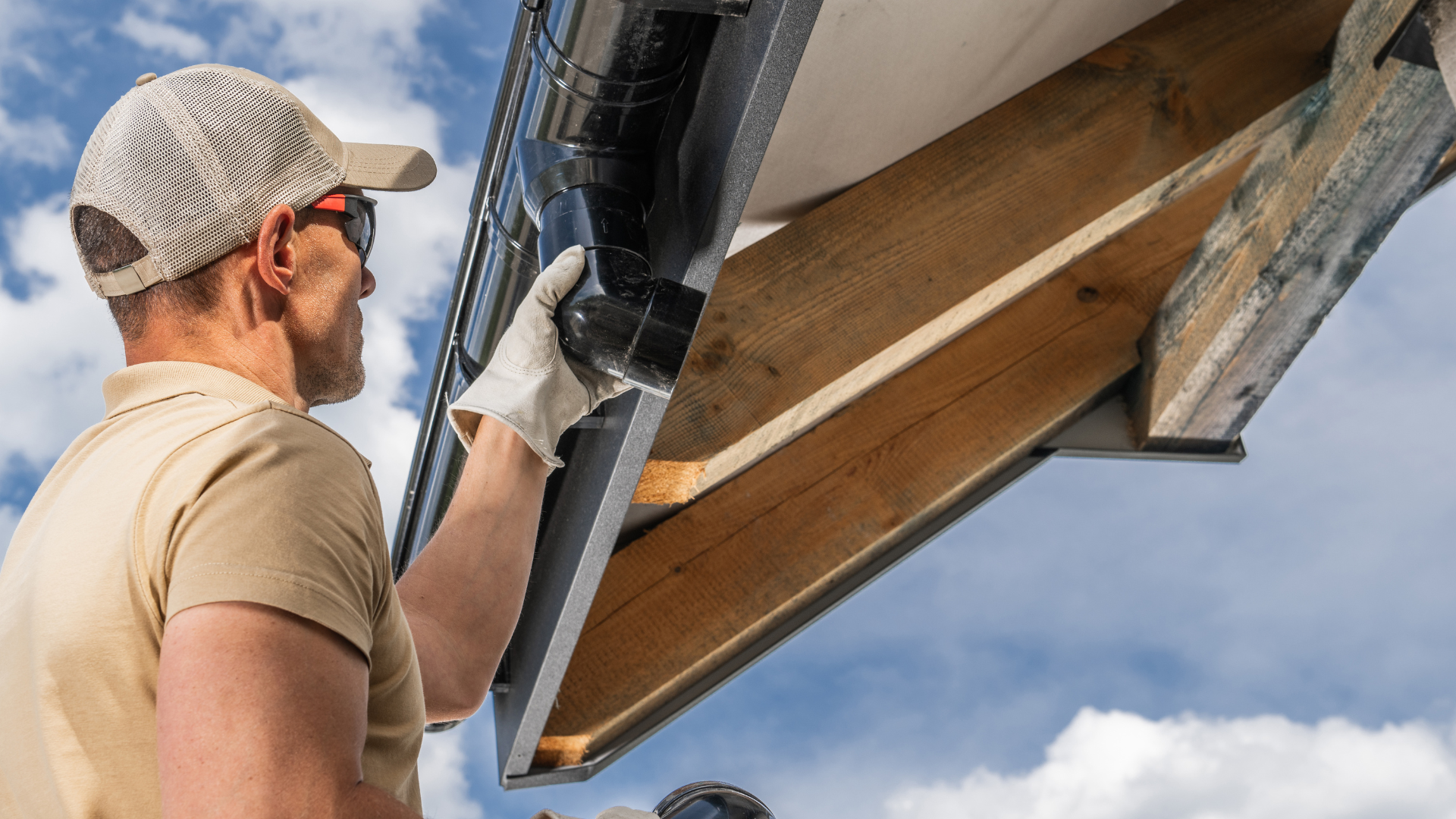
Loose Hangers and Rotted Fascia Require Different Repairs
Loose or missing hangers can often be corrected when the gutter profile is intact and the fascia remains solid. The repair may involve installing properly spaced hidden hangers, using appropriate fasteners, correcting pitch, and confirming that the downspouts can carry water away. If the original fastener hole is enlarged or stripped, the new attachment must reach sound material rather than reuse a failed connection. A successful sagging gutter repair restores both support and drainage.
Soft or rotted fascia changes the scope because the board behind the gutter can no longer hold the load reliably. CT GutterPro's fascia and soffit repair service explains that deteriorated fascia must be repaired or replaced before a gutter is reattached. A proper gutter fascia repair restores sound support instead of adding screws to the same damaged section. The moisture source must also be corrected so the replacement wood is not exposed to the same failure pattern.
Warning Signs That Show What May Be Failing
The most obvious symptom is a visible gap between the back of the gutter and the fascia, but earlier signs often appear first. Look for uneven lines, water standing after rain, loose end caps, streaks on the fascia, and overflow concentrated in one section. Fastener heads backing out or hanger clips bending downward indicate that the attachment is losing control of the load. Peeling paint, dark staining, and soft wood suggest that the supporting board may also be involved.
Observe the system from the ground during or immediately after rain when it is safe to do so. Do not climb a ladder in wet or windy conditions, and never lean a ladder against a loose gutter. Note where water enters, where it stops moving, and whether the downspout discharges normally. The table below connects common observations with the likely issue and the next useful check.
| What You Notice | Possible Cause | What Should Be Checked |
|---|---|---|
| A narrow gap appears behind one short section | One or more loose hangers | Fastener condition, hanger spacing, and fascia strength |
| The gutter sags between several attachment points | Inadequate spacing, failed hangers, or deformation | Full run alignment, gutter shape, and water load |
| Water remains in the trough after rain | Incorrect pitch or a low point | Slope toward the downspout and hanger positions |
Why Older New Haven Homes Need a Complete Roofline Inspection
New Haven's older homes may have rooflines modified by additions, porches, dormers, replacement siding, and several generations of gutter work. Attachment details can vary from one run to the next, and repairs performed years apart may use different fasteners or spacing. The city's New Haven gutter service page notes that fascia deterioration is common across its older housing stock. A complete inspection helps identify whether the visible gap is isolated or part of a broader roof-edge problem.
Conditions can also change within a short distance across southern Connecticut. Mature canopy in New Haven, Branford, East Haven, and Woodbridge can add heavy leaf loads, while exposed homes in West Haven and Milford may experience stronger wind-driven rain near the coast. Orange properties can have long roof runs and larger drainage areas that place more demand on individual downspouts. These location details guide the inspection, but the observed gutter size, roof area, attachment, fascia, and drainage performance should determine the repair.
- Inspect the entire gutter run rather than only the visible gap.
- Check hangers, fasteners, seams, end caps, outlets, and downspouts.
- Test fascia for softness, cracking, staining, and failed paint.
- Confirm the drip edge directs water into the gutter rather than behind it.
- Measure pitch and identify sections that retain water.
- Review additions and roof transitions that concentrate runoff.
What Professional Gutter Reattachment Should Include
Professional repair starts by removing the load and identifying why the gutter moved. The system may need cleaning and downspout flushing before pitch, alignment, and fastener strength can be evaluated accurately. Damaged hangers are replaced, spacing is corrected, and the gutter is secured to sound fascia or framing with suitable fasteners. Seams, end caps, outlets, and downspout connections are checked because a reattached gutter still needs to drain correctly.
If the fascia is damaged, the affected wood must be exposed and evaluated before the gutter goes back up. CT GutterPro provides gutter repair across the Connecticut Shoreline and handles fascia repair when the attachment surface is part of the failure. We assess the cause before recommending work, repair the sections that remain serviceable, and explain when deterioration makes replacement the better investment. That approach prevents a cosmetic fix from hiding a structural attachment problem.
Questions the Repair Should Answer
- Did debris or a blocked downspout overload the gutter?
- Are the existing hangers reusable, improperly spaced, or damaged?
- Is the gutter still straight enough to hold the correct pitch?
- Can the fascia and framing hold new fasteners securely?
- Is water entering behind the gutter because of a drip-edge issue?
- Does the downspout system have enough capacity for the roof area?
A Decision Framework for Reattaching, Repairing, or Replacing
The lowest-cost response is not always the repair that lasts, so the decision should follow the failure path. Reattachment makes sense when the gutter is sound, the problem is localized, and solid fastening material remains available. Broader repair is appropriate when hangers, pitch, outlets, seams, or a limited fascia section need correction together. Replacement becomes more practical when the gutter is bent, corroded, cracked, undersized, repeatedly failing, or pulling away across several runs.
Homeowners should ask for findings that separate the gutter condition from the fascia condition. A straight gutter attached to one damaged board may need wood repair and reinstallation, while a deformed run on sound fascia may need partial or full gutter replacement. Multiple old repairs, widespread leaks, and chronic overflow can make another isolated fix poor value. CT GutterPro's guide to
gutter repair versus replacement in New Haven provides additional context for that larger decision.
| Condition Found | Most Likely Direction | Reason |
|---|---|---|
| One loose section, sound gutter, solid fascia | Reattach with corrected hangers and fasteners | The failure is localized and support can be restored |
| Sagging run with poor pitch but no major deformation | Rehang and realign | Proper support and slope may restore drainage |
| Localized soft fascia behind an otherwise sound gutter | Repair fascia, then reinstall the gutter | New fasteners require a solid attachment surface |
| Repeated overflow from debris and restricted downspouts | Clean, flush, repair, and reassess capacity | Load and drainage must be corrected together |
| Bent, cracked, corroded, or separated gutter sections | Replace damaged runs | The trough may no longer hold shape or water reliably |
| Widespread detachment with multiple past repairs | Evaluate full replacement | Repeated repairs may cost more without solving system-wide failure |
How to Reduce the Chance of Another Failure
Maintenance should focus on both flow and attachment. Professional gutter cleaning removes debris, flushes downspouts, and creates an opportunity to check slope, hangers, seams, and fascia before a storm exposes the weakness. Trees close to the roof may require more frequent service than properties with light canopy. Gutter guards can reduce debris entry, but they should be installed only after the underlying system is secure, correctly pitched, and draining freely.
Downspout discharge matters because a gutter system is only as effective as its outlet. The U.S. Department of Energy's Building Science Education guidance recommends directing roof runoff away from the foundation, and the EPA identifies poorly directed gutters and downspouts as common moisture-problem locations. After major rain, homeowners can perform a ground-level check for overflow, new gaps, or discharge backing up near the house. Early correction usually limits the repair to fewer components.
- Clear leaves and roof debris before prolonged wet weather.
- Flush each downspout and confirm water exits freely.
- Check for standing water after the storm has passed.
- Watch for fresh gaps, tilted sections, and loose fasteners.
- Keep discharge moving away from the foundation.
- Schedule inspection when the same area repeatedly overflows or loosens.
What Gutter Repair May Cost in 2026
CT GutterPro does not publish a fixed price for this repair because the inspected condition determines the work. Tightening a few hangers on sound fascia is different from removing a run, replacing deteriorated wood, correcting pitch, and reinstalling the gutter. Height, access, gutter material, damaged length, fastener type, fascia condition, downspout restrictions, and cleanup can all affect the estimate. We provide free estimates and explain the recommended scope before work begins.
The figures below come from HomeGuide's 2026 gutter repair cost guide and provide broad national market context, not a CT GutterPro quote. New Haven pricing can fall outside these ranges based on labor, site access, historic roofline details, material, and the amount of concealed damage. Fascia or soffit work may be priced separately when the supporting wood is compromised. A written inspection-based estimate is the reliable way to understand the cost for a specific home.
Estimated 2026 Market Context
| Repair Type | Published Market Range | Scope Note |
|---|---|---|
| Typical gutter repair project | $100 to $450 | National range for common repairs of varied scope |
| Gutter pitch adjustment | $75 to $200 | Realignment to restore drainage toward an outlet |
| Sagging gutter repair | $75 to $300 | May include tightening fasteners or replacing supports |
| Hanger or bracket replacement | $2 to $3 per hanger, plus labor | Labor is listed at $50 to $150 per hour |
| Gutter leak repair | $100 to $225 | Depends on the leak type, access, and repair method |
| Damaged gutter section replacement | $6 to $17 per linear foot | Applies when part of a run cannot be repaired reliably |
| Fascia or soffit replacement behind gutters | $6 to $20 per linear foot | Needed when the roof-edge wood can no longer hold attachments |
Schedule Gutter Repair Before the Next Heavy Rain
A gutter that has started pulling away will not correct itself when the weather clears. CT GutterPro can inspect the full system, identify the reason for the movement, and explain whether reattachment, hanger replacement, fascia repair, or gutter replacement makes sense. Our owner-operated team has served Connecticut since 1986 and provides honest recommendations without unnecessary work. Acting early can help prevent additional roof-edge damage, uncontrolled overflow, and a larger repair later.
We provide gutter repair in New Haven CT and serve homeowners throughout Branford, East Haven, West Haven, Milford, Orange, Woodbridge, and surrounding communities. Every recommendation is based on the gutter's condition, the strength of the fascia, and the way water moves through the complete system. If you see a gap, sag, loose hanger, or repeated overflow after heavy rain, arrange an inspection before the next storm. Contact CT GutterPro today for a free gutter repair estimate.