

When Does Roof Heat Cable Make Sense for Ice-Dam Prevention on Branford Homes?

Every gutter system, regardless of construction method, has to manage the expansion and contraction that comes from temperature change. Metal expands when heated and contracts when cooled, and Connecticut's climate produces significant temperature swings across every season: hot, humid summer days followed by cool nights, and winter conditions that cycle through freezing and thawing repeatedly.
Roof heat cable in Branford, CT makes the most sense when snowmelt repeatedly refreezes at the same roof edges, valleys, gutters, or downspouts and blocks its own drainage path. A properly planned system warms selected areas enough to help water continue moving during freezing conditions. It is not intended to clear an entire roof, eliminate every icicle, or compensate for a gutter system that is clogged, sagging, or attached to damaged fascia. The decision should begin with the location and cause of the recurring ice, not with a standard cable pattern.
Branford winter conditions vary with roof shape, tree cover, attic configuration, sun exposure, and distance from the shoreline. The same framework applies in New Haven, East Haven, Milford, Orange, and Woodbridge, but each property needs its own inspection. CT GutterPro plans roof and gutter heat cable installation around actual freeze points and the full drainage route. This guide explains when cable can help, when another repair should come first, and what homeowners should expect.
What Roof Heat Cable Is Designed to Do
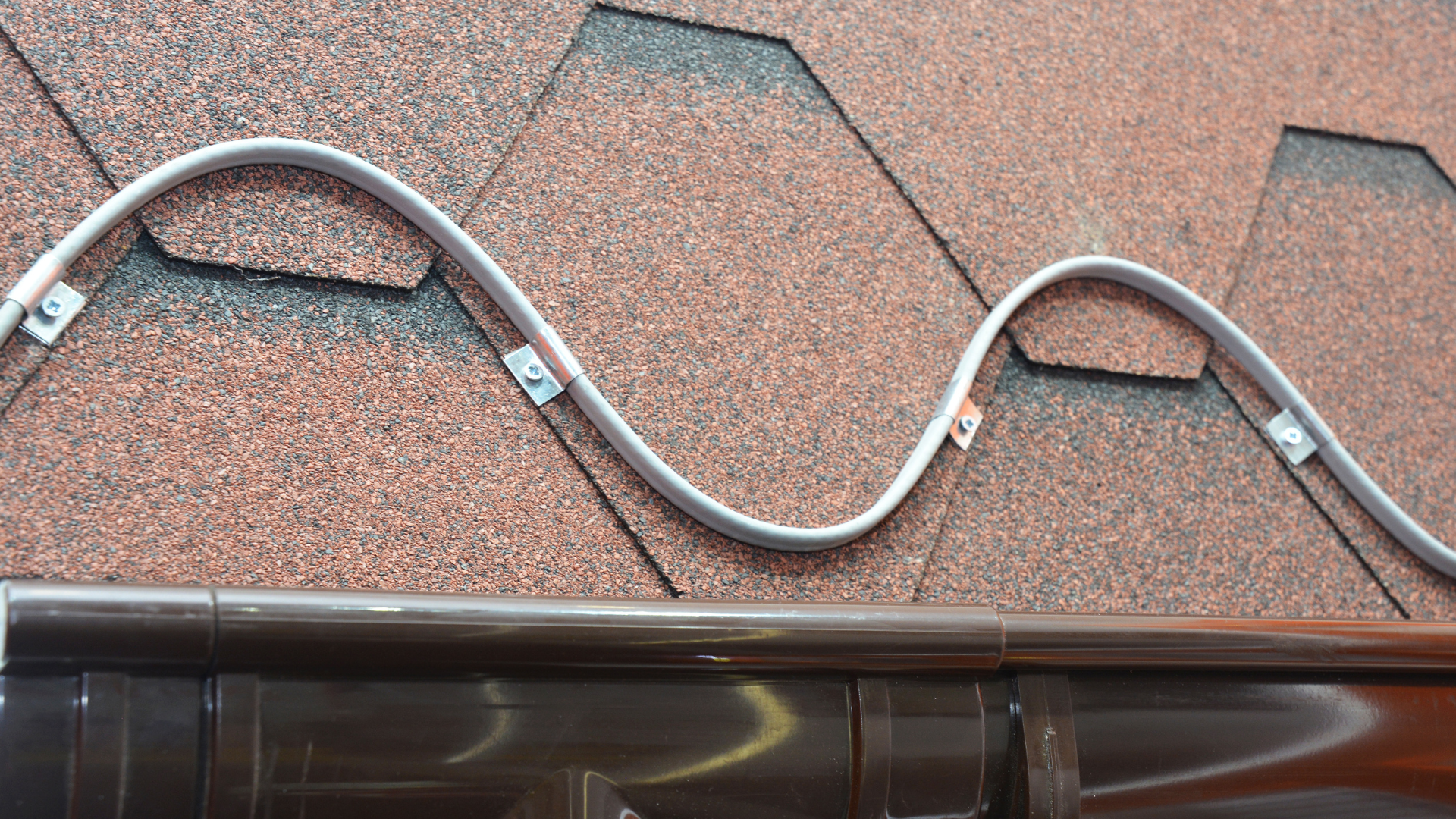
Roof heating cable creates a controlled path through areas where meltwater repeatedly refreezes. Depending on the property, that route may cross part of the lower roof edge, continue through a gutter run, and extend into a downspout. The goal is to keep a narrow drainage channel available, not to turn the roof into a heated surface. That distinction keeps the design focused on water movement instead of unnecessary cable coverage.
Heat cable is one part of ice-dam prevention, not a guarantee that ice will never form. Air leakage, uneven insulation, roof geometry, solar exposure, clogged gutters, and damaged drainage components can all contribute to winter buildup. The University of Minnesota Extension explains that water held behind an ice dam can enter a home and damage ceilings, walls, and insulation. A complete recommendation separates problems cable can manage from building conditions that need another specialist.
Signs a Branford Home May Be a Good Candidate
Heat cable is most useful when the problem repeats and the drainage system is serviceable. Homeowners often remember where ice formed but not how water traveled before freezing. Cold-weather photos can connect a roof-edge ridge, frozen gutter, or solid downspout with the upstream meltwater path.
Look for these patterns:
- Ice returns in the same location: Repeated buildup at one eave, valley, dormer, gutter run, or downspout suggests a predictable freeze point.
- Meltwater reaches a colder overhang: Snow melts over a heated part of the home and freezes when it reaches the colder roof edge.
- A downspout freezes before the gutter drains: Water enters the outlet but cannot complete the drainage route.
- A complex transition concentrates runoff: Valleys, additions, porch tie-ins, and inside corners can direct water toward a small cold area.
- Attic improvements have limits: Some low-slope, cathedral-ceiling, or inaccessible assemblies cannot be corrected enough to eliminate every recurring edge condition.
- The gutters are structurally sound: The system is clean, pitched correctly, firmly attached, and capable of carrying meltwater once a channel is open.
| Observed condition | What it may indicate | Does heat cable deserve evaluation? |
|---|---|---|
| Ice forms at the same eave after snow | Predictable roof-edge refreezing | Yes, if the roof and gutter are sound |
| Gutter stays open but downspout freezes | Drainage path fails at the outlet or leader | Yes, the full route should be assessed |
| Leaves and debris fill the gutter | Water cannot drain before freezing | Clean first, then reassess |
| Gutter sags or holds standing water | Pitch, hanger, or fascia problem | Repair before considering cable |
| Ice appears below a warm attic area | Heat loss may be driving snowmelt | Evaluate air sealing and insulation too |
| Water enters around damaged roofing | Roof defect may be the primary issue | Roofing assessment should come first |
When Heat Cable Is Not the First Fix
Cable should not be installed over an unresolved gutter or roofline failure. A gutter packed with leaves, pitched toward the wrong end, pulling from the fascia, or draining into a blocked downspout will still manage water poorly when warmed. Rotted fascia and loose fasteners can also make attachment unreliable. In those situations, gutter cleaning in Branford or a targeted repair should come before electrical equipment is added.
Heat escaping from the home can also warm the roof deck and melt snow from below. The U.S. Department of Energy’s Building America guidance identifies air sealing, insulation, and appropriate roof ventilation as important controls for reducing ice-dam formation in cold climates. Heat cable may still help at a stubborn freeze point, but it does not replace correction of major building-envelope defects. We explain when the visible winter symptom points beyond the gutter system.
Where a Targeted Heat Cable System May Run
The correct layout follows the water. Cable placed only along a roof edge may leave the gutter or downspout frozen, while cable added throughout an entire roofline may waste material and electricity. The assessment should identify where melting begins, where water collects, and which component becomes the first closed section.
Potential locations include:
- Lower roof edges and eaves where water crosses from a warmer roof area to a colder overhang.
- Roof valleys that concentrate snowmelt from two slopes into one drainage path.
- Gutter runs that repeatedly fill with ice even after debris and pitch issues are corrected.
- Outlets and downspouts that freeze solid before meltwater can discharge safely.
- Dormer edges and roof transitions where changing geometry creates small shaded freeze zones.
- Isolated problem sections rather than every available roof edge when observations support a focused installation.
The route must respect the roof material, manufacturer’s instructions, available power, and safe attachment points. A product approved for one application may not suit every roof, gutter, or pipe. Cable crossing, overlap, spacing, controls, and terminations must follow the selected system’s requirements. A site-specific layout matters more than a generic diagram.
The Entire Winter Drainage Path Must Work
A heat cable system can open a channel at the eave and still fail to solve the homeowner’s problem if the gutter outlet or downspout remains blocked. Meltwater must move from the roof surface into the gutter, through the outlet, down the leader, and away from the building. Standing water in a low gutter section can refreeze around the cable or add weight to an already stressed assembly. Discharge that ends beside a walkway or foundation can also create a new ice or drainage hazard at ground level.
Before installation, we check gutter pitch, hangers, seams, outlets, downspouts, fascia, and visible roof-edge conditions. A Branford gutter repair may be the more useful first step when the system is loose, leaking, or out of alignment. Downspout extensions or another drainage correction may also be needed so released meltwater reaches an appropriate discharge point. That sequence must remain open from roof to ground. Heat cable works best when every downstream component is ready to carry water.
Safe Operation Requires the Right Electrical Plan
Roof and gutter cable operates outdoors around water, metal components, snow, and ice. That makes product selection, electrical protection, cable routing, and inspection part of the system, not optional details. Homeowners should not substitute pipe-heating products unless the manufacturer specifically approves them for roof and gutter de-icing.
A responsible plan should address:
- Product approval: Use cable listed and labeled for the intended roof, gutter, and downspout application.
- GFCI protection: The Consumer Product Safety Commission recommends GFCI-protected power for heat-tape equipment to reduce shock risk.
- Electrical capacity: Confirm that the circuit, receptacle, controls, and connections are suitable for the planned cable length and load.
- Manufacturer spacing: Never overlap, shorten, cross, or bunch cable unless the product instructions explicitly permit it.
- Weatherproof connections: Keep plugs, terminations, sensors, and control components in approved positions.
- Seasonal inspection: Check clips, cable jackets, connections, and controls before operation, then replace damaged components.
- Controlled use: Follow the operating instructions instead of leaving a constant-wattage system energized without regard to weather.
Electrical upgrades or circuit work should be handled by a qualified electrical professional when required. CT GutterPro evaluates the roofline and drainage layout, but we do not treat an inadequate electrical supply as a cable-placement problem. If another correction is needed first, we identify it before the installation scope is finalized.
What We Check Before Recommending Installation
The most useful inspection begins with evidence of the winter pattern. We ask where ice appears, whether water has entered the home, which downspouts freeze, and whether previous service changed the behavior. Photos from multiple storms can reveal whether the problem follows one weather direction, shaded section, or snowmelt route. That history often narrows the inspection quickly.
| Inspection area | What we look for | How it affects the recommendation |
|---|---|---|
| Roof edge and valleys | Recurring ice lines, transitions, visible damage | Identifies targeted cable zones or roofing concerns |
| Gutters | Debris, pitch, standing water, loose hangers, leaks | Determines whether cleaning or repair comes first |
| Outlets and downspouts | Restrictions, freeze points, discharge location | Shows whether cable must continue through the leader |
| Fascia and attachment | Rot, softness, loose fasteners, movement | Confirms whether the assembly can support installation |
| Attic and heat-loss clues | Uneven snowmelt, warm roof zones, interior staining | May trigger insulation or air-sealing referral |
| Electrical access | Receptacle location, protection, routing limits | Determines whether electrical preparation is required |
After the inspection, the answer may be targeted cable, gutter service, roofline repair, building-envelope work, or a combination completed in the right order. We keep the proposed coverage focused on the sections that contribute to the problem. That approach is more useful than installing the longest possible run. It also gives the homeowner a clear reason for each part of the scope.
Use a Decision Framework Before Installing Heat Cable
Start by asking whether the winter ice is recurring, whether the roof and gutter are structurally sound, and whether meltwater has a complete discharge path. Then separate a localized freeze point from widespread heat-loss or roof defects. A targeted system makes the strongest case when it manages a known drainage interruption that remains after basic maintenance and repair.
Use this framework:
- Install targeted heat cable when the same roof edge, valley, gutter, or downspout repeatedly refreezes and the surrounding system is serviceable.
- Clean first when leaves, pine needles, shingle granules, or nests restrict water movement.
- Repair first when gutters sag, leak, pull away, hold water, or attach to damaged fascia.
- Request a roofing assessment when shingles, flashing, underlayment, or roof penetrations appear damaged.
- Request an energy assessment when uneven snowmelt strongly suggests attic air leakage or inadequate insulation.
- Confirm electrical readiness before finalizing cable length, controls, and operating method.
- Choose another solution when the problem cannot be managed safely with a listed de-icing cable system.
This process applies through New Haven, East Haven, Milford, Orange, and Woodbridge, but the layout changes with each home. Coastal exposure, tree canopy, additions, valleys, long gutter runs, and shade affect how winter water moves. We inspect the property instead of assuming one pattern works across the corridor. The result should be a focused drainage plan, not cable installed because ice appeared once.
Estimated 2026 Cost and Project Context
We prepare each heat-cable estimate after measuring the required route and checking the roof edge, valleys, gutters, downspouts, access, controls, and electrical readiness. CT GutterPro provides a free onsite estimate with clear pricing for the actual Branford property. For general budgeting, HomeGuide’s 2026 roof heating cable cost guide lists approximately $5 to $15 per linear foot installed and $500 to $2,000 for many complete installations. Those national figures provide planning context, while the inspected cable length, roof complexity, preparation work, and electrical requirements determine the project estimate.
| Cost or scope item | 2026 planning context | What affects the final estimate |
|---|---|---|
| CT GutterPro onsite estimate | Free | Measured layout and inspected property conditions |
| Roof heating cable installation | $5 to $15 per linear foot nationally | Cable type, routing, pitch, stories, and access |
| Typical national project range | $500 to $2,000 | Total cable length, controls, gutters, and downspouts |
| Existing-gutter cable retrofit | $400 to $1,400 nationally | Gutter length, outlet routing, and preparation |
| Gutter cleaning or repair | Separate inspected scope | Debris, pitch, hangers, seams, fascia, and access |
| Electrical preparation | Separate inspected scope | Circuit capacity, receptacle, GFCI, controls, and permits |
Find Out Whether Heat Cable Fits Your Branford Home
Heat cable makes sense when it supports a known winter drainage problem and the surrounding roofline is ready for it. CT GutterPro evaluates the roof edge, gutter pitch, outlets, downspouts, fascia, freeze points, and cable route before recommending installation. We also explain when cleaning, repair, roofing, insulation, ventilation, or electrical work should come first. Homeowners receive a focused recommendation instead of unnecessary coverage.
If ice repeatedly forms along your Branford roof edge or freezes the same gutter and downspout, document the location and schedule an assessment before severe winter weather. Review our roof and gutter heat cable service or request a free onsite estimate. We serve Branford, New Haven, East Haven, Milford, Orange, Woodbridge, and surrounding Connecticut communities. Our team will show where cable can help, what must be corrected first, and how the full drainage path should work.