

New Gutters vs. Gutter Guards: What Connecticut Homes Actually Need to Prevent Water Damage

Walk through any neighborhood in Madison, Guilford, or Old Saybrook and you will see two kinds of gutter decisions playing out on the homes around you. Some homeowners have invested in new gutter systems. Others have added gutter guards to what they already have. Both approaches can be exactly right. Both can also be the wrong call for the specific home and the specific problem.
The question of new gutters versus gutter guards is not one the internet answers well. Most of what you will find is written by manufacturers of one product or the other. This guide works through the decision as it actually applies to Connecticut shoreline homes, where annual rainfall averages around 48 inches, mature hardwood canopies drop heavy debris loads through fall, nor'easters test every fastener and joint, and the age of the existing housing stock means many gutter systems were installed before current sizing standards existed.
The difference between making the right choice and the wrong one shows up directly in your repair bills.
What Each Option Actually Does
Before comparing them, it is worth being precise about what each solution addresses, because they solve different problems entirely.
New Gutter Installation: Replaces the water management system itself. The outcome is a gutter system that is:
- Sized correctly for the roof's drainage load
- Pitched correctly toward each downspout
- Hung at the right height relative to the roofline
- Free of accumulated damage, joint failures, and structural sagging
New gutters solve structural problems. They do not solve debris accumulation on their own.
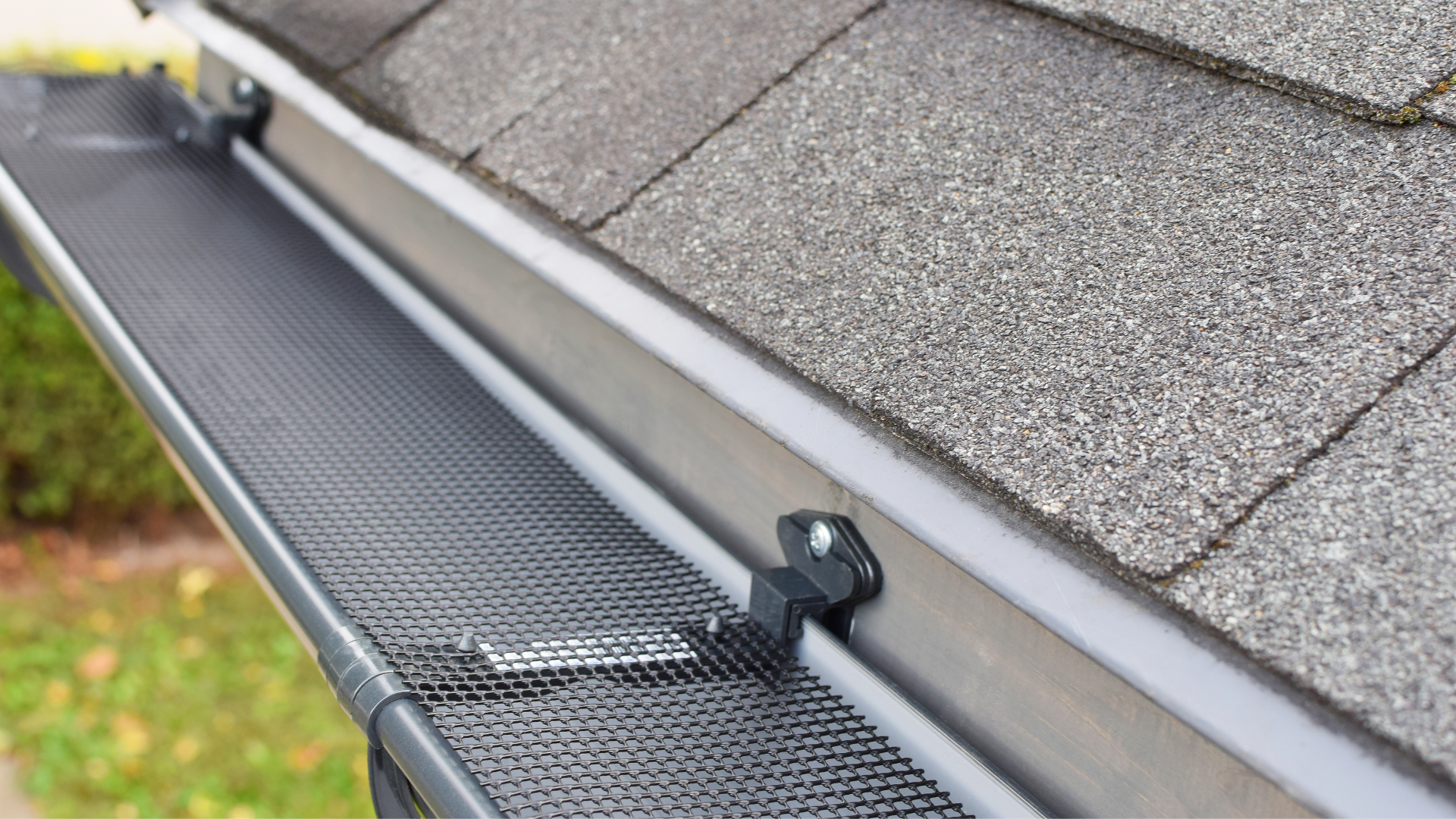
Gutter Guards: Installed over or inside an existing gutter system to reduce debris entry. A guard does not:
- Change the pitch of an existing gutter
- Correct downspout placement
- Repair failed joints or sealant
- Address any structural problem in the existing system
What a guard does, when correctly selected for the debris type and climate, is significantly reduce how often debris accumulates to the point of causing overflow or blockage.
The core principle: Gutter guards solve a maintenance problem. New gutters solve a structural problem. The decision starts with an honest assessment of which problem you actually have.
When New Gutters Are the Right Answer
New gutter installation is the correct choice when the existing system has failed structurally, was never properly sized or positioned, or when cumulative repairs would approach the cost of replacement. Here are the specific conditions that point clearly toward replacement:
Visible sagging along the gutter run. Sagging occurs when hangers fail, when accumulated weight from standing water or ice deforms the gutter profile, or when the fascia board behind the gutter has rotted and can no longer hold fasteners. A sagging gutter cannot be corrected by adding guards. Installing guards over a sagging system adds cost while the underlying problem continues to worsen.
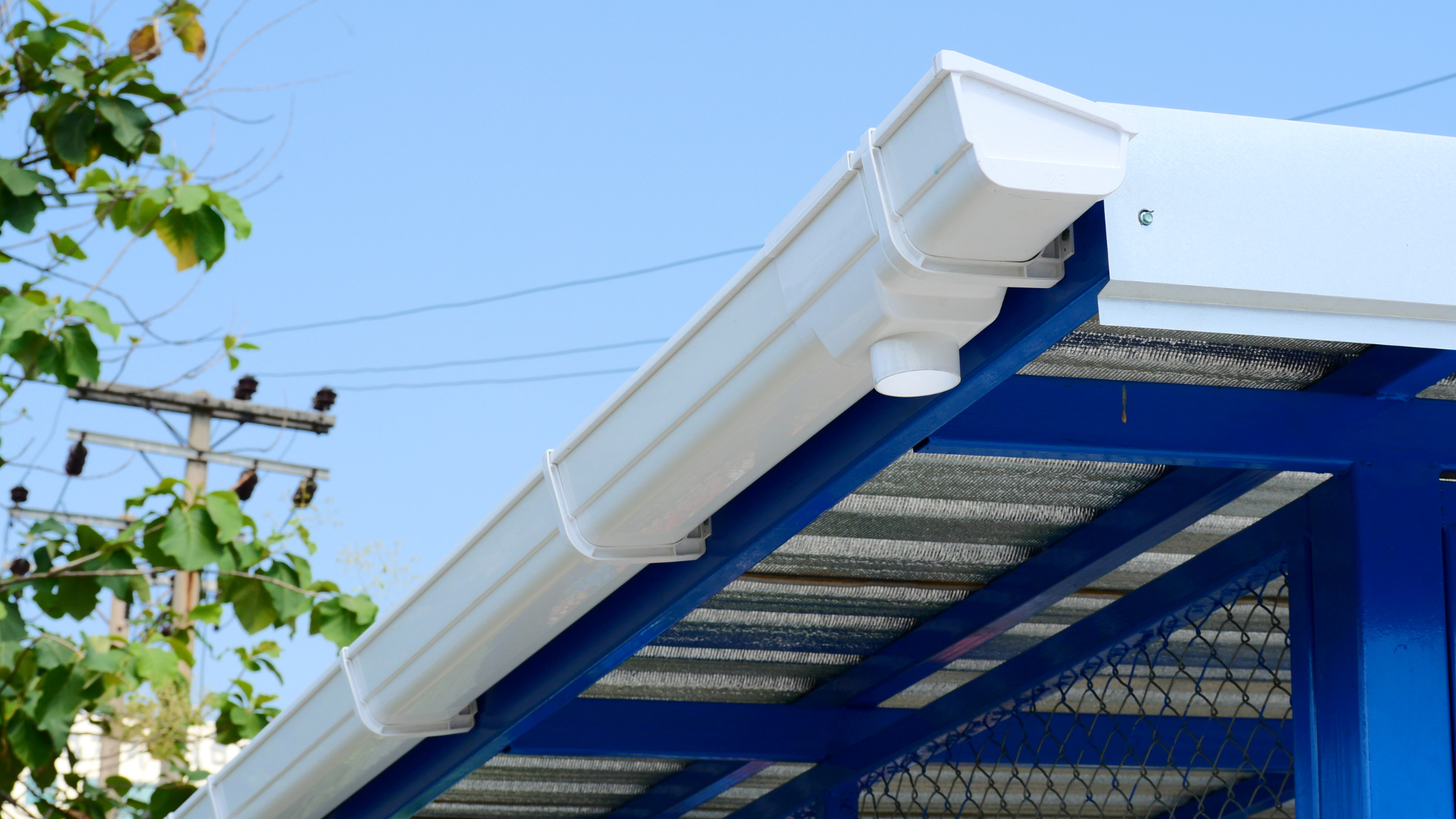
Multiple joint failures and persistent leaks. Sectional gutter systems have joints roughly every ten feet, each sealed with caulk or gaskets that degrade over time. A system with several failing joints across its length has entered a maintenance cycle of diminishing returns. Each repair extends the system temporarily while new failures develop elsewhere. Seamless aluminum gutters, which are the standard CT GutterPro installs throughout Branford, East Haven, and Westbrook, eliminate mid-run joints entirely, with connections only at corners and downspouts.
Gutters that overflow in moderate rainfall. Many older Connecticut homes were built with standard 4-inch gutters. Current installation practice calls for 5-inch or 6-inch gutters depending on roof pitch and drainage area. A 4-inch gutter that overflows during a moderate rain event is not failing because it is clogged. It is failing because it cannot move the volume of water the roof produces. Adding guards to an undersized system does not solve the overflow problem. Correctly sized replacement gutters do.
Incorrect downspout placement. The number and location of downspouts determines whether a gutter can drain during heavy rainfall. A roofline with insufficient downspout capacity will overflow at the midpoint of each gutter run regardless of how clean the gutters are. In communities like Guilford and Madison, where lot topography matters for drainage direction, a downspout positioned incorrectly sends water toward the foundation rather than away from it. This is a design problem, and guards are not a design solution.
When Gutter Guards Are the Right Answer
Gutter guards deliver their full value when the existing gutter system is structurally sound, correctly sized, and properly positioned, and the primary ongoing problem is debris accumulation requiring frequent cleaning.
Connecticut shoreline homes under mature oak, maple, and sycamore canopies deal with sustained leaf and seed pod accumulation through fall and spring. In North Branford and East Haven, where tree coverage over older residential streets is dense, a home without guards may require cleaning two to four times per year. A correctly selected and professionally installed guard system on a sound gutter can extend the cleaning interval significantly.
Choosing the right guard type for Connecticut's conditions:
Not all guards perform equally against Connecticut's debris mix of leaves, maple seeds, pine needles, and shingle grit. Here is how the main guard types perform in this climate:
- Micro-mesh guards: Best overall performer for Connecticut. Fine stainless steel mesh allows water through while blocking seeds, needles, and granules that defeat larger-opening guards. CT GutterPro has installed over 700,000 feet of guard systems across the shoreline, and micro-mesh consistently outperforms other types in this debris environment.
- Reverse-curve and surface-tension guards: Handle leaves reasonably well but allow pine needles and shingle granules to enter the gutter through the opening at the front edge.
- Screen guards: Effective against large debris but allow fine material through. Require cleaning more frequently than micro-mesh in heavy-debris environments.
- Foam inserts: Not recommended for Connecticut conditions. According to independent analysis, foam inserts have an average lifespan of only 2 to 5 years due to UV degradation. They can also wick moisture toward the fascia board through capillary action, adding a moisture risk rather than eliminating one.
- Brush guards: Trap debris inside the brush fibers, requiring removal and cleaning of the guard itself. High maintenance for a product designed to reduce maintenance.
The Mistake That Costs Connecticut Homeowners the Most
The most common and costly error CT GutterPro encounters across the shoreline is homeowners adding guards to a gutter system that needed replacement first.
A guard installed over gutters with failing joints, inadequate slope, or undersized profiles does not fix any of those problems. It adds cost and complexity to a system that will continue to fail in the ways it was already failing, now with the added step of removing the guards to access and repair the problems beneath them.
The correct sequence when both issues are present:
- Replace the gutter system to establish correct sizing, slope, and positioning
- Install guards over the new system to reduce the ongoing maintenance burden
According to industry pricing data from Angi, professional gutter guard installation costs between $653 and $2,457 depending on home size and guard type selected. New gutter installation averages around $1,150 for a standard home. The homeowner who installs guards on a failing system and then needs full replacement a year later has spent money twice on the same roofline. The homeowner who replaces first and guards second has made one coherent, compounding investment.
How to Know Which Problem You Have
No homeowner should be expected to make this determination from the ground. The signs that indicate structural failure versus a debris management problem require a trained eye:
- The pitch of the gutter relative to the roofline (standing water versus proper drainage)
- The condition of the fascia board behind the gutter
- The state of each joint and end cap
- Whether downspouts are positioned and flowing correctly
- Whether the gutter sizing matches the drainage area of the roof it serves
CT GutterPro provides free estimates for homeowners throughout Branford, Guilford, Madison, Old Saybrook, Old Lyme, North Branford, East Haven, New Haven, and Westbrook. Every estimate includes an honest assessment of whether the existing system warrants guards, warrants replacement, or can be extended with targeted repair before guards are added.
The goal is a gutter system that handles Connecticut's rainfall without requiring constant attention and without producing the water damage that a failing system causes to fascia, foundation, landscaping, and basement. Getting to that outcome starts with an accurate diagnosis, not a product preference.