

Why Connecticut Homeowners Are Choosing Expert Gutter Professionals Over DIY

Every spring and fall, the same conversation happens in neighborhoods from Branford to Old Saybrook. A homeowner sees the gutters are full, checks the cost of a professional service call, and thinks: how hard can this really be? A ladder, some gloves, and an afternoon. It seems reasonable until it isn't.
Gutter work is one of the home maintenance categories where the gap between what it looks like and what it actually involves is widest. The risks are real, the technical requirements are more demanding than they appear, and the mistakes made by homeowners attempting DIY gutter work in Connecticut regularly show up in service calls weeks or months later, often costing significantly more to fix than a professional job would have cost in the first place.
Here is why the shift toward professional gutter service on the Connecticut shoreline is not just a preference, but a practical decision backed by numbers, local experience, and hard lessons.
The Safety Problem Is More Serious Than Most Homeowners Realize
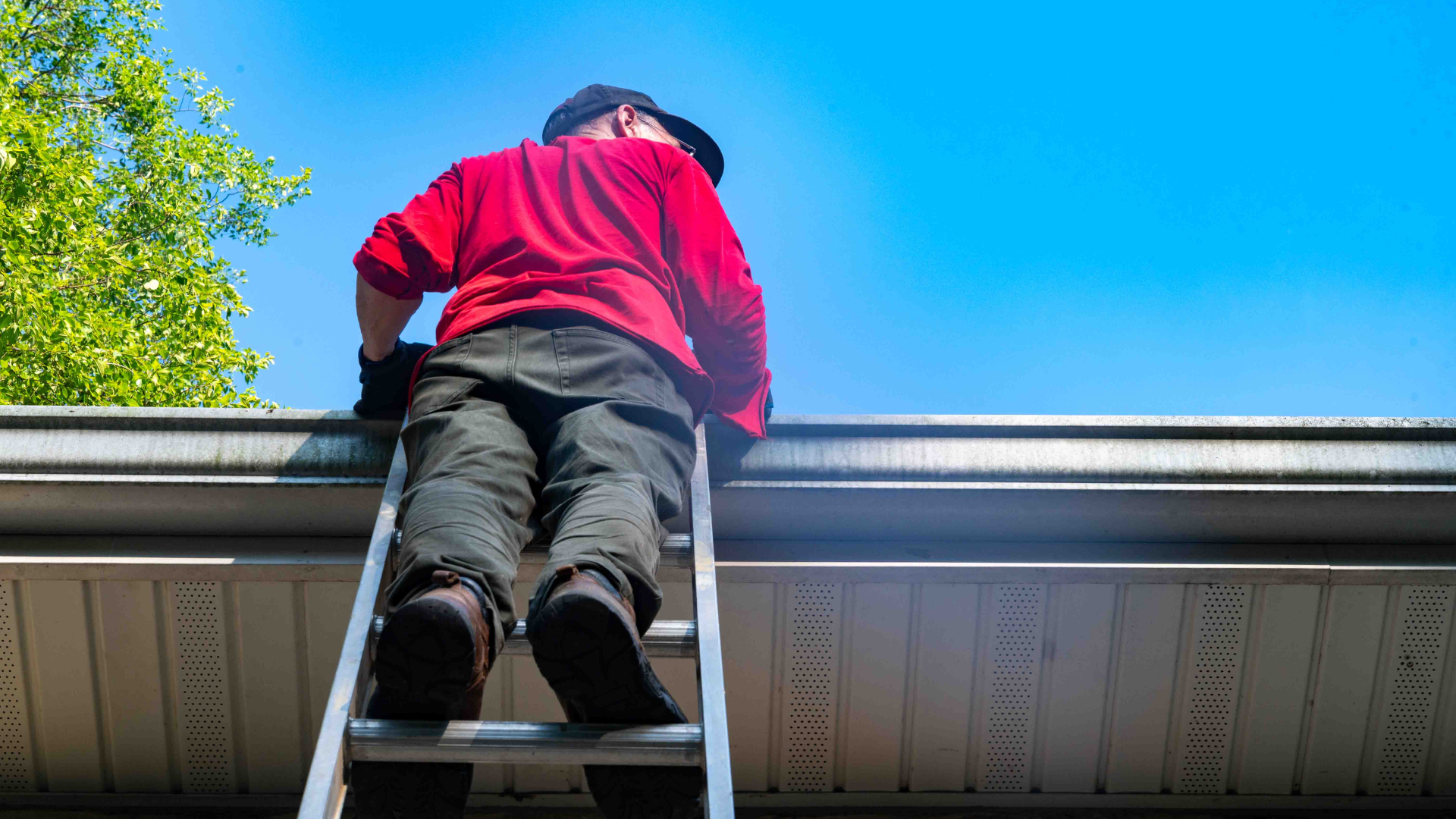
The single biggest argument for calling a professional starts before a single piece of gutter is touched. It starts the moment a ladder goes up against the house.
According to the U.S. Consumer Product Safety Commission, improper ladder use accounts for approximately 165,000 emergency room visits every year. The American Ladder Institute puts the annual figure at over 164,000. Falls from as low as six feet can produce broken bones, head trauma, and spinal injuries.
Gutter work is not a quick task at arm's reach. It involves:
- Sustained time on a ladder, often on sloped or uneven ground
- Repositioning the ladder repeatedly along the full length of the roofline
- Carrying tools and debris while maintaining balance at height
- Working at full arm extension to reach the back wall of the gutter
- Wet conditions from recent rainfall or damp debris that increases slip risk at every step
Professional gutter technicians work under these conditions daily. They use ladder stabilizers, appropriate harnesses for two-story work, and carry liability insurance that protects both themselves and the homeowner if something goes wrong. A homeowner on a household ladder on a Saturday afternoon has none of those protections and no recourse if the worst happens.
Gutter Installation Is a Precision Trade, Not a Weekend Project
For homeowners considering full DIY gutter installation rather than just cleaning, the technical demands increase substantially. Several realities make this more complex than it appears:
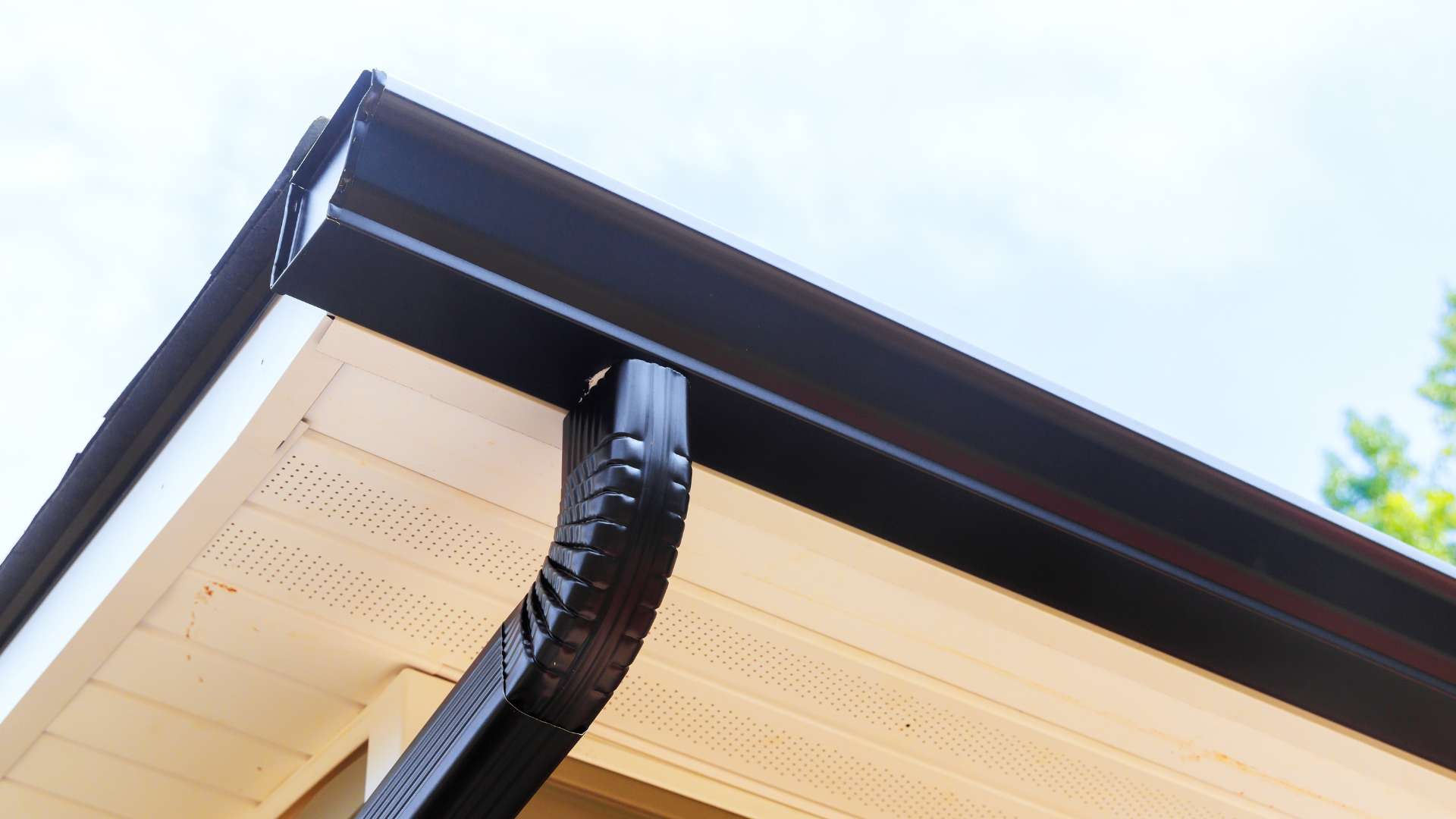
Seamless gutters cannot be purchased at a hardware store. Seamless aluminum gutters, which are the standard for Connecticut homes, are fabricated on-site using a roll-forming machine that produces a continuous length of aluminum to the exact measurements of each roofline section. This equipment is owned by professional installers. It is not available to homeowners, and it requires training to operate correctly.
Slope calculation determines whether the system actually works. Gutters must be pitched at a precise slope toward each downspout, typically between one sixteenth and one quarter inch of drop per foot of horizontal run.
- Too little slope: water sits in the gutter, becomes a mosquito breeding ground, and adds weight that causes sagging and fastener failure over time
- Too much slope: the gutter becomes visually obvious from the ground and may not drain efficiently during heavy rainfall events
- An error in either direction is not self-correcting and typically requires reinstallation to fix
Downspout placement is a drainage calculation, not a visual choice. In Guilford, Madison, and Old Saybrook, where homes sit on lots with specific topography and drainage patterns, a downspout positioned incorrectly directs water toward the foundation rather than away from it. Foundation water intrusion is one of the most expensive home repair categories, and a misplaced downspout is a common and entirely preventable cause.
Fastener spacing, hanger type, and corner treatment all require experience. A poorly installed gutter system on a Connecticut shoreline home, where nor'easters and winter ice loading create seasonal stress, will fail. And it typically fails during the storm that loads it most heavily, which is also when it causes the most downstream damage to fascia, soffit, and foundation.
The Cost Math That DIY Savings Leave Out
The appeal of DIY gutter work is the apparent savings on labor. But the full cost calculation almost always looks different once the hidden costs are counted.
What DIY actually costs:
- Retail material pricing: Professional gutter companies purchase materials in bulk at trade pricing unavailable to retail customers. The material cost advantage alone often offsets a meaningful portion of the labor cost difference.
- Tool costs: Ladder stabilizers, gutter sealant, rivets, end caps, hangers, downspout connectors, and specialty tools add up quickly for a single-use purchase.
- Time investment: A full gutter installation or repair that a trained crew completes in a few hours can take a homeowner an entire weekend, with less reliable results.
- Remediation costs: This is the item that most often closes the gap entirely.
What remediation costs:
- A gutter with incorrect slope that develops standing water and causes fascia rot: fascia replacement in New Haven County runs several hundred to over a thousand dollars depending on linear footage and material
- A joint sealed incorrectly that leaks against the soffit: soffit replacement adds additional cost on top of the original gutter repair
- A downspout positioned toward rather than away from the foundation: foundation waterproofing is among the most expensive home repair categories, routinely running into the thousands
In North Branford and East Haven, where many homes have older wood fascia already managing Connecticut's 48 inches of annual rainfall, a gutter failure that adds another moisture intrusion point can trigger rot damage that requires replacing the fascia before new gutters can even be rehung. That sequence costs significantly more than an original professional installation would have.
What 40 Years on the Connecticut Shoreline Actually Teaches You
There are aspects of gutter performance in this specific region that only come from sustained local experience. A national installation guide does not cover:
- How Long Island Sound proximity accelerates salt air corrosion on metal gutter components in Westbrook and Old Lyme
- The debris load differences between mature oak and maple canopies in Guilford versus the pitch and pine mix near East Haven
- The ice loading patterns that nor'easters produce on north-facing rooflines in Branford during January and February
- The drainage conditions that affect low-lying properties in Madison after heavy autumn rainfall combines with saturated soil
CT GutterPro has been serving the Connecticut shoreline since 1986, with over 8,500 customers and more than 2 million feet of gutter installed across New Haven County and surrounding communities. That depth of local pattern recognition is applied to every job, from a single-story cleaning in North Branford to a full seamless installation on a complex roofline in Old Saybrook.
When DIY Is Reasonable and When It Is Not
To be direct: there are gutter tasks that capable homeowners can handle themselves without significant risk.
Tasks that are generally manageable for DIY:
- Clearing light debris from accessible, single-story gutters on a stable, level surface
- Replacing a single gutter spike with a screw-in ferrule on a section within safe ladder reach
- Reattaching a downspout extension that has been displaced
Tasks that fall outside reasonable DIY scope for most Connecticut homeowners:
- Full gutter installation of any kind, seamless or sectional
- Any work on two-story or complex rooflines
- Downspout reconfiguration or repositioning
- Gutter guard installation on systems requiring roof shingle integration
- Any repair that requires diagnosing why a gutter is failing rather than simply removing debris
The Connecticut shoreline's rainfall volume, its seasonal ice and debris load, and the age of the housing stock in communities like Branford, Guilford, and East Haven make gutter system performance a genuine home protection issue. Gutters that work correctly protect the foundation, the fascia, the soffit, the landscaping, and the basement simultaneously. Gutters that are not working correctly create damage across all of those areas at once.
The homeowners across the shoreline who have shifted to professional gutter service are not spending more money overall. They are eliminating the hidden costs of DIY work that used to show up in their repair bills.