

The Complete Connecticut Homeowner's Checklist for Exterior Maintenance Starting with Your Gutters

Connecticut homes earn their wear. The shoreline communities from Branford down through Old Lyme to Westbrook face a climate that delivers roughly 48 inches of rain per year, nor'easters that arrive without much warning, late-summer humidity that tests every painted surface and every caulked joint, and winters that alternate between hard freezes and thaw cycles that are more damaging to exterior materials than sustained cold. Inland communities like North Branford and East Haven deal with the same precipitation load without the moderating effect of Long Island Sound, which means colder winters and heavier ice events on rooflines.
Exterior maintenance on a Connecticut home is not a single-season project. It is a system with a calendar.
That calendar starts with the gutters. Not because gutters are the most visible part of the exterior, but because a failing gutter system is the source of more secondary exterior damage than any other single component. Water that overflows a clogged or damaged gutter lands at the foundation, wicks into the fascia board, saturates the soffit, and pools against the landscaping. Every item further down this checklist is more likely to fail faster if the gutter system above it is not working correctly.
That is why gutters come first.
Spring Checklist (March to May)
Spring is the highest-priority exterior maintenance window on the Connecticut shoreline. Winter has finished its work and the results are visible. Address them before summer humidity locks in damage.
Gutters and Downspouts
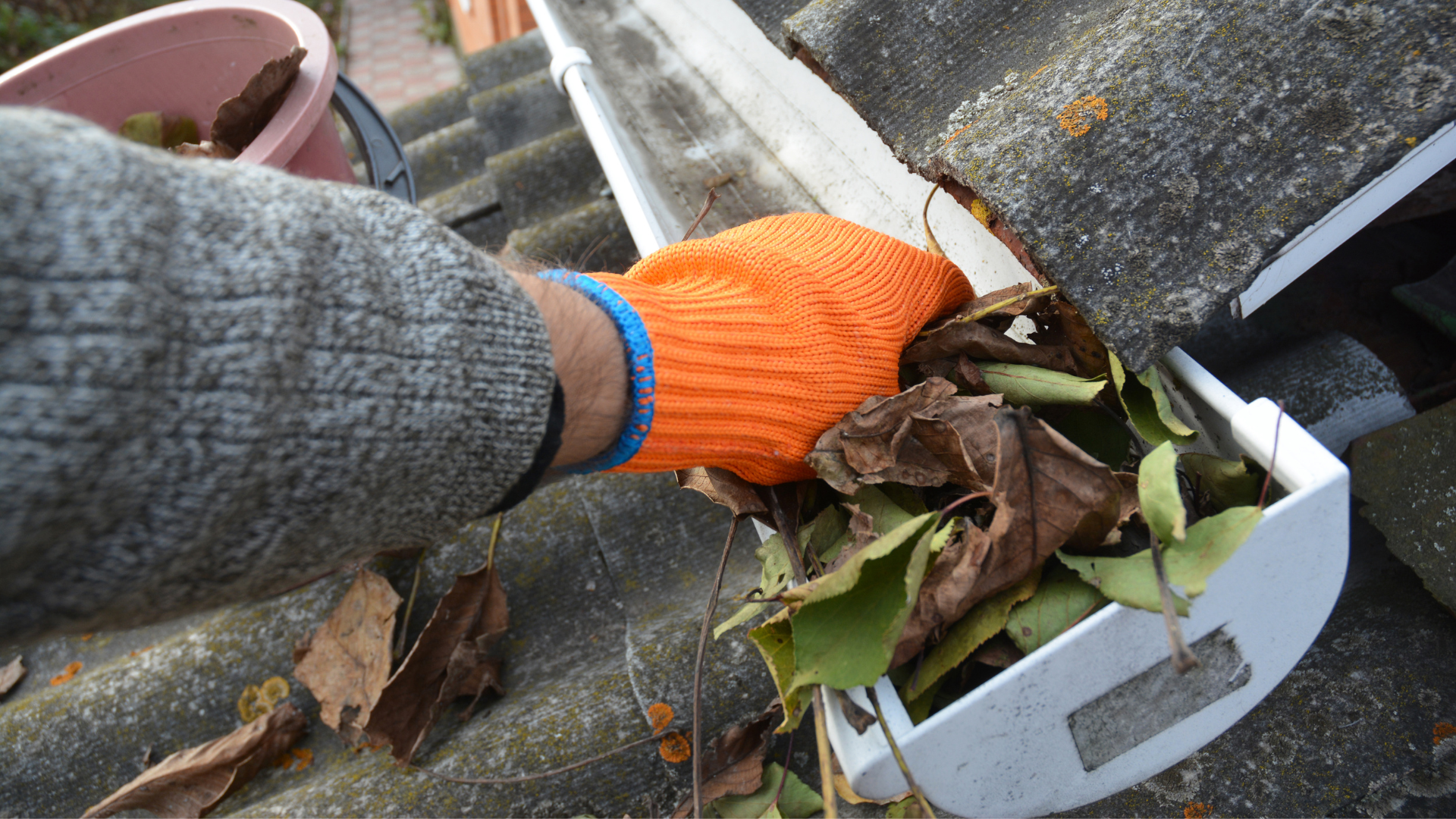
- Clear gutters of winter debris including compressed leaf mat, spring seed pods, and granules washed from roofing shingles during freeze-thaw cycles
- Flush each downspout to confirm it is flowing freely, not just draining slowly
- Inspect all gutter joints and end caps for separation or sealant failure
- Confirm the gutter pitch is correct: water should not sit in the gutter after rainfall
- Check all hangers and spikes for looseness, replacing any that have pulled away from the fascia
- In communities with heavy spring tree activity like Guilford and Madison, plan a second cleaning in late April or May after seed pods have fully dropped
Fascia and Soffit
- Inspect fascia boards directly behind each gutter section for soft spots, staining, or paint failure
- Soft fascia is an early sign of moisture intrusion from gutter overflow or poor gutter seating, and it must be addressed before new gutters or guards can be properly rehung
- Check soffit panels for staining, warping, or gaps that allow moisture and pests to enter rafter bays
Roof
- From the ground with binoculars, look for missing or lifted shingles, damaged flashing at chimneys and skylights, and any moss or lichen growth that indicates sustained moisture retention
- A roof shedding granules heavily will load those granules into the gutters below, accelerating clogging and potentially signaling that the roofing surface is approaching end of life
Foundation and Grading
- Walk the full perimeter and confirm the ground slopes away from the foundation on all sides
- Winter frost heave can shift soil toward the foundation, reversing drainage direction
- Confirm each downspout extension is intact and directing water at least six feet from the foundation wall
Exterior Caulking and Seals
- Inspect caulking around all windows, doors, and exterior penetrations
- Connecticut's freeze-thaw cycle is hard on caulk: cracks that were minor in fall become meaningful water entry points after a winter of expansion and contraction
- Address failed caulk before the spring rain season reaches its June peak
Deck and Porch Surfaces
- Inspect deck boards for rot, fastener lift, and structural integrity at ledger connections to the house
- Clear all debris from between deck boards where moisture accumulates through winter
- Confirm deck drainage does not direct water against the home's foundation or siding
Summer Checklist (June to August)
Summer on the Connecticut shoreline brings humidity, afternoon thunderstorms, and steady UV degradation of exterior surfaces. The summer maintenance focus is prevention and active monitoring after storm events.
Post-Storm Gutter Check
- After any storm that produces heavy rainfall, walk the perimeter and look for overflow evidence
- Signs to look for: soil erosion at downspout discharge points, water staining on foundation walls, mulch displacement along the foundation line
- These patterns confirm the gutter system did not handle the rainfall volume, either from clogging or from undersized capacity
Downspout Extensions
- Check that all downspout extensions remain in position and have not been displaced by lawn equipment or foot traffic
- A downspout terminating at the foundation rather than six feet away is directing potentially hundreds of gallons of water per storm directly against the home's foundation
Exterior Paint and Stain
- Inspect painted surfaces for peeling, cracking, or bubbling
- These conditions indicate moisture is getting behind the paint film, either from exterior water intrusion or interior humidity pushing outward
- Shoreline homes in Old Saybrook and Westbrook deal with salt air that accelerates paint degradation on exposed elevations; address peeling surfaces before fall rains arrive
Siding and Trim Joints
- Check for gaps in siding joints, particularly on south and west-facing elevations that experience the most direct summer sun
- Wood siding that dries through summer contracts and can open joints that were tight in spring
- Gaps in siding allow water entry during fall nor'easters when wind-driven rain reaches elevations it would not reach in calm conditions
Air Conditioning Condensate Drainage
- Confirm AC condensate lines are draining away from the foundation and not creating a persistent moisture source against the home
This is a commonly overlooked contributor to foundation moisture issues during summer months
Fall Checklist (September to November)
Fall is the second major maintenance window and the one with the tightest deadline. Everything on this list needs to be completed before the first hard freeze.
Gutter Cleaning: The Most Important Fall Task
Connecticut's hardwood canopy drops leaves through October and into November across most shoreline communities. The consequences of heading into winter with full gutters are specific and predictable:
- Full gutters add significant weight that stresses hangers and fascia fasteners through freeze events
- Wet leaf mat that freezes in the gutter becomes the starting condition for ice dam formation at the eave
- Systems that arrive in spring fully clogged are in worse condition than they left fall, with a full winter of freeze-thaw stress having compressed and compacted the debris
Recommended cleaning timing for Connecticut shoreline homes:
- Single cleaning homes: late November, after leaf drop is substantially complete
- North Branford and East Haven properties under heavy canopy: a pre-drop cleaning in September followed by a post-drop cleaning in November
Gutter Guard Inspection
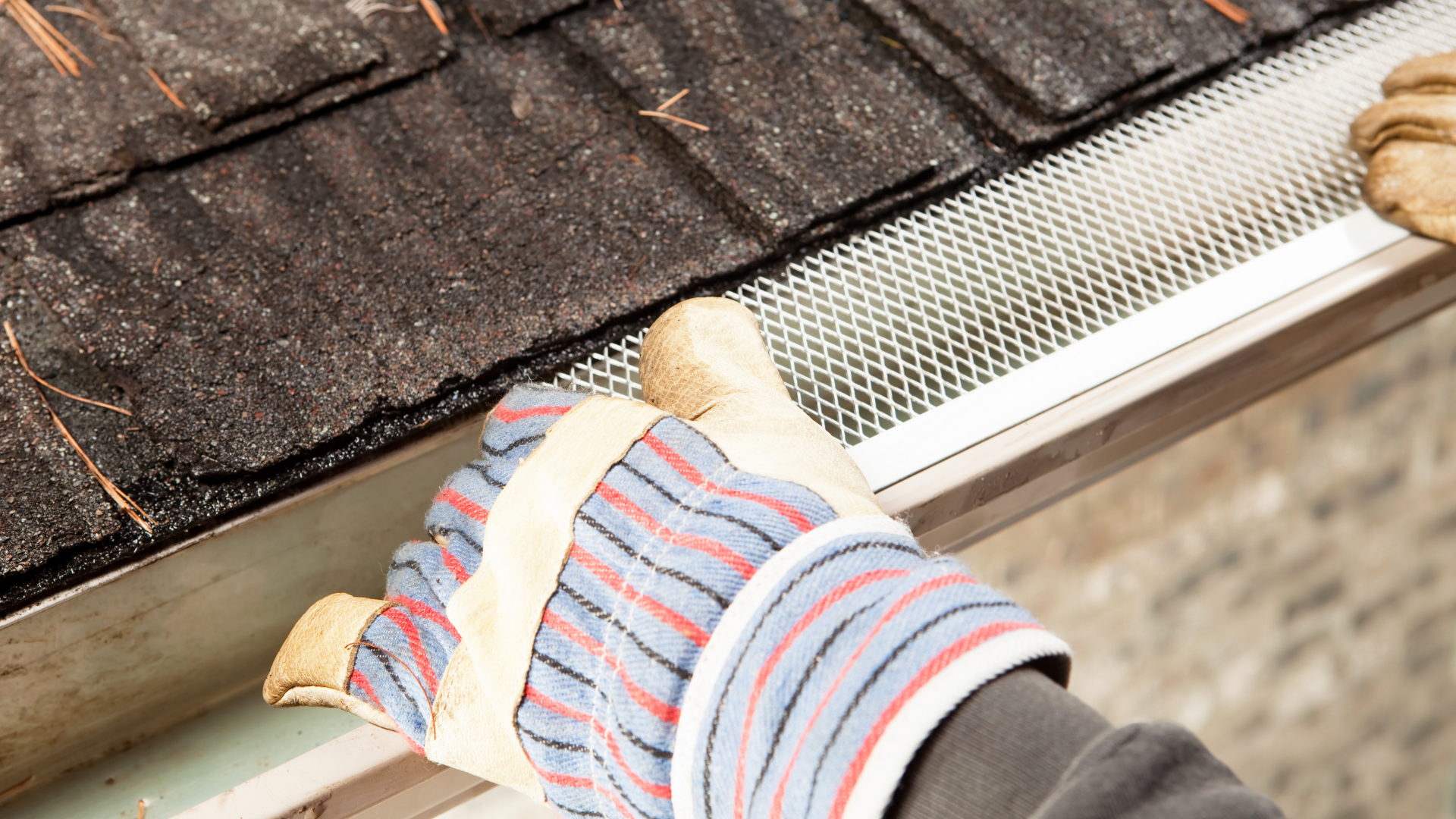
- Inspect guard surfaces for debris bridging across the top, which can direct water over the gutter's front edge rather than into it
- Micro-mesh guards may accumulate shingle granules on the mesh surface; clear with a soft brush
- Confirm all guard sections are seated correctly and that no sections have lifted or shifted after summer heat expansion
Downspout Clearance Before Freeze
- Clear all downspouts of any partial blockage before temperatures drop below freezing
- A downspout that is partially blocked in fall becomes a column of ice in winter that can split the downspout or back water up into the gutter above it
Window and Door Weatherstripping
- Replace any weatherstripping that has compressed or cracked during summer
- Connecticut winters are long enough that heating costs are meaningfully affected by air infiltration at windows and doors, and the same gaps that allow air through allow moisture
Exterior Hose Bibs and Irrigation Systems
- Shut off and drain all exterior water connections before the first hard freeze
- A burst outdoor hose bib is entirely preventable damage that causes significant repair costs when it occurs inside a wall cavity
Roof Flashing Inspection
- Inspect chimney flashing, skylight flashing, and valley flashing for lifted edges or sealant failure
- These are the points most likely to allow water infiltration during winter ice and snow events
An ice dam that backs up behind lifted flashing can push liquid water into the attic and wall cavities without any shingle failure occurring
Winter Checklist (December to February)
Winter maintenance is primarily monitoring with a few specific intervention points.
Ice Dam Monitoring
- Ice dams form when heat escaping from the living space melts snow on the roof surface, which then refreezes at the cold eave where there is no heat below
- The resulting ice buildup backs liquid water up under the shingles, pushing it into the attic and wall cavities
- Homes in Branford and North Branford that have experienced ice dams in prior winters should ensure attic insulation and ventilation are adequate before winter sets in, not after
- If ice dams form: the correct removal method is professional steam equipment. Mechanical removal with tools, salt products, or calcium chloride causes shingle and gutter damage that adds cost to the repair
Gutter Condition After Major Snow Events
- Heavy, wet snow accumulates in gutters and adds substantial weight to the hanging system
- After any major snow event, visually confirm gutters are not being pulled away from the fascia by snow load
- Gutters sagging under snow weight have either a fastener problem or a fascia problem that needs professional assessment before spring
Foundation Drainage During Mid-Winter Thaws
- Mid-winter thaw events in Connecticut produce rapid snowmelt that tests foundation drainage in compressed timeframes
Confirm downspout extensions are clear and directing meltwater away from the foundation during these events, particularly on north-facing and shaded elevations where ice may have formed at the extension
The Gutter System as the Foundation of Everything Else
Every item in this checklist connects to gutter performance. Fascia condition depends on whether the gutter drains correctly. Foundation drainage depends on downspout positioning. Ice dam risk is affected by gutter condition and the eave heat dynamics that drive snowmelt. Soffit integrity depends on whether overflow is happening at the gutter's outer edge.
The exterior maintenance system is connected, and the gutter system connects more of it than any other single component. A gutter system that is working correctly reduces maintenance burden across the entire checklist. A system that is not working correctly creates compounding problems on every line item below it.
CT GutterPro serves homeowners throughout Branford, Guilford, Madison, Old Saybrook, Old Lyme, North Branford, East Haven, New Haven, and Westbrook with gutter installation, cleaning, repair, guard installation, fascia and soffit repair, and drainage solutions. With 40 years of experience on this coastline and over 8,500 customers served, CT GutterPro brings the local knowledge that makes exterior maintenance decisions clearer and less costly over time.