

After the Storm: How Connecticut Experts Restore and Fortify Damaged Gutter Systems

Connecticut averages one to three significant nor'easters per winter season, each combining heavy snow or rain, freezing temperatures, and prolonged winds lasting 12 to 36 hours. Add the summer thunderstorm season, coastal storms from Long Island Sound, and the occasional hurricane remnant tracking up the East Coast, and the shoreline communities from Branford to Old Lyme absorb more cumulative storm stress on exterior building systems than most homeowners fully account for.
Gutters absorb a disproportionate share of that stress. They sit at the intersection of the roof and the wall, exposed to wind from every direction, loaded with debris and water weight during the storm itself, and subjected to freeze-thaw cycling in the days that follow. A gutter system that enters a nor'easter with loose hangers, compromised joints, or partially blocked downspouts does not exit it in the same condition. What enters as a maintenance issue exits as a repair.
The question after any significant storm is not simply whether the gutters look damaged. It is what the storm did to the system that is not visible from the driveway, and whether the restoration plan addresses both the damage that occurred and the vulnerabilities that allowed it.
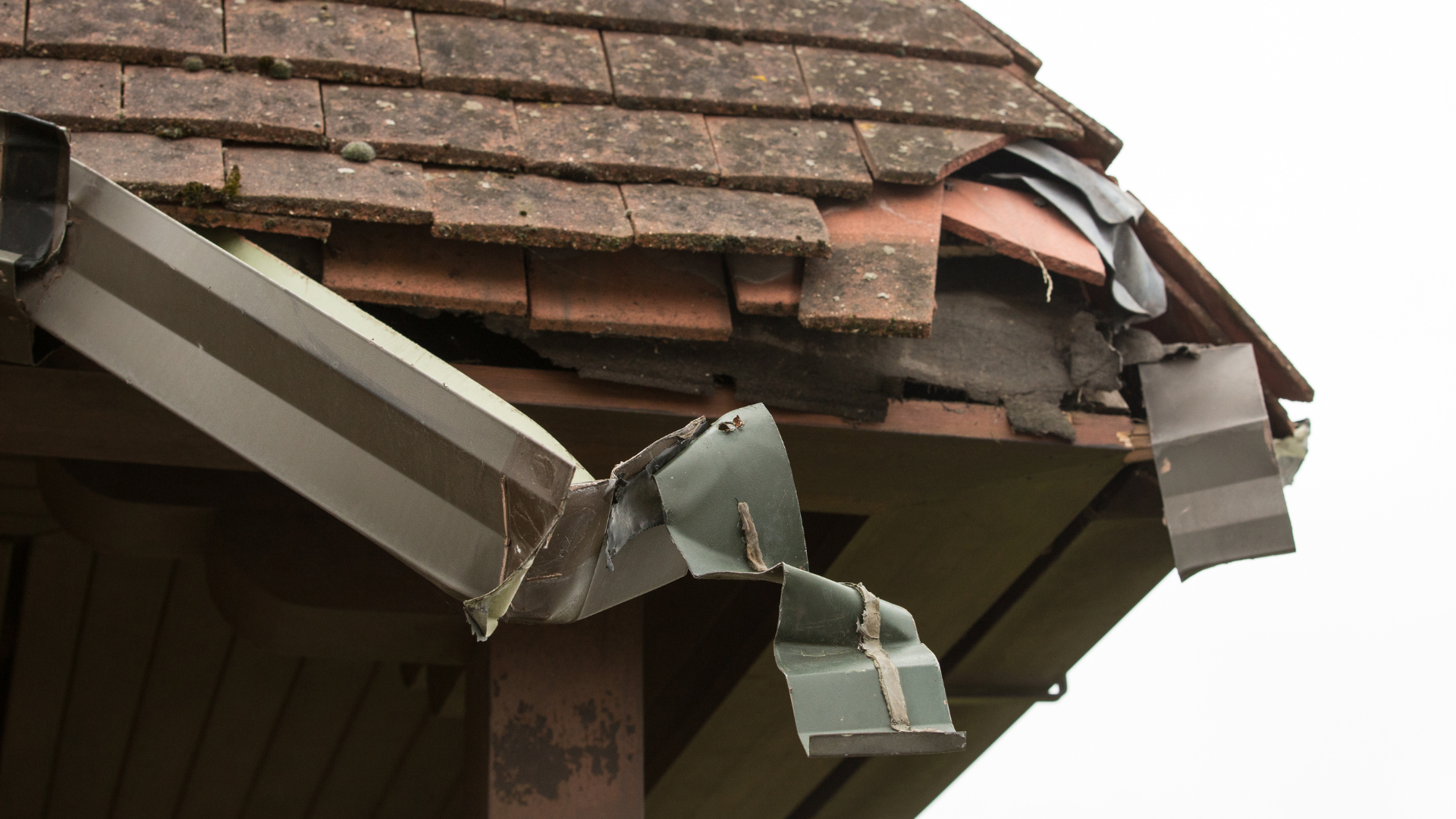
What Connecticut Storms Do to Gutter Systems
The damage patterns that CT GutterPro encounters after Connecticut storm events fall into consistent categories, each requiring a different response. Understanding what each type of storm does to gutters helps homeowners assess what they are looking at after the clouds clear.
Nor'easter Wind and Snow Load Damage
Nor'easters are sustained events, not brief intense ones. Wind that persists for 12 to 36 hours works on gutter fasteners differently than a single gust. The repeated loading and release of sustained wind creates a vibration and flex cycle in the gutter system that progressively loosens fasteners that a short burst would leave intact.
Specific damage patterns from nor'easter events include:
- Wind lift and detachment: High winds create uplift forces that get underneath the gutter trough, prying the system away from the fascia board. Fasteners that were holding adequately before the storm may be partially pulled from the wood after hours of sustained wind load, leaving the gutter sitting in position but no longer anchored securely. The gutter looks intact from the ground but has lost the fastener engagement that holds it in heavy rain.
- Snow weight deformation: Wet, heavy snow accumulating in gutters during a nor'easter adds substantial weight to the hanging system. Each gallon of water weighs approximately 8.3 pounds. A 20-foot gutter run holding saturated snow and ice can add well over 100 pounds of unplanned weight to the system. This deforms the gutter channel, pulls hangers further from the fascia, and permanently alters the pitch of the affected section.
- Ice formation at blockage points: Nor'easters frequently involve temperature fluctuations where rain precedes snow or where daytime temperatures allow partial melt that refreezes overnight. Water trapped at a blockage point in the gutter freezes, expands, and can split the gutter channel or blow out end caps and joints.
- Fascia board stress: Every force applied to the gutter during a nor'easter is transferred to the fascia board behind it. A fascia board that was already managing some moisture exposure from prior gutter overflow experiences accelerated stress during a storm that loads the system heavily for hours.
Summer Thunderstorm and Hail Damage
Connecticut's summer thunderstorm season produces a different damage profile than nor'easters. The events are shorter but more intense, with heavy rainfall concentrated in windows as brief as 30 to 60 minutes and hail that can accompany the most severe cells.
- Hail impacts: Hail striking aluminum gutters leaves dents that are more than cosmetic. Each dent creates a low point in the gutter channel where water pools rather than flows toward the downspout. Pooling adds weight, accelerates corrosion at the dented area, and creates the conditions for standing water that becomes a mosquito breeding site. According to the EPA, mosquitoes can breed in as little as half an inch of standing water.
- Debris surge loading: A summer thunderstorm can deposit a season's worth of roof debris into the gutters in one event. Leaves stripped from trees, shingle granules washed from the roof surface, and small branches combine with the existing debris load to create sudden blockages that cause overflow during the storm itself, exactly when rainfall volume is highest.
- Downspout detachment: High-volume water flow during intense rainfall creates significant hydraulic pressure at the downspout connection. Combined with wind, this can vibrate downspouts loose from their brackets or disconnect them from the gutter outlet entirely, directing the entire water volume at the foundation rather than away from it.
Coastal Storm and Wind-Driven Rain Damage
Shoreline communities including Old Saybrook, Westbrook, and coastal sections of Branford and Guilford face an additional storm category that inland Connecticut does not. Coastal storms and tropical remnants moving up the East Coast produce wind-driven rain that arrives horizontally rather than vertically, pushing water into gaps and against surfaces in ways that vertical rainfall would not reach.
- Joint and seal failure: Wind-driven rain finds every compromised joint, end cap, and sealant gap in the gutter system. Joints that were functionally sealed under normal rainfall conditions can allow water infiltration under the pressure and direction of horizontal wind-driven rain, sending water behind the gutter and against the fascia.
Accelerated salt air corrosion: Coastal storms intensify the salt air exposure that shoreline gutters experience year-round. After a significant coastal storm event, metal gutter components in these locations should be inspected for accelerated corrosion at fasteners, joints, and any areas where the protective coating has been compromised by impact or age.
The Post-Storm Assessment: What to Look for Before Calling for Repairs
A post-storm gutter assessment starts from the ground, not from a ladder. Most of the information needed to understand the scope of storm damage is visible from ground level, and the safety risks of climbing onto a wet or storm-damaged structure before a professional assessment are significant.
Ground-level indicators to check after any significant storm:
- Visible separation between gutter and roofline: Any gap between the back of the gutter and the fascia board indicates that fasteners have pulled free and the gutter is no longer properly anchored. This is not a cosmetic issue. An unanchored gutter section can fall suddenly and will not manage water correctly in the next rain event.
- Sagging sections: A section of gutter that has dropped below its original slope has either lost hanger support or has a fascia board that has softened behind it. Sagging gutters pool water rather than draining it, accelerating the deterioration of both the gutter and the structure behind it.
- Tiger stripes on the gutter face: Dark vertical streaks running down the front face of the gutter indicate that water has been overflowing the top edge rather than flowing through the downspout. These streaks reveal where blockages or insufficient capacity is causing overflow.
- Soil erosion or mulch displacement at the foundation perimeter: Concentrated water overflow landing at the foundation leaves visible evidence in disturbed soil, washed-away mulch, and erosion patterns that point directly to where overflow is hitting the ground.
- Downspout condition: Check that all downspouts are still connected at the gutter outlet above and at the discharge point below. A downspout that has separated at either connection is directing water it should be managing somewhere it should not go.
- Debris accumulation visible in the gutter channel: From the ground, visible debris mounding above the gutter edge indicates a system that is significantly loaded and likely blocked at multiple points.
What requires professional assessment:
- Fascia board condition behind the gutter, which requires inspection at close range
- Hanger and fastener engagement in the fascia wood
- Joint and end cap integrity under the debris load
- Downspout internal blockage below visible access points
- Gutter pitch confirmation after any deformation from snow or debris weight
Fascia and soffit condition for moisture exposure that may have occurred during the storm
The Restoration Process: What CT GutterPro Does After Storm Damage
Restoring a storm-damaged gutter system is not the same as cleaning a neglected one. The restoration process addresses both the visible storm damage and the underlying conditions that the storm revealed or worsened.
Step 1: Full system assessment before any repair work begins
CT GutterPro's post-storm assessment covers every component of the gutter system as a connected whole, not just the sections with visible damage. A nor'easter that pulled three hanger sections loose on the south face of the home may also have stressed fasteners on the north face that appear intact but are no longer securely engaged. The assessment identifies both the confirmed damage and the at-risk sections that may fail in the next storm if not addressed.
Step 2: Debris clearing and system flush
Post-storm debris loads are heavier than routine accumulation and often include material that blocks downspouts at intermediate points rather than just at the outlet. CT GutterPro clears the full gutter run and flushes each downspout to confirm unobstructed flow before any repair work is assessed. The flush also reveals leaks at joints and end caps that are not visible under a debris load.
Step 3: Fascia assessment and preparation
Repairs to the gutter system cannot be completed correctly on a compromised fascia. Every hanger and fastener that goes back into the fascia needs solid wood engagement to hold correctly. CT GutterPro assesses the fascia condition behind every damaged section before rehanging. Where the fascia has been softened by moisture exposure, fascia repair or replacement is completed before the gutter is reinstalled. Skipping this step results in a gutter that appears repaired but will pull free again under the next significant load.
Step 4: Hanger replacement and pitch correction
Hangers that have been partially pulled from the fascia by storm loading are not restored to full strength by being pushed back in. They need to be replaced with new fasteners positioned in solid fascia wood, at the correct spacing, and at the pitch that ensures water flows toward each downspout rather than pooling between them. CT GutterPro uses screw-type gutter hangers rather than spikes, which provide significantly better long-term fastener retention in the Connecticut climate.
Step 5: Joint and sealant repair
Every joint, end cap, and corner that showed evidence of failure during the storm assessment receives fresh sealant applied to a clean, dry surface. Joints that are structurally compromised beyond sealant repair are replaced. A joint that was leaking during the last storm will leak during the next one if the sealant is simply reapplied over the existing failure.
Step 6: Downspout repair and discharge confirmation
Downspouts that were detached, crushed, or disconnected from their wall brackets are repaired or replaced. Every downspout discharge point is confirmed to be directing water at least six feet from the foundation perimeter, and any extensions that were displaced during the storm are repositioned or replaced.

The Fortification Step: Why Restoration Alone Is Not Enough
The distinction between restoring a gutter system and fortifying it is where CT GutterPro's 40 years of Connecticut shoreline experience makes the most difference. A restored system is back to the condition it was in before the storm. A fortified system is less likely to sustain the same damage in the next one.
Fortification measures CT GutterPro recommends after storm damage:
- Upgrading from spike fasteners to screw hangers: Spike-style gutter hangers that come pre-installed on many gutter systems work their way out of the fascia over time, particularly under repeated loading from Connecticut's storm seasons. Screw-type hidden hangers provide stronger, longer-lasting fastener retention and are significantly more resistant to storm uplift forces.
- Installing or upgrading gutter guards: A system with quality micro-mesh guards enters every storm with a substantially lower debris load than an unprotected system. Lower debris load means lower weight, better flow capacity during the storm, and less debris to clear from downspouts in the aftermath. For Connecticut shoreline homes dealing with regular nor'easters and summer storms, guards are not just a convenience feature. They are a storm resilience investment.
- Adding or repositioning downspouts: Storm overflow patterns often reveal that a section of gutter is draining too long a run to one downspout. Adding a downspout in the middle of a long run reduces the overflow risk during the next heavy rainfall event significantly.
- Upgrading to 6-inch gutters on high-load sections: Roof sections that produced overflow during the storm may be undersized for the drainage area they serve. Replacing 5-inch gutters with 6-inch systems on high-load runs increases flow capacity by approximately 40 percent, addressing overflow risk at its source rather than managing it through cleaning frequency.
Extending downspout discharge points: Any downspout currently discharging closer than six feet to the foundation perimeter should be extended as part of the post-storm restoration. The storm has demonstrated what happens when the gutter system is stressed. The discharge point is a simple and inexpensive fix that reduces foundation risk materially.
Insurance Documentation After Storm Gutter Damage
Connecticut homeowners' insurance policies typically cover storm damage to gutters when the damage was caused by a covered peril including wind, hail, and falling objects. Filing a claim for storm gutter damage requires documentation of the pre-repair condition.
CT GutterPro provides written assessment findings and photographic documentation of storm damage that homeowners can submit to their insurance carrier. Scheduling a professional assessment promptly after a storm event, before any cleanup or temporary repairs obscure the damage, produces the strongest documentation for a claim.
CT GutterPro serves Branford, Guilford, Madison, Old Saybrook, Old Lyme, North Branford, East Haven, New Haven, and Westbrook with post-storm gutter assessment, restoration, and fortification services. With 40 years of experience on the Connecticut shoreline and over 8,500 customers served, the team brings the local pattern recognition that makes the difference between a repair that holds through the next season and one that needs to be done again.